Security Information Incident Handbook
The Security Incident Information Management Handbook was developed collaboratively between RedR UK, Insecurity Insight, and EISF, as part of the SIIM project, funded by EU Humanitarian Aid.
During his lecture at Cambridge University in March 2023, Rahul Gandhi said, when referring to international risks and democracy, that ‘the institutional framework required for democracy is becoming constrained and the basic structure of Indian democracy is under attack.’ In a more recent speech in New York, speaking at the Indian Overseas Congress USA event,…
As the Middle East navigates a year marked by upheaval—Syria’s post-Assad transition and Israel’s escalated conflict with Lebanon—another critical narrative unfolds with quieter urgency. Iraq, a nation of immense geopolitical importance, approaches its 2025 elections amid complex challenges that mirror broader global threats to democracy. Iraq’s precarious experiment with democracy, its lessons for post-conflict governance,…
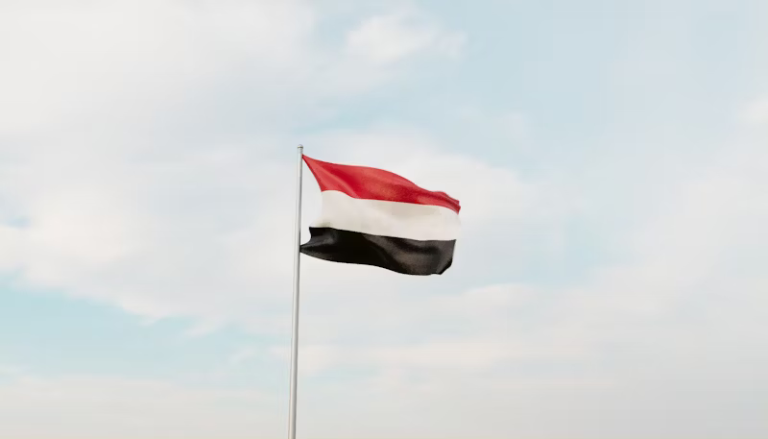
Written by Elisa Garbil – 28.08.2025 The transformation of Yemen’s Houthi movement from a marginal insurgency to a disruptive regional force marks one of the most significant non-state evolutions in contemporary Middle Eastern politics. Their growing military capabilities, ideological expansion, and strategic autonomy have positioned the Houthis as not just a local Yemeni problem but a geopolitical…
The World Economic Forum’s Global Risks Report 2025 described an “increasingly fractured” world, with state-based conflict, climate disruption, political polarization and technological risks all intensifying at the same time. Geopolitical and international risk dashboards from 2Secure, BlackRock, KPMG and others show the same picture: conflicts are reshaping trade, energy and supply chains; national security concerns…
On 25 September the Italians were called to vote for the election of the new parliament. After the resignation of Mario Draghi, having lost support within the coalition in Parliament, he left the country at a turbulent and time of high risk. As said by Giovanni Capoccia during his interview on The International Risk Podcast,…
Democracies are judged by their visible institutions. Elections, constitutions, courts, legislatures and a free press are treated as the cornerstones upon which democratic systems stand. When coming to assess democratic health, they tend to focus on voter turnout, constitutional protections, judicial independence, or the conduct of political leaders. Many of the rules that sustain democratic…
One Comment
Comments are closed.