
Political Risk as the Decisive Force Behind Corridor Success: Why the INSTC, BRI, and the Middle Corridor Rise or Falter
Written by Elisa Garbil – 12.01.2026
Transport corridors, also known as the arteries of global trade, are often described in terms of engineering feats, freight volumes, and infrastructure investments. Yet the true determinant of whether these grand initiatives thrive or stall lies elsewhere. Beyond tracks, ports, and customs software sits the quieter but more powerful force shaping their destinies, namely political risk. For supply chain and procurement leaders, geopolitical risk is an operating variable, not a background narrative. International risk surfaces in lead-time volatility, transit denials and documentation friction, sanctions and export-control exposure, escalating insurance and security costs, and contractual positions that can flip from margin-positive to loss-making within a quarter. In 2026, the relevant question is rarely the shortest route; it is the route with the highest political durability under sanctions constraints, war-risk dynamics, border policy shifts, and regulatory enforcement.
Political risk determines whose goods move, which borders stay open, how sanctions distort logistics choices, and ultimately which states possess the strategic trust needed to become irreplaceable links in global commerce. Across Eurasia, this dynamic is vividly visible in the competition and coexistence of the International North–South Transport Corridor (INSTC), China’s Belt and Road Initiative (BRI), and the increasingly discussed but still nascent Middle Corridor. This international risk article is for COOs, Heads of Supply Chain, procurement leaders, and risk owners who are being told to de-risk without raising cost, and to comply with sanctions without slowing operations.
Each of the three corridors offers compelling technical and economic advantages. Yet the divergence in their trajectories, e.g. BRI’s global entrenchment, INSTC’s stop-start momentum, and the Middle Corridor’s slow consolidation, reveals a common truth: political risk is not merely one factor, it is the decisive factor. And in the context of Afghanistan’s fragility, Iran’s sanction-laden geopolitical environment, and Central Asia’s evolving state strategies, the stakes haven’t been higher.
Meanwhile, the global push to de-risk supply chains, driven by U.S.–China rivalry, Europe’s diversification imperatives, and India’s pursuit of strategic autonomy, has made corridor politics even more consequential. Supply chains no longer seek the shortest or cheapest route, they seek the most politically durable one.
Understanding how the three major Eurasian corridors navigate political risk is essential to anticipating which of them will define trade routes for decades to come. Listen to Sophia Nina Burna-Asefi’s episode to find out more about the new global supply chain map!
The Structural Variable Behind Corridor Performance
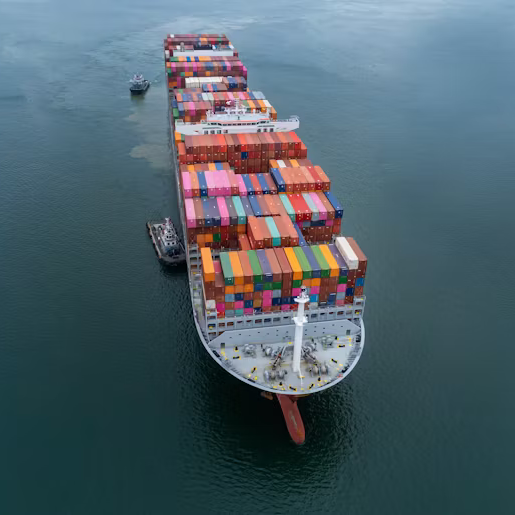
While logistics literature often prioritises cost, speed, and multimodal connectivity, political science and transport-economics research show that political stability, regulatory predictability, and interstate trust consistently outweigh technical considerations. Studies on infrastructure success and failure highlight that even well-designed systems collapse when governance is weak, when corruption captures logistics processes, or when geopolitical shocks disrupt cross-border interoperability.
Political risk acts in several ways:
- Regime instability threatens continuity for long-term investments.
- Sanctions and great-power rivalry distort transport preferences, rerouting flows, sometimes even overnight.
- Border politics determine whether goods move seamlessly or become stranded in bureaucratic bottlenecks.
- Strategic distrust leads states to favour ‘friendly corridors’, even if economically suboptimal.
- Regional security dynamics, from insurgencies to frozen conflicts, make certain lines uninsurable.
Thus, the challenge for INSTC, BRI, and the Middle Corridor is not only to build ports or railways but to stabilise the political geography they traverse.
China’s Belt and Road Initiative: Scale, Influence, and Emerging Frictions
No corridor has reshaped Eurasian trade more profoundly than the Belt and Road Initiative (BRI). Through its network of overland and maritime routes, China has injected massive financing into ports, industrial hubs, and railway links stretching from Southeast Asia to Europe.
1. BRI’s Political Advantages
BRI’s strength has always been its political centralisation. Backed by Chinese state financing, diplomatic coordination, and long-term strategic planning, BRI avoids the fragmentation that plagues multilateral projects. China’s ability to align bilateral agreements into a single narrative of connectivity gives BRI corridors a consistency few competitors can match. This unified political structure helps China: (1) push projects forward even in high-risk environments, (2) absorb delays without losing momentum, (3) bind partners through debt, trade, and security cooperation, and (4) secure influence in strategically important nodes (ports, rail terminals, free-trade zones).

2. Emerging Constraints
Yet BRI is increasingly constrained by political fatigue, mounting debt concerns, and geopolitical pushback. Research on China’s global strategy notes growing scrutiny from states wary of over-dependence on Beijing. Political risk now cuts both ways: countries fear the risks of aligning too closely with China as much as the risks of being excluded. Moreover, global de-risking trends, particularly in the EU, U.S., and India, have created incentives to seek alternatives to Chinese-centric routes. This shift does not kill BRI, but it transforms the strategic environment in which it operates.
The International North–South Transport Corridor: Promise Constricted by Political Landmines
The INSTC, a multi-modal corridor linking India, Iran, and Russia through the Caucasus and Central Asia, possesses enormous economic potential. Shorter than the traditional Suez route, it offers compelling advantages for Indian exports to Eurasia and Russia’s southbound trade. Yet, INSTC’s defining characteristic is not its technical ambition but its political vulnerability.
1. Iran: The Central Strength and the Central Liability
Iran sits at the heart of the corridor. Its ports, especially Chabahar, and its railway links anchor INSTC’s southern segment. But Iran’s geopolitical position also presents INSTC’s greatest challenge. Sanctions, banking restrictions, and Western regulatory pressures complicate everything from financing to insurance. Even when infrastructure is available, companies hesitate to commit cargo volumes due to compliance risks. This creates a structural paradox: the corridor’s strategic value grows with global polarisation, but the same polarisation suppresses its commercial viability.
2. India’s Calculated Commitment
India sees INSTC both as a trade opportunity and as a geopolitical tool to counterbalance China’s BRI footprint. Its investments in Iran’s Chabahar Port were meant to give India direct access to Afghanistan and Central Asia without relying on Pakistan. However, New Delhi must navigate a delicate balance: partnering with Iran without triggering geopolitical consequences in its relations with the U.S. and the Gulf. This caution slows implementation and produces oscillations in commitment.
3. Russia’s Sanctions and the Corridor’s Reorientation
Since the Ukraine war, Russia has placed growing strategic weight on INSTC to bypass Western-controlled maritime routes. Yet sanctions complicate financing and international participation, reducing the corridor’s attractiveness for global shippers despite its geographic efficiency.
4. Afghanistan: The Potential Link and the Political Fragility
A stable Afghanistan would dramatically strengthen INSTC’s connectivity, serving as a bridge to Central Asia. But Afghanistan’s political instability, international isolation, and security risks deter sustained investment. Without long-term predictability, Afghanistan remains a theoretical advantage rather than a functional link.

The Middle Corridor: Conceptually Attractive, Politically Uneven
The Trans-Caspian International Transport Route (TITR), commonly known as the Middle Corridor, connects China to Europe via Kazakhstan, the Caspian Sea, Azerbaijan, and Turkey. Its value surged after geopolitical disruptions made Russia-dependent corridors less reliable. Yet the Middle Corridor’s future depends less on technical improvements and more on whether the states along it can coordinate politically.
Strength: A Politically Acceptable Alternative
The Middle Corridor benefits enormously from current global de-risking dynamics:
- Europe seeks to diversify away from Russia.
- China needs redundancy beyond its northern routes.
- Central Asia is eager to reduce overreliance on both Russia and China.
- Turkey positions itself as a logistics hub linking Asia and Europe.
The corridor enjoys a unique window of geopolitical opportunity, amplified by India and Kazakhstan exploring trade options through TITR as an alternative to China-centric routes.
Weakness: Fragmented Governance
Political risk manifests here not through instability but through coordination gaps. Kazakhstan, Azerbaijan, Georgia, and Turkey each maintain distinct regulatory systems, customs procedures, freight pricing mechanisms, and political priorities. Achieving synchronised corridor governance, which is an essential condition for reliability, remains a work in progress. This fragmentation leads to:
- Fluctuating transit fees
- Bottlenecks at ports and border crossings
- Difficulty attracting long-term private investors
- Competition among regional players instead of strategic unity
Without governance harmonisation, the corridor risks being competitive in concept but inconsistent in practice.

Central Asia’s Balancing Act
Kazakhstan’s and Uzbekistan’s strategic autonomy drives them to embrace diversified partnerships, yet domestic political transitions and economic dependencies shape their corridor choices. Regional cooperation is improving, but inconsistent reforms and varying risk appetites mean the Middle Corridor’s political cohesion remains fragile.
Afghanistan, Iran, and Central Asia: The Geopolitical Core of Corridor Politics
The three regions stand at the intersection of the INSTC, BRI alternatives, and Middle Corridor visions. Their political conditions directly shape Eurasia’s logistics future.
Afghanistan: A Missing Link Awaiting Stability
Afghanistan could be a transformative connector between South Asia and Central Asia. Yet its security challenges, unpredictable governance, and international isolation keep infrastructure dreams perpetually stalled. Whether linked to BRI via the China–Pakistan Economic Corridor (CPEC) or projected as an extension of INSTC, Afghanistan’s unresolved political uncertainty limits all corridor prospects that rely on it.
Iran: Strategic Geography Overwhelmed by Sanctions
Iran offers the most direct landbridge between the Indian Ocean and Eurasia. Its ports, logistics infrastructure, and regional influence should make it indispensable. Yet sanctions, and the wider reputational and regulatory risks they impose, create a barrier that infrastructure alone cannot fix. Iran’s involvement in corridors therefore becomes a test for political risk tolerance: companies and states with higher tolerance benefit, while risk-averse actors bypass it.
Central Asia: The Region With the Most to Gain, and the Most to Manage
Kazakhstan, Uzbekistan, and Turkmenistan sit at a historic crossroads. Their ability to maintain neutrality, reform customs processes, and improve regional coordination will determine whether Eurasian corridors can function without Russia as the central node. Central Asia’s political evolution, which is more than any technical constraint, will shape whether the region becomes a connectivity hub or remains a transit appendage.
Supply-Chain De-Risking: The Strategic Context Behind Corridor Competition
A global transformation in supply-chain strategy is reshaping corridor preferences. De-risking, importantly not decoupling, drives countries and corporations to diversify production and logistics routes. The drivers include: (1) U.S.–China technological rivalry, (2) Europe’s need to reduce dependence on Russia, (3) India’s pursuit of logistics autonomy, (4) the search for sanction-proof trade architecture, and (5) private-sector demand for resilient, insurable corridors.
BRI once benefitted from the desire for efficiencies; today, alternatives benefit from the desire for resilience. This creates an unprecedented opening for INSTC and the Middle Corridor, but only if they can demonstrate political reliability.
Forward-Looking Scenarios: Which Corridor Will Succeed?
The future of Eurasian connectivity hinges on how political risk evolves. Three plausible scenarios illustrate the potential trajectories.
Conclusion: Political Risk Is the Architect of Corridor Destiny
Transport corridors are not born from infrastructure but from political conditions that enable infrastructure to operate. Across the INSTC, BRI, and the Middle Corridor, engineering challenges are solvable, yet political uncertainties are not. The decisive factor is, and will remain, whether states along each route can deliver:
- Predictable governance
- Coordinated border regimes
- Stable regional security
- Regulatory harmonisation
- Long-term political commitment
Afghanistan’s volatility, Iran’s sanctions, and Central Asia’s evolving statecraft continue to shape these corridors in profound ways. As global supply chains reorganise around resilience, the importance of political stability only intensifies.If the coming decade proves anything, it will be that corridors succeed not by being the shortest or fastest, but by being the most politically durable. In this race, infrastructure is merely the visible surface; political risk is the true foundation on which the future of Eurasian connectivity will be built.




One Comment
Comments are closed.