Who Pays the Price for the World’s Copper Rush? The Risks and Realities of Mining in Balochistan
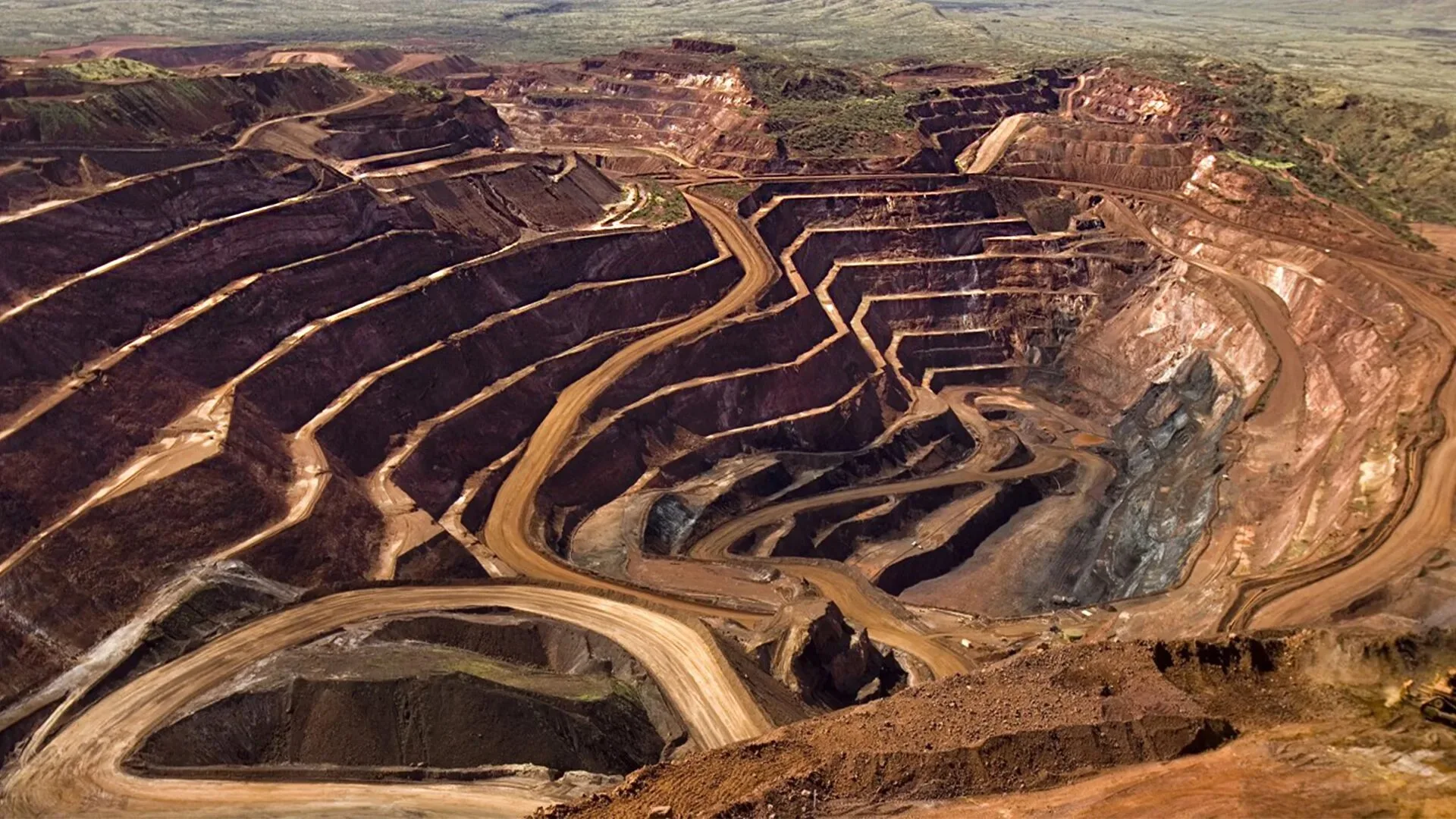
As demand for clean energy accelerates, copper has become one of the world’s most valuable resources. Electric vehicles, solar panels, transmission lines, and battery storage systems all depend on it—driving a rapid global rush to secure long-term supply. One of the richest deposits sits in Balochistan, Pakistan’s largest and most resource-rich province, where the vast Reko Diq copper and gold project has drawn the attention of foreign governments and multinationals from Canada and the United States to China and the Gulf.
For Islamabad and international investors, Reko Diq is framed as a cornerstone of the clean energy future and a chance for Pakistan to elevate its role in the transition; some analysts suggest it could be Pakistan’s opportunity to become the “Saudi Arabia of copper”. On Barrick’s website, they claim Reko Diq could be transformed into a “world-class, long-life mine which would substantially expand Barrick’s strategically significant copper portfolio and benefit its Pakistani stakeholders for generations to come”. For Pakistan’s government, Reko Diq is almost seen as a lifeline; a way to attract foreign investment, reduce reliance on IMF bailouts and potentially stabilise foreign currency reserves.
However, for many in Balochistan, it represents something far more familiar: a continuation of extraction without inclusion, unfolding in a context of militarisation, repression, and deep inequality. It raises questions about who really benefits from operationalising Reko Diq and other mining projects alike, and who pays the price.
Rich in Minerals, Poor in Rights
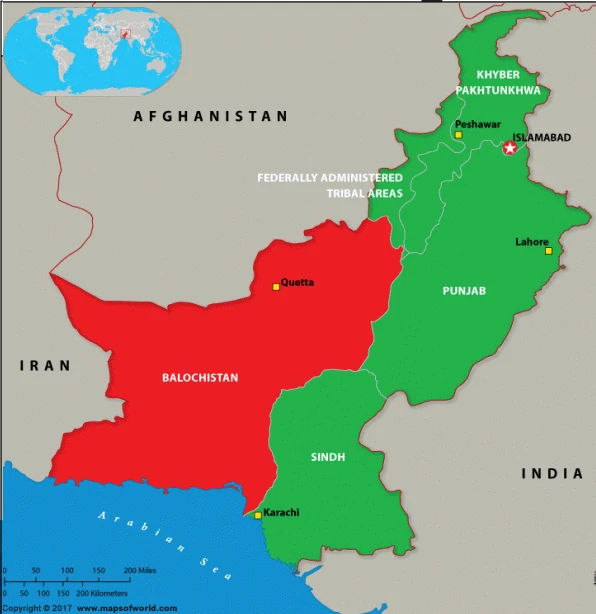
Despite supplying much of Pakistan’s natural gas and holding more than half of its mineral wealth, Balochistan remains the country’s poorest province. Most households lack electricity, safe drinking water, and reliable public services. The disconnect between the province’s natural riches and its lived poverty fuels the widespread belief that development has consistently bypassed the Baloch. As Lateef Johar Baloch, a native Baloch, speaking on the The International Risk Podcast expresses “we have natural gas, we have resources but they’re not used for the devleopment of our people”
His concerns are echoed by a coalition of 35 civil society organisations, who warn that Reko Diq risks repeating the extractive patterns of the Saindak copper-gold mine—an earlier Chinese-led project that generated revenue for Islamabad and Beijing while leaving local communities impoverished and politically marginalised.
A Global Race for Minerals in a Volatile Region
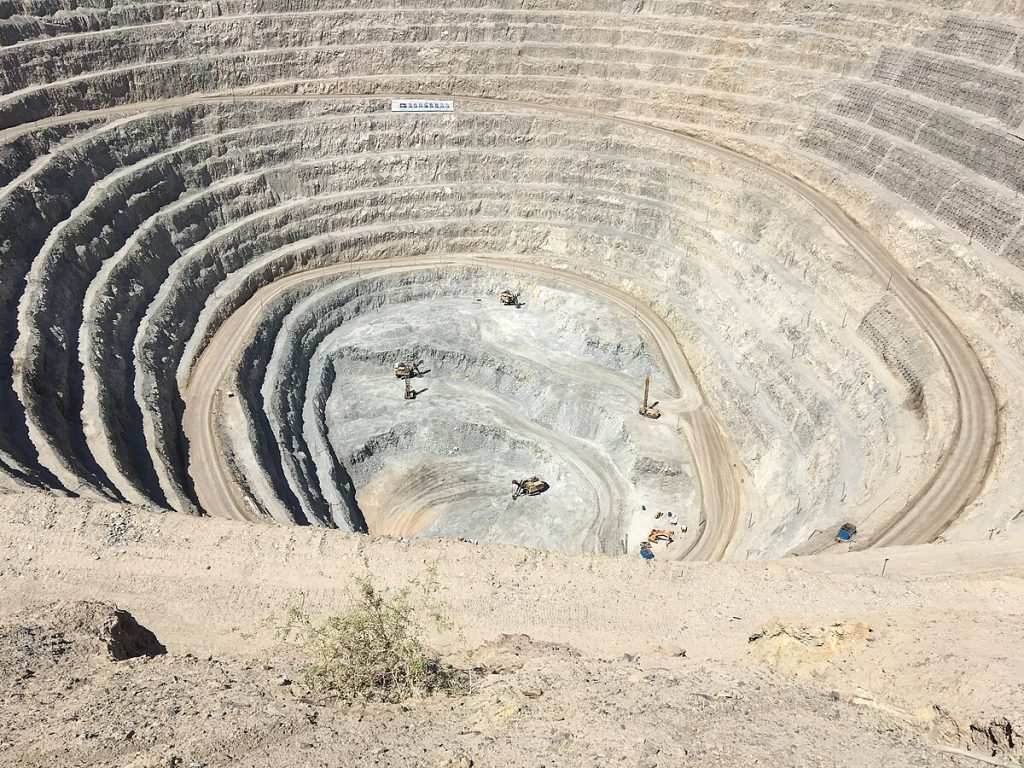
Reko Diq’s reserves—worth an estimated $60 billion—have drawn in global powers eager to secure mineral supply chains for the clean energy transition. China, already dominant in global copper processing, sees the mine as an extension of its strategic corridor through Pakistan. Western companies, including Barrick Gold, promote it as a cleaner, strategic alternative to Chinese supply chains. Gulf states, seeking to diversify their economies, have also expressed interest.
Yet this geopolitical enthusiasm obscures an unsettling reality: the mine sits in a conflict-affected province where decades of militarisation, enforced disappearances, and distrust of the state have created one of the world’s most challenging environments for large-scale development. As Lateef explains, “China and the United States are competing to hold and its resources in their control” but without Baloch consent.
Human Rights Concerns
Colonial history remains central to today’s conflict, with this legacy of imposed borders, annexation, mistreatment and resource extraction continuing. Balochistan is rich in natural resources and critical minerals, holding over half of Pakistan’s discovered minerals and metal deposits, yet its population remains among the most marginalised in Pakistan, with little say in how their land is governed or exploited. For decades, the province has endured “kill and dump” policies: military regimes, dissenting voices have been persecuted, while there have also been enforced disappearances, torture, extrajudicial killings and violent crackdowns on any signs of separatist and nationalist movements. Today, Balochistan is one of the most heavily securitised regions in Pakistan. The Pakistani government’s relationship with the Baloch people has been defined by repression; this longstanding repression is the issue Lateef Johar has dedicated his activism to challenging, now serving as a member of the Human Rights Council of Balochistan.
The project’s backers, including Canadian-based Barrick Gold and international lenders such as the ADB and IFC, frame the mine as essential for “responsible” mineral supply chains and Pakistan’s economic revival. Yet, the human rights context on the ground directly undermines this narrative. Enforced disappearances, extrajudicial killings, and heavy militarisation remain defining features of daily life. Pakistan’s Commission of Inquiry on Enforced Disappearances reported working on 10,078 cases of enforced disappearances between March 2011, when the Commission was formed, and January 2024, of which almost a third came from Balochistan. In April 2025 alone, rights groups documented 168 enforced disappearances and 67 extrajudicial killings. UN human right experts have described these patterns as “serious human rights violations and international crimes.”

Simultaneously, anti-terrorism laws have been adopted, permitting three-month detention without charge, giving security agencies sweeping powers to detain without trial. It has been widely criticised for silencing dissent and stifling peaceful protest. A Pakistani supreme court advocate has expressed concern about how these laws give the government sweeping and unchecked power, referring to it as the “black law in the country’s history”.
While stakeholder engagement with local Baloch communities has been limited, when communities live under the threat of retaliation, meaningful consultation becomes impossible. Civil society groups argue that under such conditions, any claim of stakeholder engagement is fundamentally compromised. Lateef stresses the need for transparency; “If companies say everything is okay, nothing is wrong, so then they should allow local jouranlists and human rights organisations and independent third-party investigators, reporters United Nations”
Environmental and Water Pressures
Chagai district, where Reko Diq is located, is one of Pakistan’s driest regions, receiving less than 50mm of rainfall annually. Water scarcity is already acute; copper mining—one of the most water-intensive industries in the world—risks accelerating depletion. Groundwater decline has already pushed families to leave their homes in search of more stable water supplies.
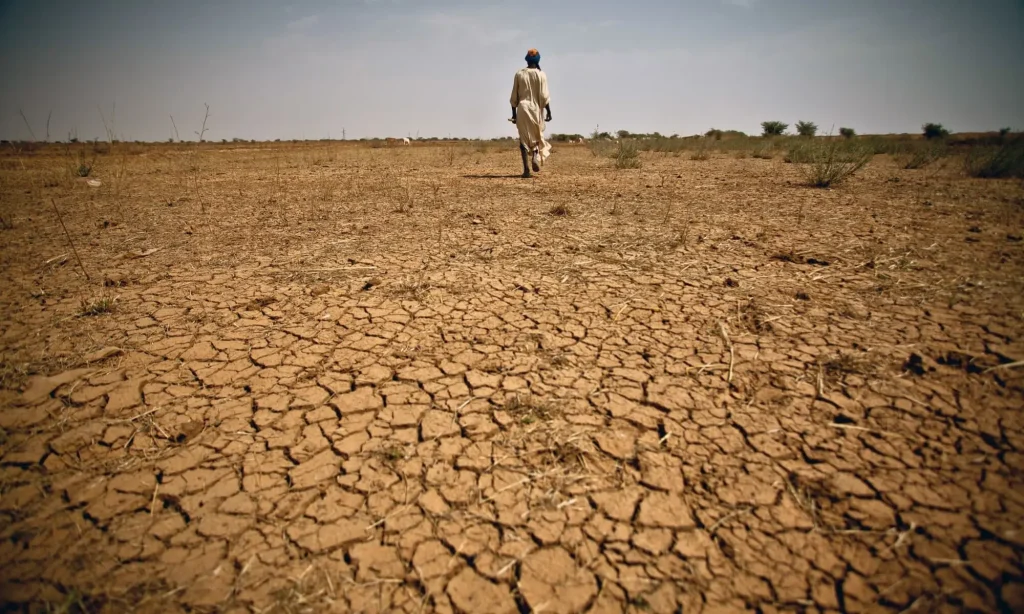
Environmental concerns extend to toxic waste, tailings, and ecological degradation in a fragile desert landscape. Copper mining also carries a substantial carbon footprint, emitting roughly 2.5 tonnes of CO2 per tonne of copper producined, challenging the notion that such projects inherently support a “clean” energy future.
Insurgency and Escalation
Extractive projects in Balochistan have long been entangled with conflict. Insurgent groups oppose mining ventures they view as exploitative, and foreign contractors have been targeted repeatedly. Groups like the Baloch Liberation Army (BLA) and the Baloch Raaji Aajoi Sangar (BRAS) coalition have explicitly warned Barrick to stay away from Reko Diq, calling these mega-development projects exploitative and legitimate targets.
Pearl Pandya, South Asia researcher with Armed Conflict Location and Event Data (ACLED) said, “The perceived exploitation of Balochistan’s natural resources by ‘outsiders’, which would include the Pakistani state as well as foreign corporations, is one of they key stated motivations behind the insurgency”. Since 2018, more than 50 attacks have struck mines, routes, and related infrastructure. In 2024, violent incidents in the province increased by 119%. Additionally, according to the Islamabad-based think tank Pak Institute for Peace Studies (PIPS), in February 2025 alone, terrorism-related deaths jumped 73% with nearly two-thirds of the fatalities occurring in Balochistan.
This dynamic creates a cycle: investment attracts militarisation, militarisation fuels local grievances, and grievances strengthen insurgent narratives. Large-scale mining in Balochistan cannot be isolated from these broader political realities. Civil society groups have called on international lenders to stop financing Reko Diq warned that “in a high militarised region, where critical voices are routinely silenced, investing in such a large-scale project is a recipe for disaster”.
The Central Question Remains
Reko Diq promises billions in revenue, strategic leverage for global powers, and a pathway to a low-carbon future. But these gains have historically bypassed the very people whose land bears the cost. So who pays the price for the world’s copper rush?
In Balochistan, the answer is visible in the shrinking water tables, the roadblocks and checkpoints, the unresolved disappearances, and the fear that any new project simply deepens old wounds. Until these structural issues and power dynamics are confronted, the world’s clean energy ambitions risk being built on extractive foundations that are anything but clean and sustainable.
Yes, the world needs copper. The question is whether we are willing to confront the consequences of how and where it is obtained.
To learn more about this issue, listen to Lateef Johar Baloch on Epsiode 293 of the International Risk Podcast, Reko Diq and the Human and Environmental Cost of Mining in Balochistan.