
Paul Hefel-James

Paul Hefel-James

Paul Hefel-James is a freelance journalist based in Beirut, Lebanon. He covers migration and refugee issues, the humanitarian sector and conflict in the Middle East region. His previous publications include explorations of labor migration in Lebanon, Syrian archives and reconstruction and the displacement crisis during the Israel-Hezbollah war. He is the author of the Substack,…
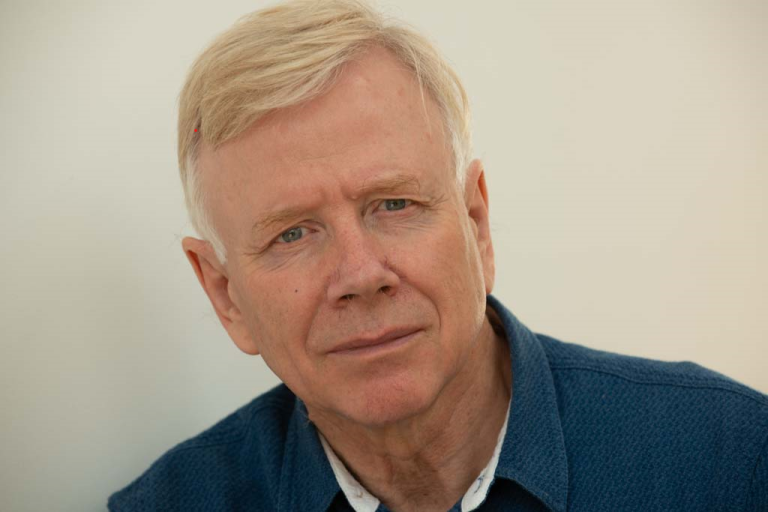

Episode 344: Israel’s Dahiyeh Doctrine Returns to Lebanon with Paul Hefel-James

Today on The International Risk Podcast, we turn to Lebanon, where Israel’s invasion, the subsequent displacement of hundreds of thousands of civilians, and political fracture are colliding in ways that could reshape Lebanon for years. As the conflict on the Lebanese front deepens, the questions are no longer just about ceasefires or border tensions, but…

Humphrey Hawksley

Humphrey Hawksley

Humphrey Hawksley is a former BBC foreign correspondent who works over the last 40 years or so has taken him to crises all over the world. He is also an award-winning author, commentator and guest lecturer at universities and think tanks such as the RAND Corporation, the Center for Strategic and International Studies and MENSA…

Episode 342: You Can’t Kill an Idea: War, Power and 40 Years as a Foreign Correspondent with Humphrey Hawksley

The global landscape feels increasingly unsettled. Conflict in the Middle East, Sudan and Ukraine to wider geoplitical, technological and climatic shifts, the world is going though a period of rapid change. At the same time, the nature of conflict and the way it’s reported has changed dramatically over the past few decades. So today we’re…

Episode 335: Water Scarcity and Systemic Risk in Iran with Milad Jafari

Iran is facing what many experts describe as a looming state of “water bankruptcy”— a crisis where demand has so profoundly outstripped supply that the very foundations of economic stability, social cohesion, and national security are under strain. From drying reservoirs in Tehran to collapsing aquifers and land subsistence, water is no longer just an…

Milad Jafari

Milad Jafari

Milad Jafari is an Iranian political scientist, researcher, and policy analyst specializing in water diplomacy and governance with a water science and engineering background. He holds two master’s degrees: one from Tarbiat Modares University, where he focused on the phenomenology of water governance issues in Tehran and also transboundary water challenges of the Helmand River,…

Episode 323: Live from Syria: The Risks That Lie Between Liberation and Reconstruction with Dominic Bowen

There are some days in the calendar that people will never forget. 8 December 2024 is a day Syrians will certainlt remember: Liberation Day. Now a national holiday, it marks the fall of the Assad family regime—a dictatorship that had ruled Syria for half a century. Fourteen months on, where is Syria today? Internationally, the…

Episode 313: Greenland at a Crossroads with Dr Gabriella Gricius

Greenland is not for sale. That was the message from Denmark and Greenland after the White House summit on the 14th January. Meanwhile, President Trump says the US needs to “own” Greenland for national security, to stop Russia and China in the Arctic. How did an island of 57,0000 people suddenly get flung into the…

Dr Gabriella Gricius

Dr Gabriella Gricius

Dr. Gabriella Gricius is a Senior Research Associate at the Arctic Institute, Postdoctoral Fellow at the University of Konstanz and a Fellow and the Media Coordinator with the North American and Arctic Defence and Security Network (NAADSN). She received her Ph.D. from Colorado State University’s Political Science Department, where her dissertation explored the prevalence of…

Episode 306: Electricity on the Frontlines: Russia’s War Against Ukraine’s Energy Infrastructure with Theresa Sabonis-Helf

Since its full-scale invasion of Ukraine in February 2022, Russia has systemically targeted Ukraine’s civilian infrastructure–especially its energy systems–as a core part of Russia’s strategy. Since the start of the war, there has been over 2000 air, drone, and artillery attacks on energy infrastructure in Ukraine. Electricity grids, nuclear power plants, transmission lines, gas facilities,…