Culture as a Battlefield: The Strategic Risks of Russia’s Cultural Offensive
Written by Elisa Garbil – 05.12.2025
Russia’s invasion of Ukraine since 2014, has unfolded across multiple dimensions: military, economic, informational, and psychological. Yet one of its most significant and underexamined fronts is cultural. The Kremlin has reframed culture not as an organic expression of society but as a strategic tool where a weapon legitimises aggression, manipulates narratives, and erodes the cultural sovereignty of its adversaries. This ‘culture war’ is not just a metaphor. It is a deliberate campaign that integrates state institutions, media, religion, and history into a coherent instrument of power. The risks of this strategy extend well beyond Ukraine’s borders. They encompass the destruction of heritage, the reshaping of identities, and the erosion of global norms that once separated culture from conflict. Listen to Olha Mukha’s viewpoint on the culture war being waged against Ukraine.
Culture as a State Weapon
Over the past decade, the Russian government has redefined culture as an element of national security. Official doctrines and policies describe culture as a component of ‘humanitarian influence’, intended to strengthen Russia’s standing abroad and counter what Moscow frames as anti-Russian sentiment. This approach fuses soft power with coercive intent. Rather than using culture to build mutual understanding, the state weaponises it to dominate narratives and impose ideological conformity. Within Russia, cultural institutions have been subsumed into state structures, their autonomy curtailed and their funding tied to loyalty. Abroad, cultural diplomacy has been reoriented toward shaping perceptions of legitimacy, victimhood, and civilisational struggle. Thus, the risk is systemic as when culture becomes a weapon, it loses its role as a bridge between societies. The arts, education, and history transform into extensions of the state’s information warfare apparatus. This in turn erodes the independence of artists, educators, and scholars, while reducing culture to propaganda.
The Cultural Front in Ukraine
Nowhere is this weaponisation clearer than in Ukraine. From the outset of the invasion, Russian narratives portrayed the war as a mission to ‘protect Russian culture’ and ‘liberate’ territories from Western cultural corruption. This framing justified the assault as a civilisational duty, not an act of aggression. On the ground, the campaign has included the systematic destruction and looting of Ukrainian cultural sites. Museums, libraries, and monuments in occupied regions have been targeted or repurposed. Ukrainian-language education has been suppressed, and historical narratives rewritten to align with the Kremlin’s vision of a ‘unified Russian world’.
These acts are not collateral damage, they are central to the Russian strategy of bringing the USSR back. By erasing Ukrainian culture and replacing it with Russian symbols, the occupier seeks to eliminate the foundation of Ukrainian identity. The risk extends far beyond the loss of physical heritage. It represents an assault on the very idea of Ukrainian nationhood, designed to weaken social cohesion and future sovereignty.
Domestic Cultural Control
Inside Russia, culture has been militarised to serve the state’s ideological agenda. Independent artists, writers, and filmmakers who dissent from official narratives face censorship, blacklisting, or exile. Theatres and museums have been purged of critical voices, while new institutions promote patriotic and religious art aligned with state ideology.
This internal ‘cleansing’ mirrors Soviet practices but operates under a different logic. Instead of overt central planning, the modern Russian system relies on fear, funding control, and the co-option of elites. Cultural conformity becomes a condition for survival. The resulting cultural ecosystem is brittle as it is dependent on loyalty, devoid of innovation, and increasingly isolated from global networks.
The risks for Russia are profound. By transforming culture into an instrument of control, the regime undermines its own soft power and creative capacity. The country’s most talented cultural figures have fled abroad, draining the very reservoir of influence the Kremlin seeks to project. Over time, this self-imposed isolation will diminish Russia’s ability to compete in the global marketplace of ideas.
The Ideological Dimension: Faith and Civilisation
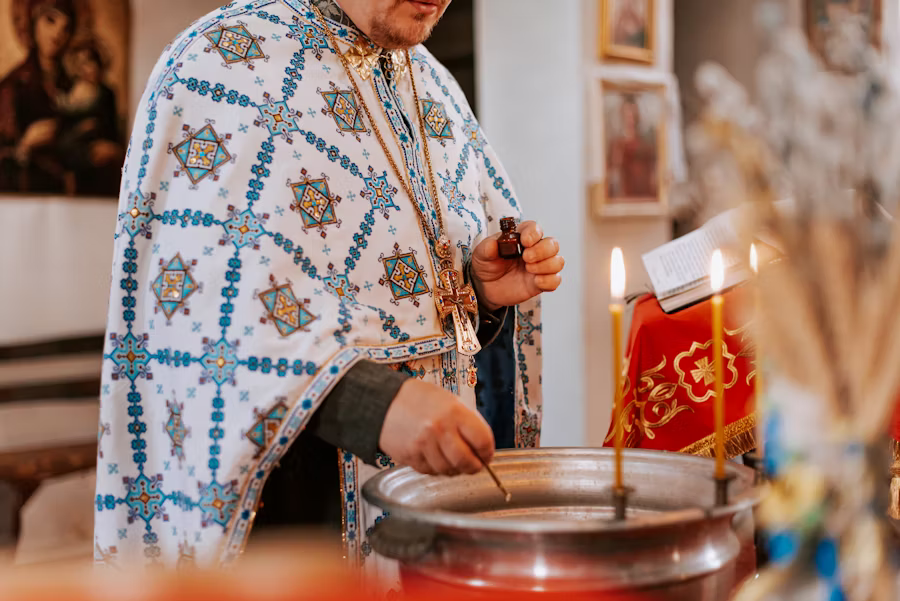
The cultural offensive is not limited to art and heritage as it extends to ideology and religion. The Kremlin’s narrative portrays Russia as a bastion of traditional values engaged in a spiritual struggle against a decadent, liberal West. The Russian Orthodox Church plays a central role in this framing, sanctifying the war as a defence of Christian civilisation. This ‘holy war’ narrative fuses geopolitics with theology. It recasts aggression as moral duty and reframes opposition as heresy. In doing so, it mobilises powerful emotional and symbolic resources such as faith, sacrifice, destiny and transforms political objectives into sacred imperatives. The risk here lies in the escalation of totalising worldviews. When a state fuses national identity with divine purpose, compromise becomes betrayal. The space for diplomacy, dialogue, or mutual understanding collapses. Moreover, by linking Russian identity to an existential struggle, the regime binds its citizens to perpetual conflict, both internal and external. Internally through conformity, externally through confrontation.
Globalising the Culture Wars
While Ukraine remains the primary battleground, Russia’s cultural strategy extends across the international information space. The state exploits social and cultural divisions in Western democracies, think of race, gender, religion, and migration, to deepen polarisation and weaken trust in institutions. This ‘weaponised culture war’ operates through media influence, disinformation, and selective cultural outreach. Russian narratives position Moscow as a defender of ‘traditional values’ against Western liberalism, appealing to disaffected groups across Europe and the United States. The aim is not to convert but to confuse. To fracture consensus and erode the cultural coherence of rival societies.
The risk for democracies is that open societies, by design, offer fertile ground for such manipulation, as we have been seeing with the surge of disinformation and the meddling of elections by Russia. Cultural pluralism becomes a vulnerability when adversaries deliberately inflame divisions. The very tolerance that sustains democratic culture is currently being exploited to undermine it.
The Human Dimension: Artists, Memory, and Resistance
Despite repression and destruction, both Russian and Ukrainian artists continue to resist the cultural war in different ways. In Ukraine, artists document the invasion, restore damaged heritage, and create new works that assert national identity. Culture becomes an act of resilience and a means of preserving continuity in the face of erasure. Within Russia, a diaspora of exiled creatives seeks to maintain independent Russian culture abroad. Their work, often banned at home, represents an alternative narrative: one that separates Russian art from the regime’s propaganda. Yet the longer the state maintains control over domestic cultural production, the weaker these independent voices risk becoming.
The human cost is significant. Artists forced into exile lose their communities and audiences, and those who remain face censorship or self-censorship. The collective memory of the era is thus shaped by fear and distortion, a risk that extends beyond Russia’s borders as misinformation circulates globally.
Cultural Destruction as a Long-Term Risk
Moreover, we know wars often destroy cities, this culture war destroys memory. The systematic targeting of cultural sites, like churches, archives, or museums, represents a deliberate effort to unmake a people’s past. Such acts carry long-term strategic consequences. First, cultural destruction deepens societal trauma, prolonging the recovery of postwar communities. Second, it complicates reconciliation by eliminating shared reference points for identity and belonging. Finally, it undermines international law: if cultural heritage is no longer respected as off-limits in war, future conflicts may see similar assaults on memory and meaning. Therefore, the risk extends to international institutions tasked with protecting culture. When major powers disregard cultural conventions, the legitimacy of global norms erodes. The boundaries between cultural diplomacy, propaganda, and warfare blur.
Strategic Risks and Global Implications
The weaponisation of culture generates cascading risks across four levels:
- National Identity Risks: Ukraine’s survival depends not only on military defense but on preserving its cultural sovereignty. The erasure of heritage and language threatens to weaken the foundations of its nationhood.
- Institutional Risks: cultural organisations, both Ukrainian and international, face physical and reputational hazards. Museums, archives, and heritage projects may be destroyed, looted, or politicised.
- Societal Risks: in both Russia and the West, cultural manipulation polarises societies and undermines public trust. When culture is reframed as a battlefield, dialogue becomes confrontation.
- Systemic Risks: the collapse of global cultural norms erodes cooperation, increases suspicion, and legitimises cultural aggression as a tool of statecraft. If left unchecked, this could set a precedent for future powers to target culture as part of their strategic repertoire.
Mitigation and Response
Managing these risks requires a multi-layered response:
- Strengthen Cultural Resilience: protecting culture should be seen as a security priority. Governments and international bodies must fund preservation, digital archiving, and reconstruction of at-risk heritage.
- Support Independent Culture: backing independent artists, journalists, and cultural institutions, both within and outside Russia, helps preserve alternative narratives that counter state propaganda.
- Integrate Cultural Intelligence: policy frameworks should include cultural analysis in risk assessments, ensuring that cultural dimensions of conflict are recognised and mitigated alongside military and economic threats.
- Reinforce International Norms: global institutions like UNESCO and the International Criminal Court must reaffirm that deliberate cultural destruction constitutes a war crime, ensuring accountability and deterrence.
- Promote Cultural Dialogue: cross-border artistic collaboration and cultural diplomacy can help prevent the monopolisation of narratives by authoritarian regimes. Cultural exchange, when protected from manipulation, remains a powerful countermeasure to propaganda.
Conclusion
Russia’s cultural offensive represents a fundamental redefinition of warfare. By turning culture into a weapon, the Kremlin has expanded the battlefield into the realm of identity, memory, and belief. The consequences are profound: a shattered cultural landscape in Ukraine, a hollowed creative sphere within Russia, and a world where the boundary between culture and conflict grows increasingly thin. For Ukraine, the defence of culture is a defence of existence. For Russia, the subjugation of culture is a path toward creative and moral impoverishment. For the international community, the challenge is to protect the integrity of culture as a domain of human connection, not domination.
The risk is clear: if culture becomes normalised as a tool of warfare, societies may lose one of their last shared languages of peace. The task ahead is to ensure that culture, once mobilised for destruction, is reclaimed for reconstruction, remembrance, and resilience.