Sovereign Debt as Strategy: Credit, Constraint, and the Quiet Reordering of Power
Sovereign debt is not new. What is new is the role it now plays at the strategic level. Instruments once treated as technical matters of fiscal management have moved to the centre of international politics, shaping how states exert influence, constrain rivals, and manage risk without overt confrontation.
In a recent episode of The International Risk Podcast, Professor Dr Lev Breydo argues that sovereign credit has become a core mechanism through which power is exercised in the contemporary international system. This shift is not simply about rising debt levels or market volatility. It reflects a deeper transformation in how states compete in an environment defined by interdependence, legal complexity, and political constraint.
As Dr Breydo explains, credit markets no longer sit outside geopolitics. They have become one of its primary arenas.

From financial plumbing to strategic leverage
For decades, sovereign debt was treated as background infrastructure. It enabled growth, stabilised economies, and facilitated development, but it was rarely understood as a strategic instrument in its own right. That assumption no longer holds.
Today, access to credit markets, the design of debt contracts, and the enforcement of repayment terms increasingly shape state behaviour. Lending conditions influence domestic policy choices. Market access affects diplomatic alignment. Financial infrastructure determines which states retain autonomy under stress and which are forced into external dependency.
Dr Breydo situates this shift within a broader reordering of power, where influence is exerted less through force and more through constraint. Credit does not coerce by threat alone. It disciplines through exposure. The more integrated a state is into global financial systems, the more vulnerable it becomes to pressure applied through those same systems.
Political default and the weaponisation of finance
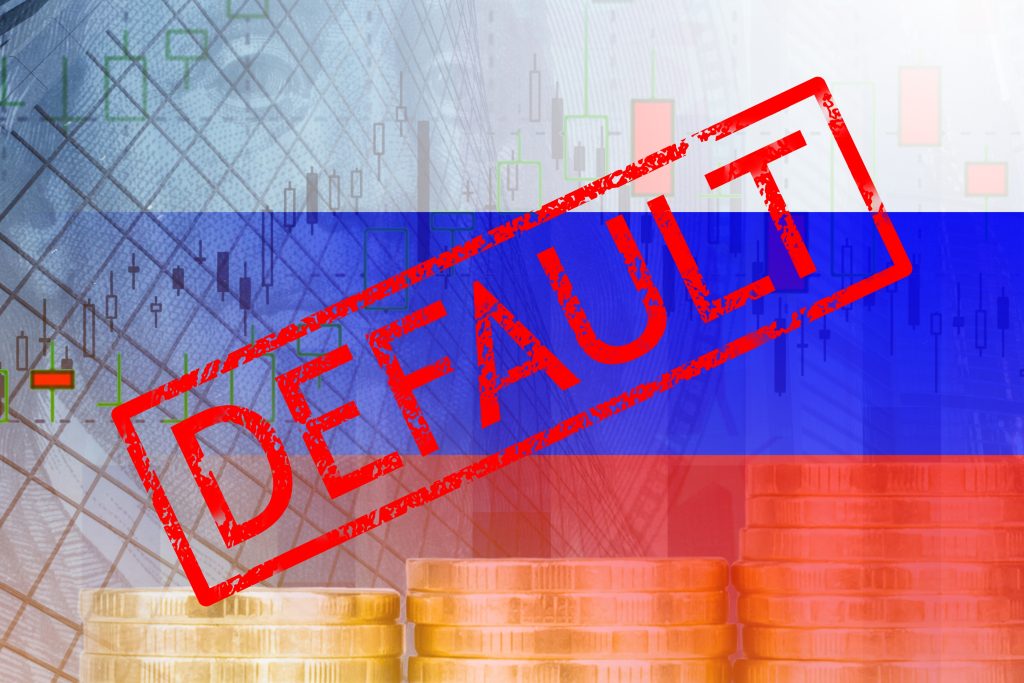
The most striking illustration of this transformation is Russia’s default following its invasion of Ukraine. Dr Breydo characterises this not as an economic failure, but as a political rupture.
Unlike historical sovereign defaults driven by insolvency or liquidity crises, Russia had the resources and intent to pay. What prevented repayment was the deliberate activation of financial infrastructure as a tool of coercion. Sanctions, payment blockages, and reserve freezes turned credit systems into enforcement mechanisms.
This episode revealed something fundamental. Financial architecture is not neutral. It can be mobilised, coordinated, and weaponised. In this sense, sovereign debt now resembles other tools of statecraft that operate below the threshold of armed conflict. It constrains behaviour while preserving plausible deniability and legal ambiguity.
The absence of exit and the persistence of risk
One of the defining features of sovereign debt as a strategic domain is the absence of a formal bankruptcy mechanism. States cannot restructure obligations through a centralised legal process. When distress occurs, outcomes are shaped through ad hoc negotiations, political pressure, and market discipline.
For emerging and frontier economies, this creates a condition of persistent vulnerability. High debt levels combined with rising interest rates mean that distress is not an exception, but a recurring risk. Default carries not only economic consequences, but reputational and political costs that can lock states out of capital markets for years.
Dr Breydo highlights how this structural asymmetry shifts leverage toward creditors. Even when lenders are fragmented or commercially motivated, the architecture of the system favours those who control access to capital rather than those who depend on it.

The United States and systemic exposure
At the centre of this system sits the United States. US Treasury securities remain the foundation of global finance, functioning simultaneously as reserve assets, collateral, and benchmarks for risk pricing worldwide.
This centrality creates stability, but it also generates exposure. Domestic political dynamics in Washington now carry international consequences. Debt ceiling brinkmanship, fiscal uncertainty, and debates over repayment prioritisation are no longer internal matters. They ripple across markets, currencies, and balance sheets globally.
Dr Breydo argues that this blurring of domestic and international risk reflects the structural reality of the system. When one state underwrites global financial stability, its internal politics become a shared vulnerability.
Technology, transparency, and new fault lines
The growing role of technology adds another layer of complexity. Artificial intelligence, digital assets, and automated financial systems promise efficiency, transparency, and inclusion, particularly for emerging markets with underdeveloped financial infrastructure.
Yet these same tools introduce new vectors of instability. Algorithmic decision making can amplify shocks. Digital settlement systems increase speed, but reduce margin for error. Financial innovation, when layered onto an already fragile debt environment, can magnify systemic risk rather than contain it.
For Dr Breydo, the challenge is not technological progress itself, but governance. Without coordination, legal clarity, and institutional resilience, innovation risks accelerating the very instabilities it aims to resolve.
A permanent feature of international politics
Sovereign debt has not temporarily drifted into geopolitics. It has become embedded within it. Credit markets now shape alignment, discipline behaviour, and define the boundaries of state autonomy.
This does not signal the end of economic cooperation, but it does require a recalibration of how risk is understood. Debt sustainability is no longer only a fiscal concern. It is a strategic one.
As Dr Breydo makes clear, the architecture of finance now functions as part of the architecture of power. Understanding this shift is essential for policymakers, investors, and institutions operating in an increasingly constrained and interconnected world.
Sovereign debt is no longer merely a measure of economic health. It is a mechanism through which global order is quietly negotiated, enforced, and contested.