The Anatomy of Sudan’s Collapse: War Economy, Foreign Support, and a Nation Under Siege
In this episode of The International Risk Podcast, Dominic Bowen speaks with Dr. Amgad Fareid Eltayeb about Sudan’s descent into catastrophe, the role of foreign backers in sustaining the war, and the deliberate use of famine as a weapon. Their conversation traces how a country once full of revolutionary hope has become the site of what he describes as one of the world’s largest forgotten humanitarian crises, and what it will take to restore civilian agency and the possibility of peace.
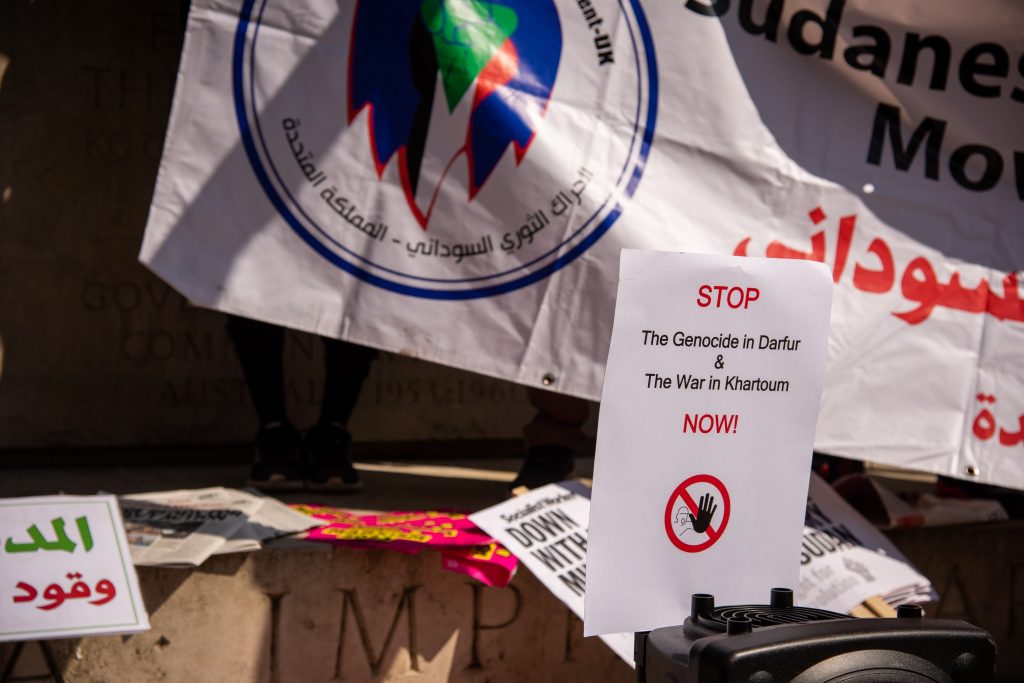
At the outset, Dominic frames the scale of the collapse: more than 25 million people facing acute food insecurity, 12 million displaced, and nearly 19 million children out of school. Sudan, he notes, is often misrepresented as chaotic or simply tribal. Dr. Eltayeb argues that the current war is not fundamentally ethnic or ideological, but driven by power and extraction. The conflict, he says, is about gold, arms, logistics routes, and geopolitical positioning.
External intervention and a “new colonial” project
Central to Dr. Eltayeb’s analysis is the role of external actors, particularly the United Arab Emirates. He describes external intervention as the biggest and most unspoken factor behind the suffering of Sudanese people. The UAE, he explains, has been providing support, weapons, arms, political cover, media backing, refuge, and hospitalisation to the Rapid Support Forces (RSF), which he identifies as the direct descendant of the Janjaweed militia that committed genocide in Darfur in the early 2000s.
In the current war, he recalls, the RSF began by committing another atrocity in West Darfur, which he notes has been formally recognised as genocide. In a few days, thousands were killed. For him, this is not random violence, but part of a broader pattern. He characterises the UAE as representing “a new colonial, sub-imperial example of power”, a small but wealthy state seeking to extend its influence by controlling ports, gold flows, and agricultural land along the Red Sea corridor.
He points out that the Red Sea is one of the most important trade arteries in the world, and that Sudan produces around two billion dollars’ worth of gold per year, much of it smuggled to the Emirates. Sudan’s agricultural land, he notes, is several times larger than the land area of the UAE, and has become a target for external actors concerned with food security and strategic depth.
Famine as a weapon of war
One of the most disturbing aspects of the conflict is the deliberate use of starvation. Dr. Eltayeb explains that while economic collapse, price rises, profiteering and displacement all contribute to hunger, famine has also been deliberately used as a weapon of war by the RSF.
He describes the siege of El Fasher, capital of North Darfur and the last major city there controlled by the Sudanese government. Since May 2024, the city has been encircled. The RSF, he says, built earthworks and positions around El Fasher to prevent any entry of assistance and any exit of people. Those who try to flee are targeted and killed. Drone attacks have struck hospitals and mosques. He recalls that the last functioning hospital was bombed, killing patients, and that a mosque was attacked, killing dozens of people, including children.
The aim, he argues, is to break the will of communities who fear a repetition of previous massacres in other parts of Darfur. Many of those in El Fasher come from non Arab communities who remember earlier campaigns of ethnic cleansing. In his view, government forces are largely fighting to protect these civilians from another genocide, while the rest of the world offers only words. Efforts to deliver food and aid have been obstructed. Proposals for humanitarian truces have been rejected by the RSF. International actors have been slow to support air drops or secure access corridors, even as hundreds of thousands of civilians remain trapped.
Famine, he stresses, is not restricted to Darfur. Starvation and extreme deprivation are now visible across Sudan, particularly among people who have fled RSF controlled areas to zones held by the national army. Yet large parts of this suffering remain outside the focus of international media and diplomacy. Since the recording of this episode, El Fasher has been seized, marking a grave and deeply consequential shift in the conflict, with far reaching humanitarian and political repercussions that sharpen the gravity of what he describes.
Disinformation, silence, and complicity
For Dr. Eltayeb, the failure to name these dynamics clearly is not accidental. He argues that it is catastrophic that the world talks about numbers of displaced and hungry people without addressing “who is behind it and who is fuelling it”. Humanitarian suffering is often described in abstract terms, without acknowledging how sieges, blockades, and the flow of arms from foreign capitals create and sustain the crisis.
When asked whether this is disinformation or negligence, he answers that it is complicity. The UAE, he says, has significant influence over many countries and stakeholders in the region, and this makes governments reluctant to criticise its role. Meanwhile, the narrative on Sudan is shaped by foreign actors, and alternative realities and stories are pushed into the public domain to obscure responsibility.
He traces the RSF’s origins back to the days of Omar al-Bashir’s regime, when the militia was formalised as a force designed to protect the president from the regular army, not to serve national defence. After the revolution of 2018–2019, he notes, the group quickly found a new patron in Abu Dhabi. He also explains how Russian mercenaries were invited into Sudan and then formed partnerships with RSF networks, using Dubai as a hub for money laundering and sanctions evasion. Sudan, he says, has become one piece in a larger pattern, part of what he calls a new axis that is willing to break the foundations of international law.
Civilian agency and the path to peace
Despite the bleak picture, Dr. Eltayeb insists that Sudanese civilians still hold a clear political vision that predates and outlasts the current war. When Dominic asks whether a genuine civilian-led political settlement is still possible, he responds that the key is restoring Sudanese agency over both problems and solutions.
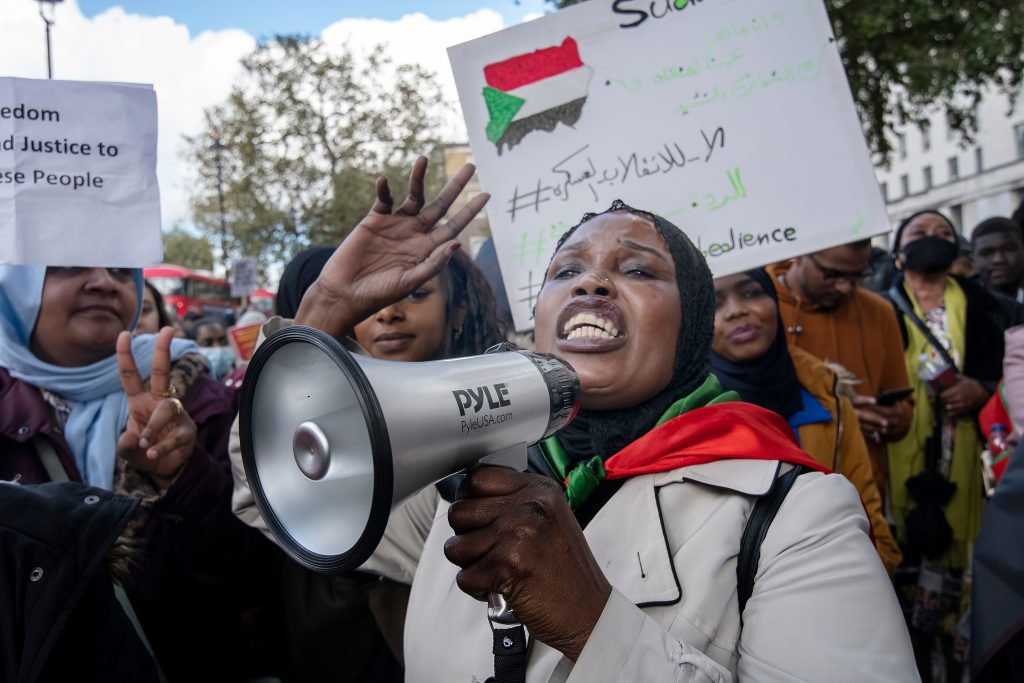
He stresses that the demand for democracy in Sudan is a popular one, not an external import. The Sudanese people marched in a “glorious revolution” for months, and struggled for thirty years against political Islam and authoritarian rule. He believes that civilian government will eventually return after the war, but that the immediate priority is to end the conflict. To do so, he argues, foreign interventions that fuel the war must be stopped, and the ambitions of paramilitary and fascist actors must be curtailed.
Lessons for Europe and business
The episode also carries clear messages for European policymakers and the business community. For companies operating in or near conflict economies, Dr. Eltayeb argues that the central lesson is that stability and peace are more profitable than war. A war economy can bring high returns for a short period, but stability allows for long-term engagement, reduced migration pressures, and lower risks of radicalisation and blowback.
He notes that Sudan is rich in resources, but has been repeatedly failed by corrupt arrangements and unequal partnerships. In his view, Europe still has an opportunity to support peace, rehabilitation, and reconstruction in Sudan in a way that genuinely serves the interests of Sudanese people, focusing on livelihoods, education, health, water, and electricity. This, he suggests, would also help address the deep inequalities and marginalisation that have fed conflict for decades.
At the same time, he warns that fragile and fragmented states like Sudan must be protected from the ambitions of what he calls immoral powers. He points to the growing role of some Gulf states and Russia in spreading instability across the Horn of Africa and central Africa, and argues that international law must be applied consistently if it is to retain meaning.
A forgotten catastrophe
In the final part of the conversation, Dr. Eltayeb reflects on the wider risks that concern him most. Above all, he says, he wants to go back to his country and his city. Sudanese people, he argues, do not have the luxury of stepping back. They face the destruction of their state institutions, the looting of museums and cultural heritage, epidemics, and a generational educational crisis in which children and students have been out of school for years.
He believes that anyone who sees themselves as a global citizen should recognise Sudan as “the biggest humanitarian catastrophe in the world that is being forgotten”. For him, the equation is clear. The choice is now with the international community: either to continue circling around the suffering with abstract language, or to confront directly the forces and interests that are driving Sudan towards collapse.