Episode 327: Hypersonic Missiles and Global Strategy: Implications for Hegemony, Arms Control, and Systemic Security with Dr Jacob Parakilas

This episode of the International Risk Podcast explores hypersonic missiles through the lens of global strategy, defense policy, and international security. Host Dominic Bowen interviews Dr. Jacob Parakilas from Rand Europe about what makes hypersonic weapons strategically significant beyond their speed. The International Risk Podcast brings you conversations with global experts, frontline practitioners, and senior decision-makers…


Dr Jacob Parakilas

Dr Jacob Parakilas

Jacob Parakilas is research leader for Defence Strategy, Policy and Capabilities at RAND Europe. Previously, Parakilas worked on the U.S.–UK defence relationship as a member of the State Department’s Political-Military team at the U.S. Embassy in London. He has also lived in Lagos, Nigeria, where he worked as a consultant and wrote a column focused…

Hypersonic Missiles and Global Strategy: Implications for Hegemony, Arms Control, and Systemic Security

Hypersonic Missiles and Global Strategy: Implications for Hegemony, Arms Control, and Systemic Security

Hypersonic missiles are typically defined as a missile which travels at Mach 5 and above for a sustained period of time and is manoeuvrable during its flight within the Earth’s atmosphere. While speed is often the headline feature, it is the combination of velocity, manoeuvrability, and atmospheric flight that distinguishes these systems from traditional ballistic…

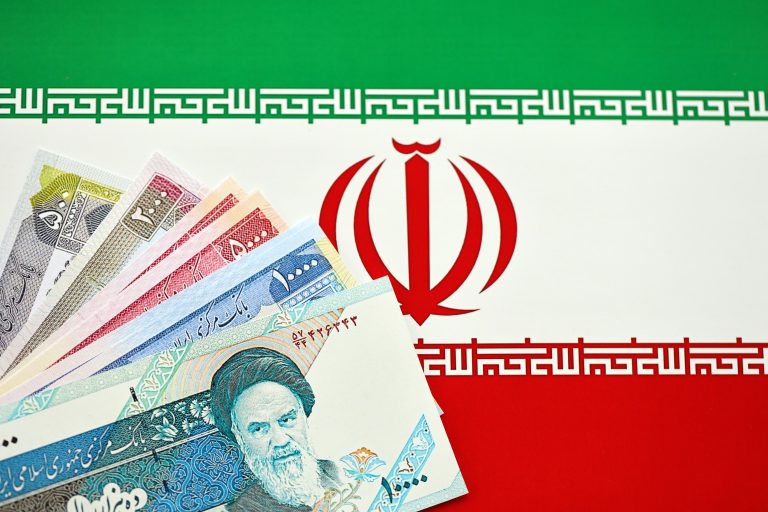
Iran Under Pressure: Sanctions, Stagnation, and the Limits of Economic Coercion

Iran Under Pressure: Sanctions, Stagnation, and the Limits of Economic Coercion

Iran has faced more than a decade of sustained economic pressure. Inflation has remained above 40 percent. The rial has experienced repeated episodes of sharp depreciation. Oil exports, once the central pillar of state revenue, have been significantly constrained by sanctions. From the outside, it looks like a system in permanent crisis. Yet despite these…

Episode 326: Iran Under Pressure: Economic Strain, Political Stability, and Regional Risk with Professor Djavad Salehi-Isfahani

This episode with Professor Djavad Salehi-Isfahani examines how prolonged sanctions, inflation, and structural economic stagnation have reshaped Iran’s political economy. We explore how comprehensive sanctions since 2011 constrained oil revenues and fiscal capacity, why inflation and currency depreciation have reinforced one another over time, and how these pressures have affected poverty, middle-class security, and youth prospects. The…

Episode 325: BRICS and the Economic Role of Emerging Global Powers with Mihaela Papa

Coordinated and Produced by Elisa Garbil In this episode host Dominic Bowen unpacks the growing influence, and mounting challenges, facing BRICS as the bloc expands and expectations rise with Mihaela Papa. From Brazil’s 2025 presidency and AI regulation to climate finance, payment systems, and the realities of de-dollarisation, the discussion cuts through the headlines to examine what…

Mihaela Papa

Mihaela Papa

Mihaela Papa is Director of Research and a Principal Research Scientist at the Center for International Studies at the Massachusetts Institute of Technology, where she leads the BRICS Lab. Previously, she led the Rising Power Alliances project and taught sustainable development and global governance at the Fletcher School at Tufts University. She has published extensively on geopolitics,…

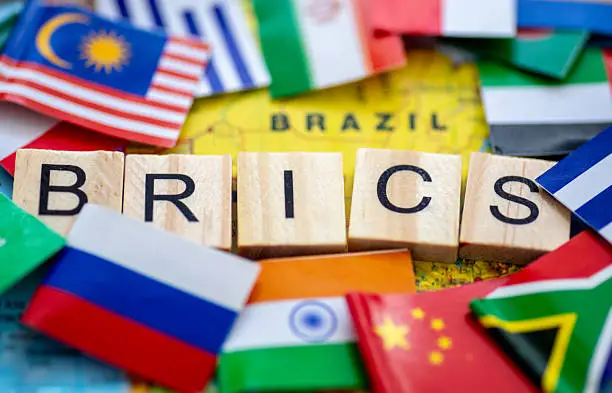
BRICS 2025: A Risk-Based Assessment of Brazil’s Presidency and Strategic Transitions

BRICS 2025: A Risk-Based Assessment of Brazil’s Presidency and Strategic Transitions

Written by Elisa Garbil – 18.02.2025 The Rise of BRICS as a Strategic Actor The BRICS, formally composed of Brazil, Russia, India, China, and South Africa, hence the name BRICS, and expanded in recent years to include additional members such as Saudi Arabia, Egypt, the United Arab Emirates, Ethiopia, and Iran, now represents a significant portion of…

Episode 324: Syria’s Shifting Identity and Political Landscape with Ola Rifai

In this episode of the International Risk Podcast, Dominic Bowen speaks with Ola Rifai about the evolution of Syrian identity and how competing narratives of nationalism, sectarianism, and statehood have shaped Syria’s political trajectory and risk before and after 2011. Find out more about how identity was managed under the Assad regime, how sectarianisation unfolded…