Inside the War in Ukraine: Strategy, Technology and the Future of Security

Inside the War in Ukraine: Strategy, Technology and the Future of Security

The war in Ukraine did not begin in February 2022. That date marks the escalation to full-scale invasion, but the conflict itself began in 2014 with Russia’s hybrid warfare in eastern Ukraine and the annexation of Crimea. Since February 2022, however, the war has evolved into Europe’s largest conventional conflict since the Second World War….

Episode 328: Food Security and Systemic Resilience: National Preparedness in Globally Integrated Food Systems with Professor Tim Lang

In this episode of The International Risk Podcast, Dominic Bowen speaks with Professor Tim Lang about the systemic risks facing global food security and how interdependent global supply chains, energy markets, and trade governance shape national resilience. The discussion highlights how domestic food insecurity is rarely confined within national borders: disruptions in production, logistics, or…

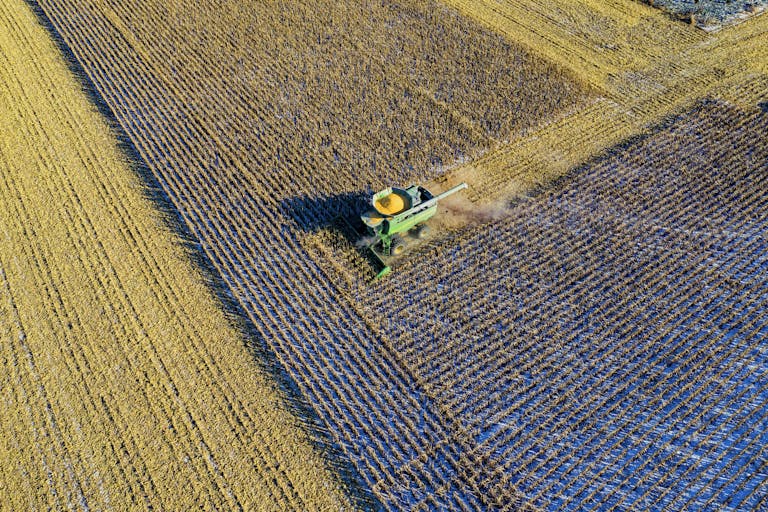
Aerial shot of a harvester working a cornfield in rural Austin, MN during fall season.

Food Security and Systemic Resilience: Preparing for Cascading Risks in Modern Food Systems

Food security is frequently treated as a domestic policy metric: a function of agricultural output, food prices, and household purchasing power. Yet, in an era defined by dense global trade networks and digitally mediated supply chains, national food systems operate as interdependent nodes within a transnational system. Producers, maritime corridors, energy markets and regulatory authorities…

Professor Tim Lang

Professor Tim Lang

Tim Lang is Emeritus Professor of Food Policy at City St George’s, University of London, and founding Director of the Centre for Food Policy established in 1994 as a leading centre for research and education on food system dynamics. His research and scholarship focuses on the intersections of health, environment, politics, and society within modern…

Episode 327: Hypersonic Missiles and Global Strategy: Implications for Hegemony, Arms Control, and Systemic Security with Dr Jacob Parakilas

This episode of the International Risk Podcast explores hypersonic missiles through the lens of global strategy, defense policy, and international security. Host Dominic Bowen interviews Dr. Jacob Parakilas from Rand Europe about what makes hypersonic weapons strategically significant beyond their speed. The International Risk Podcast brings you conversations with global experts, frontline practitioners, and senior decision-makers…

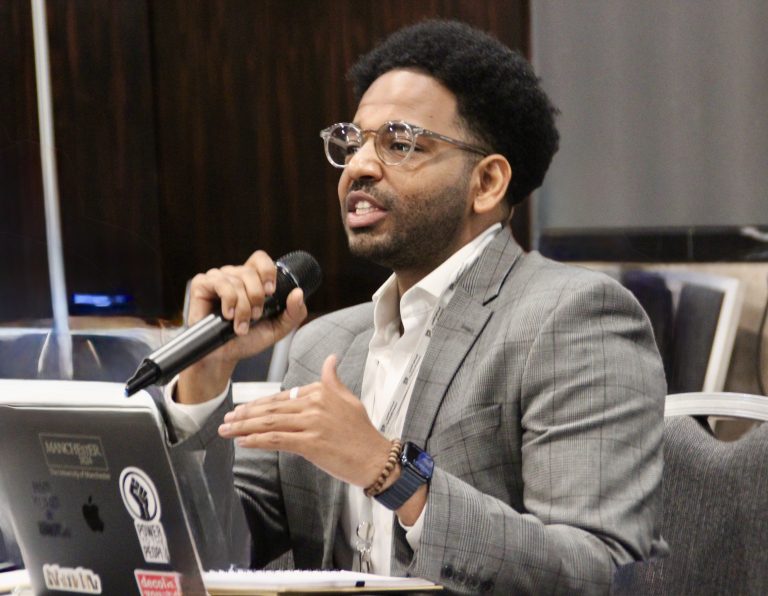
Dr Jacob Parakilas

Dr Jacob Parakilas

Jacob Parakilas is research leader for Defence Strategy, Policy and Capabilities at RAND Europe. Previously, Parakilas worked on the U.S.–UK defence relationship as a member of the State Department’s Political-Military team at the U.S. Embassy in London. He has also lived in Lagos, Nigeria, where he worked as a consultant and wrote a column focused…

Hypersonic Missiles and Global Strategy: Implications for Hegemony, Arms Control, and Systemic Security

Hypersonic Missiles and Global Strategy: Implications for Hegemony, Arms Control, and Systemic Security

Hypersonic missiles are typically defined as a missile which travels at Mach 5 and above for a sustained period of time and is manoeuvrable during its flight within the Earth’s atmosphere. While speed is often the headline feature, it is the combination of velocity, manoeuvrability, and atmospheric flight that distinguishes these systems from traditional ballistic…

Iran Under Pressure: Sanctions, Stagnation, and the Limits of Economic Coercion

Iran Under Pressure: Sanctions, Stagnation, and the Limits of Economic Coercion

Iran has faced more than a decade of sustained economic pressure. Inflation has remained above 40 percent. The rial has experienced repeated episodes of sharp depreciation. Oil exports, once the central pillar of state revenue, have been significantly constrained by sanctions. From the outside, it looks like a system in permanent crisis. Yet despite these…

Episode 326: Iran Under Pressure: Economic Strain, Political Stability, and Regional Risk with Professor Djavad Salehi-Isfahani

This episode with Professor Djavad Salehi-Isfahani examines how prolonged sanctions, inflation, and structural economic stagnation have reshaped Iran’s political economy. We explore how comprehensive sanctions since 2011 constrained oil revenues and fiscal capacity, why inflation and currency depreciation have reinforced one another over time, and how these pressures have affected poverty, middle-class security, and youth prospects. The…