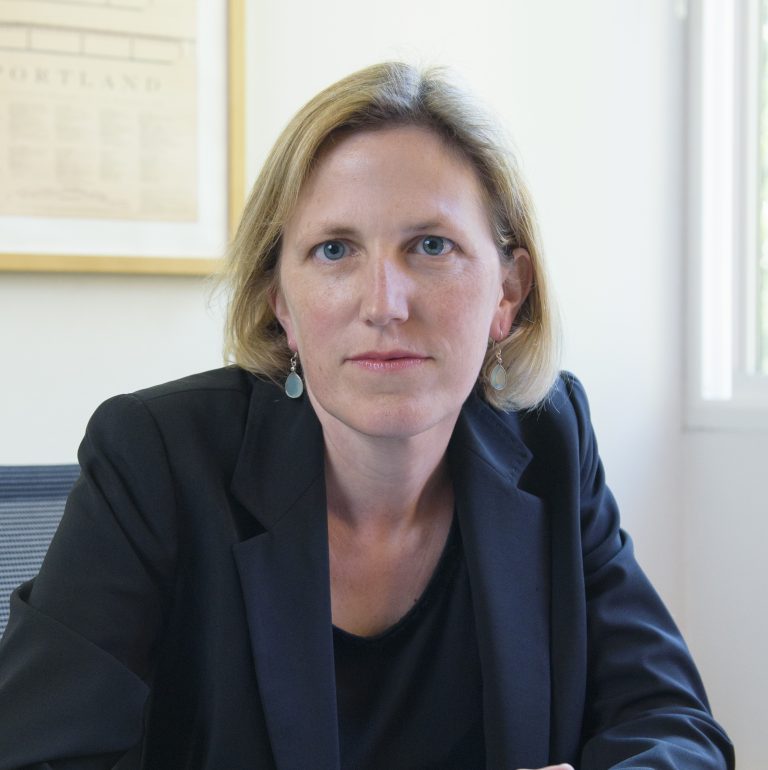
Episode 328: Food Security and Systemic Resilience: National Preparedness in Globally Integrated Food Systems with Professor Tim Lang
In this episode of The International Risk Podcast, Dominic Bowen speaks with Professor Tim Lang about the systemic risks facing global food security and how interdependent global supply chains, energy markets, and trade governance shape national resilience. The discussion highlights how domestic food insecurity is rarely confined within national borders: disruptions in production, logistics, or trade policy can ripple internationally, affecting availability, affordability, and equity. Lang emphasises that in rich countries, food insecurity often remains politically invisible, tied to household purchasing power and reduced to private responsibility.
Find out more about how efficiency-driven “just-in-time” systems prioritise cost reduction over redundancy, leaving food systems exposed to cascading shocks. The discussion considers how export controls, regulatory divergence, and concentrated supply chains redistribute risk rather than contain it, and why national governments remain accountable for outcomes they no longer fully control.
Finally, the episode explores the tension between sovereignty and shared governance, particularly within the European Union, and considers whether existing risk assessment tools are calibrated for systemic disruption rather than isolated supply failures. It concludes with a focus on civil preparedness and strategic exposure: stockpiling, “just-in-case” approaches, and sustainable diets are central to diversifying production and building resilience in the face of climate, geopolitical, and technological pressures on modern food systems.
Tim Lang is Professor Emeritus of Food Policy at City St George’s, University of London, and founding Director of the Centre for Food Policy. His research and scholarship focuses on the intersections of health, environment, politics, and society within modern food systems. Recently, his research has centred on civil food resilience and the preparedness of societies for systemic food shocks. His report Just in Case was published by the UK National Preparedness Commission in February 2025.
The International Risk Podcast brings you conversations with global experts, frontline practitioners, and senior decision-makers who are shaping how we understand and respond to international risk. From geopolitical volatility and organised crime to cybersecurity threats and hybrid warfare, each episode explores the forces transforming our world and what smart leaders must do to navigate them. Whether you’re a board member, policymaker, or risk professional, The International Risk Podcast delivers actionable insights, sharp analysis, and real-world stories that matter.
The International Risk Podcast is sponsored by Conducttr, a realistic crisis exercise platform. Conducttr offers crisis exercising software for corporates, consultants, humanitarian, and defence & security clients. Visit Conducttr to learn more.
Dominic Bowen is the host of The International Risk Podcast and Europe’s leading expert on international risk and crisis management. As Head of Strategic Advisory and Partner at one of Europe’s leading risk management consulting firms, Dominic advises CEOs, boards, and senior executives across the continent on how to prepare for uncertainty and act with intent. He has spent decades working in war zones, advising multinational companies, and supporting Europe’s business leaders. Dominic is the go-to business advisor for leaders navigating risk, crisis, and strategy; trusted for his clarity, calmness under pressure, and ability to turn volatility into competitive advantage. Dominic equips today’s business leaders with the insight and confidence to lead through disruption and deliver sustained strategic advantage.
The International Risk Podcast – Reducing risk by increasing knowledge.
Subscribe for all our updates!
Transcript
00:00
Tim Lang
If you are preparing for shocks, it’s better to start off with a more sustainable, low climate, more diversified, more varied, acceptable system of production and consumption before you go into a shock.
00:15
Elisa Garbil
Welcome back to the International Risk Podcast, where we discuss the latest world news and significant events that impact businesses and organisations worldwide.
00:24
Dominic Bowen
Today’s episode is sponsored by Conducttr. They’re a crisis exercising software that’s built for corporates, consultants, humanitarian teams, and defence and security organisation. It lets you build exercises fast using its intuitive scenario editor and ready to make content. I’ve used Conducttr and I can testify that if you use PowerPoint or Excel still, well it’s time to start looking at Conducttr. If you want your teams to be genuinely ready for the next crisis, then Conducttr is certainly worth a look. And before we start today, I have a quick favour to ask you. If you listen to The International Risk Podcast and you find it useful, please follow and subscribe wherever you are watching and listening today. In return, my commitment to you is simple that every week we will keep raising the bar with better guests, sharper questions and more practical takeaways for you that you can use to make better decisions. And if there is someone you want on the show, tell me. We read all of your comments, and we act on them. Let’s get onto the show.
01:27
Dominic Bowen
Food security is often treated as a national policy failure or success, but it’s also discussed as a question of affordability, about access, and even national supply. But in a globalized food system, no country operates in isolation, and decisions made to stabilize prices to protect farmers or reassure voters can afflict trade flows, reshape production systems and affect food availability thousands of miles away. In today’s episode, we’re going to explore how domestic food insecurity doesn’t just stay within borders and how it can cascade internationally, how it can amplify volatility, deepen inequality, and expose governance gaps in global food systems. Today on The International Risk Podcast, we’re talking with Tim Lang. He’s a Professor Emeritus of Food Policy at the Centre for Food Policy in London, whose research spans everything from nutrition to trade, climate, and global food system resilience. Tim’s going to help us understand how domestic food choices can create global risks and what policymakers might be overlooking today. I’m Dominic Bowen, host of the International Risk Podcast. Thanks for joining us today. Tim, welcome.
02:34
Tim Lang
Thank you, very nice.
02:35
Dominic Bowen
Whereabouts in the world do we find you today?
02:38
Tim Lang
I’m in London, in my home in what we used to call Inner London, where I came for a year, stayed 41 years.
02:45
Dominic Bowen
That’s often the case, isn’t it? Well, Tim, you’ve spent decades exploring how we define and how we measure food insecurity. Before we get into the international dimension, can you help us define what do we actually mean when we talk about domestic food security? I’d be really interested to hear, as you’ve been living there for 41 years, how has the concept evolved over the last few decades and as you’ve been researching it?
03:08
Tim Lang
I’m on record in an academic paper of saying almost food security has become so loose, meaning so many things to so many dimensions, to so many people, to so many contexts, that it’s almost in danger of being meaningless. And yet here we are using it, and I use it. But it does, and I have to always say this, it’s got to got to have a health warning to it. You’ve got to nail down exactly what do you mean? One of the reasons people like me still use it, although we’re critics of it, is because the meaning of all things to all people is plasticity. One moment you can be talking with a prime ministers or the UN system about global trade flows or climate change, knocking out crop capacity to keep on producing as they have done for the last hundreds of years. In the next moment, you’re talking about a family, a household in which there is some food coming into the home, but it’s unequally distributed and the kids get it first and then the man very often, if the woman’s in charge of feeding and distribution in the home, and the woman’s last. It can literally cover that total range, that’s actually what’s useful about it, but it’s also the warning one has to take right at the beginning.
04:19
Dominic Bowen
Now, you’ve argued that food policy sits at this intersection of environment, health and social justice. I wonder at what point does domestic food insecurity stop being purely a national policy challenge and start to generate international consequences? What are the first transmission mechanisms that really turn domestic vulnerability into a cross-border risk?
04:40
Tim Lang
It’s a really important question you’re asking there, Dominic, because the honest answer is very often there is food insecurity. It can be known about, but it doesn’t feature in politics and it doesn’t feature as high up the political agenda. In rich countries like North America, Western Europe, countries like mine, Britain, there are well evidenced and governments will accept that there is roughly 15% of people food insecure.
Its own surveys, its own studies shows that and the assumption is that basically food is a private responsibility or it’s just reduced to the amount of money that they’ve got in the house. If they’re choosing to have a telephone or mobiles or buy a TV or have a car to get to work, well, it’s their problem if they’re not eating adequately. I’m being very stark, but that’s actually what the politics become. They become a sort of blame game.
Where it spills over into top priority politics in the modern world is when there are TV documentaries or exposés of some terrible famine breaking out in some far away place to Western viewers and it becomes something must be done. But what one has to realize in assessing risks in, from, and about food security is that food insecurity is normal. The question is, is it out of sight? Is it being deliberately ignored? Is it being downplayed by the home government or put as a blame on inadequate domestic management. But when it becomes overtly present in a very poor country, then you can’t start blaming consumers because the entire economy is at risk. So the people at the real sharp end, the people with next to nothing, you can’t be surprised if they’re not eating or not eating. So on the one level, food security analysis takes us into really big and serious and very complicated issues. And another level, it’s a really very domestic issue. Have I got enough food? What’s the quality of the food? Do I have access to it? Is it there in the first place or is it just literally not available? And the general rule is that food follows the money. You’d make sure that all populations have adequate amounts of money to be able to afford to buy a health enhancing diet. But it’s much more complicated than that. And we’ve just had four years in which the heavy politics of food security have come to the fore in a big way with the Russian second invasion of modern Ukraine. We’ve had blockade politics, food being turned off, turned on, to a captive population. And actually the biggest example in extremists is in Sudan, where different parts of the Middle East funding the warring factions who are brutally controlling access to food.
07:25
Dominic Bowen
Definitely, Tim. And one of the things you talked about was, is it there? Is it on the shelves? And, of course, the international impact of that. If we look at a very practical level, I know in the in the UK, I was there in 2022 after Russia’s second invasion of Ukraine and the UK was facing shortages of tomatoes due to poor harvests, energy costs, weather, a reliance on Dutch greenhouses after Russia’s invasion. In Sweden last year, we had egg shortages. Part of that was due to bird flu outbreaks around the world and Sweden prioritizing domestic needs over US exports. Are these sort of practical examples of whether it’s tomatoes in the UK, eggs, over the last couple of years, are these just isolated cases or are these the sort of examples that tell us that that there are some fragility in the system?
08:08
Tim Lang
Well, those are good examples. But, to someone in Darfur or someone in Gaza or someone in Ukraine, who cares if you can’t get tomatoes or a few eggs? There is a shock element, and I’m originally a social psychologist, 55 years ago. And I’m really interested in the mass psychology of food in crises and shocks and how do we deal with that? But we don’t know exactly how rich populations react to modern shocks. But the tomato shortage or the egg shortage is an illustration of the flow of foods across what previously were fairly tight borders. You’re in the European Union, if you’re in Sweden, Britain was and it no longer is, but 30% comes from the European Union. Even the bits that are technically produced elsewhere very often come through Rotterdam and then come to Britain. So we’ve developed in the neoliberal period of political economy since mid-1970s, we’ve developed a food trade which has widened the availability and the range and the capacity to source food from places that previously Sweden or Britain would never have dreamt of. So your little examples are what may seem to someone from Sudan trivial examples. Who cares if you can get tomatoes or eggs? You can diversify, you need something else, but they’re actually symbols of the assumptions we built into modern mass culture and also the realities of trade. And so you now get this situation where to a rich country consumer, you can get anything at any time of year. You can seasonality goes because if you can’t get mangoes or tomatoes or seasonal products, strawberries, one time a year, well, the trader will go and get it from the other side of the world. You can get the 12-month-in-the-year strawberry in a British supermarket. So you’re then getting into really interesting domestic politics in which food security/ insecurity can become a player. So in rich societies, there you are, you, a non-food producer, became aware that there were shortages of some things in in Stockholm or in Sweden. There’s a globalizing system which feeds, again, following the main rule, it follows the money. So if rich consumers are in Northern Europe, the food will get to them.
10:31
Dominic Bowen
But there is still that political appeal to food sovereignty and to self-reliance within countries. Is it possible? Can countries really insulate themselves from the global food system without shifting risk elsewhere?
10:43
Tim Lang
No they can’t. Well they can have go and it becomes totalitarian politics. This is what I work on now, having just spent three and a half years working on a huge report for a body in Britain called the National Preparedness Commission. The title gives what it’s about, it’s about is the country prepared for shocks and they asked me to look at food and what’s at stake and what that did was begin to explore this strange modernity of food security for rich economies like ours. Of where people don’t blink to go into a hypermarket where there’s maybe 20-30,000 items for them to choose. That’s a new world for all of us compared to 100 years ago.
11:27
Dominic Bowen
So if governments do use export bans, if they use quotas, if they use tariffs, a term we’re all familiar with today, in order to calm domestic prices and to calm domestic special interest groups, what tells you that this is crossed from a legitimate crisis management tool into something that’s actually going to destabilise the global system and destabilise people’s food supply far away? Food protectionism is sold as stability, but sometimes, of course, it’s more of a risk export strategy. Can you share some examples or at least one example of where you’ve seen this occur and what concerns you about it?
12:01
Tim Lang
Well, let me be theoretical for a moment and then re-ask the question if we’ve lost the plot. There is a long economic argument about free trade and protectionism. That sort of thinking cuts through what we’re talking about, but when we now look at risks, which is what you’re asking about, risk has tended to be seen as risk to the company. And in the last 50 years, the entire movement of risk analysis and risk advice and risk control that’s emerged has emerged on the back of big companies who are nervous about the ground being pulled from under their feet. And secondly, it’s emerged from the acceleration of international trade. People like me are arguing that that corporate risk attention does not cover societal risk attention and we have to say who’s doing this risk assessment what are the assumptions what are the framing assumptions in how they do a risk assessment of tomato supply or egg supply. And the response tends to be, well, we have got a bit of risk if we keep on getting our tomatoes long distance from this place. Let’s therefore try and encourage another part of the world to start growing for us, or just switch suppliers or diversify suppliers. So within market economics, dominated by so-called free market thinking, there has been an approach to risk that in my view, and it’s a hard criticism here, has seriously underestimated systemic risks. We’re now actually in that situation where people are waking up to the enormity of climate change risk, geopolitical risks, the possibility of 30,000 Houthis blockading shipping in the Middle East and suddenly it transforms costs and changes the risks. People like me are saying, in my report for our National Preparedness Commission in Britain said it’s time we woke up. That modern food system of consumerism and extraordinary a technological underpinning is actually itself now a risk.
14:16
Dominic Bowen
I like your question about who is doing the risk assessment of our food systems and I’m going to ask you about that. But I’ll just take the moment to remind our listeners that if you’d like to watch your podcasts, The International Risk Podcast is always available on YouTube, so please go to YouTube and search for The International Risk Podcast and please do subscribe and like our content. That really is critical for our success. But Tim, as we’ve been discussing, food systems really are globally integrated, yet policymaking remains largely national.
14:46
Tim Lang
You might think you’ve got a nation state that controls, but it’s actually negotiating, doing trade deals. In the European Union, we’ve got to be thinking that our networks and trade flows within the European Union make Sweden more vulnerable if some of those are broken, if we become reliant on that. So the question you’re asking is having to address a multi-level governance world, where Sweden is in the EU, how much should Sweden try to grow and have available for its population when it’s in a market where in theory Sweden cannot blockade foods from coming from elsewhere in the European Union. The European Union is very clear that national defense is a national concern. So one of my arguments in my report, was to say, we’ve got to talk about food defense. Sweden, in its food preparedness for a new era, said we’ve got to start stockpiling food again. A risk can become amplified by the very actions of the people in whose name everything operates. Suddenly they find it’s not working for what I want. I want to be able to afford food and get it and for it to be there. So Sweden has said we’re going to create stockpiles and they’re going to be decentralized. This is totally reversing the model of the last 70 years, which was centralization, efficiency, scale, no storage, just in time logistics. So when you go to a supermarket and you pay for the food you think oh, it’s adding up the bill. It is, but it’s reordering the food. And it’s a constant, brilliant, system of logistics. Why that matters, that’s big risk approach of focus is because the logistic systems is entirely satellite cable and software based. It’s knockoutable.
16:30
Dominic Bowen
And so when you’re speaking with politicians and policy makers around Europe, what’s the one thing that they consistently keep getting wrong when it comes to understanding food policy today?
16:40
Tim Lang
That’s a great question. I’ll be very frank because I’m a policy analyst and understand food systems. Their reflex is just to say, leave it to the supermarkets. We saw that in COVID. Governments acted, and mostly they came to food as an afterthought. They just assumed food would flow. I’ll give an example. I know, and indeed I interviewed people for my report and they actually said what they thought really was the case, where were the risks and where was security and so on. The reflex coming from them was exactly what I had concluded too, which is that the reflex was that market dynamics would just operate in all circumstances. It was a robust system, there was nothing to worry about. And the truth is the worries are creeping up. Whether we’re looking at climate change and how one moment drought, one moment floods, whether trade can be disrupted, whether ransomware knocked out the whole of Spain and Portugal’s banking system. They are saying, okay, if the cable between us and the mainland was broken because its electricity comes under the sea to them, well, we’ve got six months of diesel. But when the supermarket went down, it’s a just-in-time system. There was no storage. So we’ve got to think that through a bit. People didn’t want to, governments didn’t want to have to think about food systems. But the moment you leave the rich, complacent West, and go to the developing world, they say, of course we’ve got to do that.
You go to China, China stockpiles food. Of the rich world, only Switzerland, landlocked Switzerland, stockpiles three months of food and the free traders can’t bear, they say, we’re wasting our money. Why are we having these expensive warehousing? Who’s making the money from that? Good question. But then if the food trade goes down or as wobbles or as disrupted, suddenly you think, well, that was foresight. So there’s a balance going on there that any householder would understand. But at the international level, this really shakes up the post-Second World War arguments.
18:37
Dominic Bowen
Now, one of the important things that’s often being discussed and is very mainstream right now is around sustainable diets and the sustainable diets agenda. This is all around minimal processing and prioritising unprocessed foods, about waste reduction, cutting food loss, using sustainable packaging and I think most people can get behind that quite quickly and these diets generally address malnutrition, obesity, climate change by optimising resources and respecting ecosystems. That’s all green lights, lots of ticks, we’re all behind that. But sometimes these sustainable diet recommendations collide with real world constraints around income, culture, supply chains, farm politics. Just briefly, as we as we wrap up the conversation today, Tim, can you tell us what does good implementation actually look like if we want to be pursuing sustainable diets?
19:21
Tim Lang
Sustainable diets as an argument and as a goal has actually eluded us a little bit. There’s no clarity, there’s no consistency from markets about that. The reason that it’s complicated as well, it’s not just an issue of that sort of politics, it’s an issue of can you have a sustainable diet if it’s designed around market cornucopia? Because really sustainability is about the relationship between us as humans and ecosystems. The world in the last 70, 80 years, my lifetime, post-Second World War reconstruction, um has absolutely exploded the production of food. There’s an overproduction of food, not under, there’s maldistribution but an overproduction of food. But the key thing, where sustainable diets argument is so important is because it’s what is that production? Is it appropriate? Is it the best use of land? Is it providing the infrastructure of diversity? That’s the key word. Diversity of supply, diversity of diet is something that we’ve tended not to take seriously enough and the sustainability of diet and, indeed, sustainability of food production systems is now a critical issue for resilience. If you are preparing for shocks, it’s better to start off with a more sustainable, low climate, more diversified, more varied, acceptable system of production and consumption before you go into a shock. And risk management, risk assessment and preparing populations for resilience, that is a new agenda that slightly reverses, let me be frank, reverses the complacency that we’ve cracked it.
It’s all okay. We know how to grow food. It’s okay. It isn’t. Food’s the biggest user of water, the biggest polluter, the biggest cause of premature deaths in the world now. So we have some big thinking to do. What’s a good food system for the mid 21st century? It’s not to carry on doing what we’ve done the last 70 years. We’ve got to recalibrate it, realign it.
21:27
Dominic Bowen
Well, thanks for explaining that to us, Tim. It’s certainly very complicated, very interesting, and certainly has a big impact on our international risk. Thank you very much for joining us today.
21:36
Tim Lang
It’s a pleasure, great pleasure. I’m sorry it gets into such heavy stuff, but we can understand it. The good thing is there are lots of good people, lots of good organisations, beginning to be aware of this very stark challenge that people like me are posing. And if your listeners are interested, you can download my big report and a short version of it. It’s called Just In Case. So I’m arguing we need to shift from just-in-time approach to food to just-in-case approach to food.
22:06
Dominic Bowen
And we’ll link to that below in the show notes. Well, that was a really great conversation with Tim Lang. He’s the Professor Emeritus of Food Policy, and I really appreciated hearing his thoughts on food security and of course the international risks. Today’s podcast was produced and coordinated by Ella Burden. I’m Dominic Bowen, your host. Thanks very much for listening to the International Risk Podcast today. We’ll speak to you again in the next couple of days.
22:27
Elisa Garbil
Thank you for listening to this episode of The International Risk Podcast. For more interviews and articles visit theinternationalriskpodcast.com. Follow us on LinkedIn, BlueSky and Instagram for the latest updates and to ask your questions to our host Dominic Bowen. See you next time.