
Episode 373: When Taboos Break: Social Media, Norm Erosion, and the Path from Speech to Political Violence with Erez Levin
This episode hosts Erez Levin to examine the shifting boundaries of acceptable public speech and what this reveals about the health of modern democratic societies. The conversation explores his central argument that liberal democracies depend not only on formal legal frameworks, but also on informal social guardrails, shared moral taboos that limit the public acceptability of overt hateful bigotry and dehumanising rhetoric. As these guardrails weaken in fragmented and algorithmically driven information environments, previously marginal forms of rhetoric can become more visible, more tolerated, and in some cases gradually normalised within mainstream political discourse.
The episode examines how digital platforms and engagement-driven media systems contribute to this process by amplifying emotionally charged content and accelerating the spread of polarising narratives. We discuss how this can distort perceptions of consensus, create a “collective illusion” about how widely extreme views are held, and slowly shift the boundaries of what is considered socially acceptable. A key distinction throughout the conversation is between legitimate political disagreement, which is essential to democratic life, and eliminationist or dehumanising rhetoric, which frames entire groups as illegitimate and risks undermining the conditions required for pluralistic society.
The discussion also traces how social taboos form, stabilise, and erode over time, drawing on historical examples of how societies have marginalised organised hate movements through combinations of social stigma, institutional pressure, and economic consequence. We explore how these informal enforcement mechanisms operate in modern digital environments, where visibility is decoupled from legitimacy, and where harmful rhetoric can circulate without consistent or immediate social costs, potentially weakening the deterrent effect that once reinforced such norms.
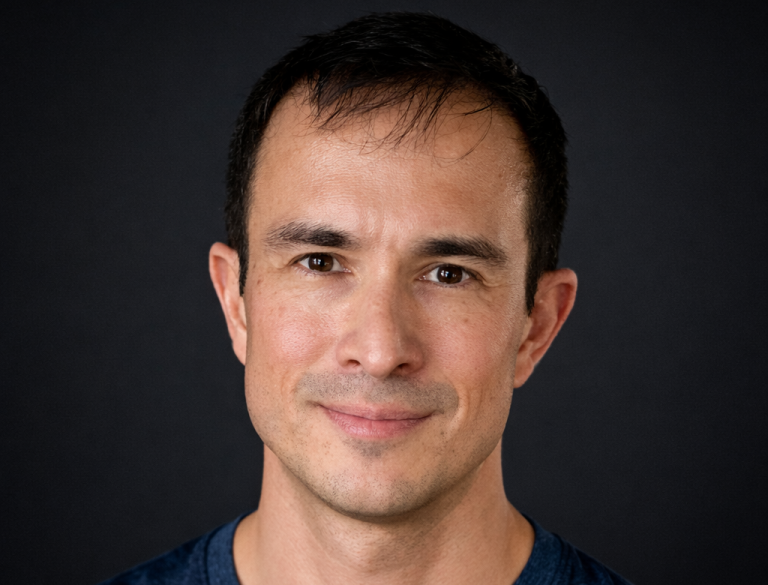
Erez Levin is an advertising technologist and former Google employee whose work focuses on the intersection of digital media systems, online advertising incentives, and the health of public discourse. Through his “Holding the Line” project and writing on Substack, he examines how societies can maintain democratic resilience by reinforcing shared norms that constrain the social acceptability of overt hateful bigotry, while preserving space for open political debate.
The International Risk Podcast brings you conversations with global experts, frontline practitioners, and senior decision-makers who are shaping how we understand and respond to international risk. From geopolitical instability and organised crime to cybersecurity threats and hybrid warfare, each episode explores the forces transforming our world and what smart leaders must do to navigate them. Whether you’re a board member, policymaker, or risk professional, The International Risk Podcast delivers actionable insights, sharp analysis, and real-world stories that matter.
Dominic Bowen is the host of The International Risk Podcast and Europe’s leading expert on international risk and crisis management. As Head of Strategic Advisory and Partner at one of Europe’s leading risk management consulting firms, Dominic advises CEOs, boards, and senior executives across the continent on how to prepare for uncertainty and act with intent. He has spent decades working in war zones, advising multinational companies, and supporting Europe’s business leaders. Dominic is the go-to business advisor for leaders navigating risk, crisis, and strategy; trusted for his clarity, calmness under pressure, and ability to turn volatility into competitive advantage. Dominic equips today’s business leaders with the insight and confidence to lead through disruption and deliver sustained strategic advantage.
Subscribe for all our updates!
Transcript
Before we start today, I have a quick favour to ask you. If you listen to The International Risk Podcast and you find it useful, please follow and subscribe wherever you are watching and listening today. In return, my commitment to you is simple that every week we will keep raising the bar with better guests, sharper questions and more practical takeaways for you that you can use to make better decisions. And if there is someone you want on the show, tell me. We read all of your comments, and we act on them. Let’s get onto the show.
00:51
Dominic Bowen
Across much of today’s digital and political landscape, the boundaries that once constrained acceptable speech are really shifting. Now, public discourse is progressively shaped by the rapid information flows, by these algorithms, and how they amplify different content for different people and, of course, the intensifying political polarisation right around the world. Within this environment, concerns are growing that the rhetoric that was once considered socially unacceptable is becoming more visible.
It’s becoming more tolerated and it’s becoming much more common in mainstream political commentators and in mainstream political communication. I’m Dominic Bowen and I’m host of the International Risk Podcast, where we unpack the topics that really matter. In today’s show, we’re joined by Erez Levin and he’s founder of Holding the Line. He’s also worked at Google for over a decade previously and his work today examines the erosion of social taboos about hate speech and the conditions under which extremist narratives can gain broader social acceptance. Now, his central argument is that democracies rely not only on legal frameworks, but also on informal social guardrails. I think this is going to be a really interesting conversation today.
Erez, welcome to the International Risk Podcast.
01:56
Erez Levin
Thanks. Great to be here.
01:57
Dominic Bowen
So tell us, where are you today?
01:59
Erez Levin
I’m in my house in New Jersey.
02:01
Dominic Bowen
Lovely. Fantastic. Well, great to speak with you. I’m looking forward to our conversation and your work. You’ve got some really interesting work online, and we’ll link to some of it in the show notes below. But your central argument, if I understand it correctly, is that societies have guardrails, and these guardrails are losing what have often been called moral taboos or universal norms, especially around bigotry, and that’s creating conditions where what we would call extremist rhetoric is being accepted as much less extreme.
We’re seeing political violence, we’re seeing social fragmentation, and this is becoming increasingly normalised. So with that said, I’d love to hear what motivates you every day — what keeps you pounding the pavement on this topic?
02:34
Erez Levin
I’d say, going back a little bit, I always enjoyed doing good wherever I spotted it. It’s where I got the most reward for myself. A number of years ago, I discovered that I unintentionally became what I’d later learn is called a “norm entrepreneur”. I like changing norms when I could. I would discover something that I thought would help people, try to share that information with them, and when I found opportunities to actually change norms for the betterment of society, I liked to do that.
So the first example I’ll share is one from when I was working at Google. At the time, very few men were taking their full paternity leave. This was before I even had my first child. I discovered all of the benefits — not just for men and children, but for women, for gender equality, for all of these wider societal benefits — if men took their paternity leave.
I realised it was simply a matter of it not being a norm. Men wanted to take it. Google permitted it. They gave them the time, but it just hadn’t become a norm. So I committed myself to making it the norm, and it became the default.
So I realised, wow, I can have really big impact, not just within this gigantic organisation, but it spreads outwards. Then I started looking for other norm-changing opportunities.
This is the latest one, where I believe there is a widespread view that overt hateful bigotry is socially unacceptable, but we’re seeing too many examples of people violating those taboos and not being meaningfully held accountable for it. That is eroding the norm, eroding the taboo, and that has tremendous risks for society.
04:13
Dominic Bowen
Yeah, that’s a fantastic point. I’ve never heard that term “norm entrepreneur” before, but I love it. I had dinner with a good friend last night. She’s gone from the corporate sector back into government, and she’s only been there a few weeks and is already pulling her hair out about the energy and workload. Coming from the corporate sector, she’s used to working hard and having clear goals. Now she’s working in a government bureaucracy where the standards are, in her view, a little lower.
And I said to her, why can’t you just relax? She said, that’s what everyone keeps telling me to do. She said, I don’t want to relax. I want to achieve good things. Do you think there’s something wrong with us, that we can’t just see something that’s wrong and leave it alone? We’ve got to be breaking that shell all the time.
She didn’t accept that. She said, no, that’s a good thing — we’ve got to keep doing it.
But I wonder, when we talk about normalisation, and when we talk about hate speech and extremism and political violence — these are terms that are often used interchangeably. Certainly we saw in Trump’s first term his campaigning on breaking norms, “draining the swamp”. He started using presidential language differently, and we’ve all seen the memes comparing President Obama announcing the death of a senior terrorist versus Trump doing the same.
We’ve seen that shift in language, not just in the US, but in UK politics as well, and dramatic changes in government leadership more broadly. We saw it in Hungary just a few weeks ago, with an entirely new political class emerging almost overnight.
So I wonder if these definitions really matter when we talk about hate, extremism, and normalisation. Do they matter?
05:16
Erez Levin
Oh, very much so. It’s unfortunate — a lot of these terms have been abused so much that they’ve become so vague they often become meaningless. I’m very specific with my language, and honestly I don’t even have it perfect, because I want to be as condensed as possible but also as comprehensive and precise.
I’d say the shortest way of putting this is that we must not accept taboo erosion.
So to be very clear, we’re not talking about subtle or coded eliminationist bigotry. By “eliminationist”, I mean the view that you want to see a whole group of people harmed — not just a degree of racial resentment, but a desire for people to be discriminated against, expelled from a country, denied equal rights, or actively harmed.
That is the line of the most extreme hatred that we must not allow — hate speech and things like that. Those are sometimes really bad, right? Often very bad, sometimes less so. We should discourage those things. But let’s not bucket them together with eliminationist bigotry, which is so far beyond the pale that we really must “hold the line” on it.
06:21
Dominic Bowen
I think that’s always interesting, but I think it’s increasingly interesting. I’m really fortunate — I get to travel around the world.
I was in Australia just after the Bondi terrorist attack and listening to the way a lot of what you would generally label middle-class, politically centrist people were talking about Muslims at large. I remember sitting down at breakfast, lunch and dinner with very — what you would safely call reasonable people, nice people, well-educated people — who were making blanket statements. And you think, well, hold on — is that fair?
Now, what happened in Bondi was atrocious. It was terrible. And for listeners who may not remember, that was the killing of two Indian-born Muslim father and son.
But should you write off an entire — not even a race, an entire religion — based on the actions of two people? And then you have this debate again with otherwise reasonable people.
But then the question becomes: how do you enter these conversations when the universal taboos — and these are conversations I would never have had in Australia before, but now they seem much more common — are shifting?
And it’s not just Australia. I see this all around the world.
07:14
Erez Levin
Oh yeah, we have to have these conversations. We’ve had too many years of self-censorship and people refusing to talk about these subjects.
We need to talk about them, and we need to understand there is nuance — and have empathy, and understand where people are coming from — while also recognising that there is still a line that cannot be crossed.
One of the things you’re probably pointing to is that there’s always going to be some tribalism, some racial resentment, some stereotyping of other groups. Those things can be harmful — they can be stereotypical, bigoted, even dehumanising. And dehumanisation can exist on a spectrum, but it doesn’t always reach the point of “they are all terrible people and should be killed”.
We need to think about this as a range, and about permission structures — and the slippery slope that can exist within them.
The example you gave, with Bondi and criticism of the Muslim community afterwards, fits into this. I have a framework for what I call harmful speech. When someone says something, people are harmed by it — everyone is going to be offended by something, and it can be harmful. I’m not saying it isn’t harmful, but we have to assess degrees of harm in a way that is patient, empathetic, and willing to engage with nuance — and also willing to give people a chance to clarify or apologise. It’s not just about one isolated statement.
What you’re really pointing to is the difference between observation and inherent traits assigned to people or groups.
In the US, it became taboo — almost faux pas — to talk about crime rates in certain populations or cities, because people would immediately interpret that as bigotry. We need to be able to talk about differences between populations without that automatically being framed as prejudice.
And this connects to something broader: societies and communities are increasingly defined by what they tolerate.
My view is in favour of big tents — but big tents still require moral guardrails. If you allow deeply immoral or dehumanising ideas to sit unchallenged, they begin to define the wider group by association.
And so this is where the speech question becomes critical. In my view, what needs to become taboo is not just violence itself, but the endorsement of violence.
9:50
Dominic Bowen
Yeah, I think that’s a really solid point — there’s no use waiting until violence has occurred and then saying violence is bad, when you’ve already sat by listening to someone advocating for that violence.
But you also talked about questioning. Now, I was that kid at school who was always asking teachers a hundred questions, and I still do it today — whether it’s someone I’ve just met or people I’ve known for a long time.
10:07
Erez Levin
That’s why you’re a podcast host.
10:08
Dominic Bowen
That’s why I’m a podcaster. It’s a great excuse to ask people questions every day.
But I remember years ago, I was working in Indigenous programs back in Australia, and I can’t even do justice to the statistics — the disproportionate health outcomes, criminal justice outcomes, education outcomes for Indigenous populations. It’s shocking. We’ve failed.
Different governments, the pendulum swinging from the far right to the far left — they haven’t found the right support, guidance, or funding. Whatever the right solution is, it still hasn’t been found.
I was working in those programs and listening to Indigenous speakers. Some of them said things that were quite controversial, but I thought, this needs to be tried — I think what they’re saying has value.
Afterwards, I went up to one of them and said, “I really liked what you said. I thought it was really interesting. I’m not sure if it’s the right solution, but I think we should at least be talking about it. How could you say that? No one in the room challenged you or reacted negatively.”
And he cut me off and said, “You can’t, mate. You can’t. You’re white, you’re heterosexual, you’ve got no visible disabilities. You look healthy, middle to upper class. You can’t ask those questions. I can — I’m Indigenous, so I can question Indigenous issues.”
That really stayed with me. I thought, yeah, he’s right in that sense — and that’s valid.
And over the years I’ve found myself in situations where I’ve wanted to question something and realised it would be inappropriate — not because of the question itself, but because of who I am, and what I visibly represent. Depending on the framing, it can come across in different ways.
So how do we have these conversations in a way that is respectful and safe — where curiosity isn’t mistaken for hate, or for trying to trap someone, but is genuinely about understanding why something is happening, or why a person or group has acted in a certain way?
11:41
Erez Levin
Yeah. So after October 7, I read a wonderful book called The Canceling of the American Mind — one of the co-authors of The Coddling of the American Mind. It analyses cancel culture, and it was a really eye-opening book.
To me, the conclusion was that what we saw on college campuses — people celebrating October 7 and other taboos we’ve seen since — the root cause was cancel culture leading to self-censorship.
I can connect that to my own experience. I worked at Google for a long time. Google was generally fairly well run, with good policies and practices — not perfect by any means.
As you can imagine, Google leaned left politically and had a lot of progressive employees, so DEI was a big part of the organisation. I think we did it relatively thoughtfully compared to what I’ve heard elsewhere, but it still had flaws — and some of those flaws, while they seemed small, had massive effects.
This is where self-censorship comes in. There were times during DEI trainings where I heard things and thought, “That sounds very discriminatory — almost like reverse racism.” But I didn’t speak up, because I was worried about being accused of being racist or a bigot, or being socially shunned for challenging the orthodoxy.
What I realised is that I needed to stop self-censoring. Fortunately, I had built a strong reputation as someone acting in good faith — advocating for things like paternity leave — so I was eventually able to speak more openly, even in professional settings and on LinkedIn.
When I challenged aspects of DEI orthodoxy, I tried to be clear: I can hold two things at once. One, that certain groups have been marginalised and we need more equity. But two, that the solutions might sometimes create new forms of imbalance or resentment elsewhere.
When I did that, I felt like I was breaking a taboo — and allowing others to realise they could say similar things without immediately being “cancelled”.
That’s generally how I approach it. I don’t know the exact example you’re referring to, but in these situations you do need a degree of throat-clearing. You don’t just repeat the exact framing someone else used. You start by acknowledging your position — saying, “I recognise how this might sound coming from me,” and “I’m coming at this in good faith.”
The point is not to impose a view, but to open space for discussion.
Because the alternative — self-censorship — doesn’t work. It allows bad ideas to circulate unchallenged.
14:20
Dominic Bowen
Yeah, I think that’s important. And, you know, the book you referenced, The Canceling of the American Mind, they talk about that dysfunctional strategy. And I really like that because I think, you know, people ask me about cancel culture and I’ve said off the record — which I guess I’m saying on the record now — I’ve always thought cancel culture is stupid.
And I think my understanding of the book’s thesis is that it’s used by both the left and the right to actually destroy livelihoods and platforms instead of engaging in conversation.
And when I look at many debates, we all heard about Roe versus Wade a couple of years ago. And when you look at it from outside America, you could hear people on the right talking about the right to life of the unborn child, or the right to life of the child. And I think most people, if you hear “do children have rights?” or “should we do everything we can to protect the rights of a child?”, everyone would go, yeah, totally, 100%.
And then the left was saying we should be looking after women’s health, women’s rights. And again, you’d go, yeah, of course, I’m 100% behind that idea. And you could hear both arguments, and both arguments were valid — but they weren’t talking to each other, they were talking at each other.
And it was such a, I think, such a lost opportunity to actually engage in meaningful debate and discussion that might have led to better health outcomes for children, for women, for families at large.
15:41
Erez Levin
Yeah, I think that’s a symptom of our two-party political system, which I’ve been critical of for a long time, and also just being involved in some of the initiatives to try to break that — not just the gridlock, but also this idea that we always have to be in opposition to each other without looking for compromise.
15:55
Dominic Bowen
Absolutely. And I wonder how taboos emerge within societies. You mentioned before tribalism, and of course we’ve got culture, institutions — sometimes academic institutions, sometimes workplaces, sometimes football clubs, churches, mosques, synagogues.
Often there’s a massive deep history that’s driven these taboos. But then we see yesterday’s taboos become acceptable today. How does that happen? What’s the process?
16:19
Erez Levin
It changes a lot, right, depending on which taboo we’re talking about. And so if we narrow down to these, I think it’s most helpful. If you think about, I don’t know, asking a woman her age — was that always taboo? There are these conventional taboos.
But when I talk about moral taboos, I mean things that we as a society — and I’m talking mainly about liberal democracies, the West — see as core moral boundaries. I think about liberty and equality. Those are the two. Anything that violates those core values violates what I’d call the universal moral framework embedded in our systems.
And how these taboos form is also important, not just how they erode. If you think about the United States, we had slavery, and then we had racism long after slavery — including Jim Crow and structural discrimination well into the civil rights era.
And it was really the civil rights movement that held up a mirror to society and forced a reckoning with those contradictions, re-establishing a taboo against that kind of exclusionary, eliminationist bigotry. That didn’t eliminate prejudice entirely — certainly not casual bigotry — but it did push it to the margins.
Institutions reinforced that shift too. Companies introduced anti-discrimination policies. Law evolved. Cultural expectations shifted.
That’s how the taboo was maintained: not only through law, but through consistent social cost.
My concern is that we are now seeing erosion of that mechanism. Every time eliminationist bigotry is expressed without consequence, it signals that the boundary is weaker than assumed. And over time, that shifts perception — both among those who oppose it and those who might be drawn toward it.
18:24
Dominic Bowen
Yeah, that’s really interesting. And I’d like to unpack that “hate pays” with you. But I’ll just take a moment, Erez, to remind our listeners that if you like to watch your podcast, the International Risk Podcast is always available on YouTube. So please do go to YouTube and search for the International Risk Podcast and please subscribe to our content. That really is so important for our success.
Now, Erez, you’ve referenced the marginalisation of different groups and plenty of historical examples. And I’m wondering about the mechanisms like social stigma, having to wear masks even if you’re in the KKK, and institutional pressure and sometimes economic exclusion, you talked about people losing their jobs, and the way communities have operated in the past versus the ways communities are operating today.
And I’m thinking in particular about the digital environment, where so much occurs online. Even when we have dinner with friends and we go out, how often does the conversation go back to, “oh, I saw this thing on social media last night,” or “I saw this on TikTok.” Even when we’re having real-world interactions, we’re still talking about social media.
So I’m wondering if you think that the digital environment has been a big factor in changing the effectiveness of managing these taboos and keeping them into a level that most of us would say is within guardrails and safe?
19:26
Erez Levin
Online provides a distortion field of sorts. Things feel more normalised than they actually are, right? When someone sees an online post that is crazy bigoted, radical, and it has 100,000 likes, that’s a signal — wow, 100,000 people believe in this thing I thought before no one would believe.
And of course, likes being anonymous, that’s a huge risk. I understand there are reasons for it, but huge concerns there — especially when you don’t know if they’re coming from international sources or bots. But 100,000 still feels like a lot of people. So there’s a massive distortion field from that.
Another lens is people talking about online not being real life. They’ve said that for a long time. You go out into the real world, and especially if you don’t live in a big city, you’re not going to see radical stuff. And even in cities, it’s a tiny fraction of people.
And when somebody is typing online, producing content specifically for online, it’s also not real life. Sometimes it’s performance, it’s theatre, they’re monetising it.
What I do think is important is that people are now documenting things that are happening in the real world and putting them online, not just in the news but in social media. And that is real life. Now is that everywhere? No. There’s a magnifying glass on things that are newsworthy and click-worthy, but it is an indicator that those things are happening.
And so what we’re seeing is people testing those guardrails, those boundaries, and if they go to that other side but they’re still able to be part of our polite society, that is tremendously dangerous.
21:06
Dominic Bowen
I’m wondering where so much of the conversation now occurs in digital environments and it’s spreading so often without context. And I think it’s great that we’re able to document so much more, but so often we see these snippets of videos and you’re like, what happened beforehand? We’ve all seen examples of that where you wish you saw what happened before or after as well.
And of course, as we’ve just discussed, social media platforms have really changed that dynamic of what’s normal. And I agree with you, it has accelerated that weakening of taboos.
But I wonder, going back to the protest, is social media simply exposing societal fractures that already existed that people were just too afraid to say? And if that’s the case, isn’t it maybe healthy to get those out there in the open? Or is that encouraging extremism and racism? How should we be thinking about this?
21:48
Erez Levin
Yeah, I see it as a self-perpetuating tribal hatred. It’s both a symptom and a cause. And so if we don’t police it, it becomes more normal. People will be inspired to follow because, like I said before, hatred pays. There are social benefits that people get — clicks, likes, backslaps — and they also don’t get ostracized.
And so that, to me, is that critical point on incentives.
22:16
Dominic Bowen
Yeah, I think that’s really important. And a key part of your debate is that relationship between language and action. Now, I remember when I was a little boy, you know, you’d get into a verbal fight with someone in the schoolyard. I don’t know if this is an Australian thing or if this is all around the world, but the teachers would say to you, “sticks and stones will break your bones, but names will never hurt you.” And it was something you’d say back to kids in the schoolyard.
But I’m wondering now that we’re all adults and we’re looking at where there is very real world political violence — there’s obviously conflicts in Iran, there’s conflicts in Sudan, and we’ve seen conflicts in the street — we’re seeing hate speech, we’re seeing violence against different communities around the world.
What evidence exists that hate speech actually leads to or is a precursor of or encourages real world political violence?
23:07
Erez Levin
Oh, there’s a lot of literature about this. Recently I found a study in psychological research — this is proven — where dehumanization specifically causes people’s brains to react differently when they see harm befalling others. They become almost immune. That dehumanization makes you not feel the humanity of another person. And so torture and political violence become more psychologically acceptable, and then more socially acceptable.
So there is a clear path. I think about it as from calling someone a bigot to a bullet — there is a clear pathway. And I talk about moral hyperinflation. A lot of people say if you call somebody a Nazi and they believe it, there’s a responsibility to stop an actual Nazi.
So there are real risks from hyper-inflated language and dehumanization, which create permission structures for actual violence — for somebody to pick up a weapon and attack someone.
24:10
Dominic Bowen
And one of the things I really wonder — now certainly picking up from what you’ve just said about workplace violence — but you often talk about the dynamic and the risks that this creates for businesses as well. Now, I think most companies can be exposed to a variety of areas around reputation damage, there’s workforce polarization, keeping in mind our employees are also consumers, they’re also members of society.
There’s, of course, consumer backlash. We spoke about cancel culture earlier on. And then, of course, instability in the societies where we’re trying to sell our products, where we’re trying to recruit the best talent is not good for business. Where do you see the biggest risks that business leaders should be considering, and what can they be doing about it?
24:46
Erez Levin
There’s probably different markers. I think a lot of companies have policies against discrimination, against creating a hostile work environment.
Most important to me is just enforcing those as early as possible. That’s not to say the strictest punishments, but to make it really clear that things that are even hinting, that are making people really uncomfortable in a way — it doesn’t matter if you feel justified in it — that can create a really tense environment.
At Google, they did some things right and some things wrong or not enough, and sending those clear signals about what is allowed or not allowed and actually having consequences. To me, the number one marker of successful teams at Google was psychological safety.
When discrimination, even in a more subtle way, is permitted, when you think there are people within the company that might hate you for the group that you’re in, that creates not just physical feelings of safety, but the psychological safety gets shattered.
That’s something companies really need to be mindful of. I think it’s a zero tolerance at a certain level.
But there’s also a correcting mechanism — bringing people back and helping them understand that these behaviors and beliefs can cause real harm internally and need to be rooted out.
26:09
Dominic Bowen
And what’s the balance? How do you do that? It was interesting just in the New York Times today, there was a story about after the assassination and murder of Charlie Kirk — there were quite a few people who were posting things on their personal Twitter, Instagram, and Facebook going, “if you’re sad about the death of Charlie Kirk, then we can’t be friends.”
And then a couple of universities and businesses let these people go. They said that condoning the murder of someone, whether you agree with their political beliefs or not, is not appropriate for our workplace. And now they’re terminated.
Those cases have gone to court and many people have received compensation and been reinstated into their workforce. So how should employees be tackling this?
26:46
Erez Levin
So actually, the Charlie Kirk’s assassination and the responses to the chain reaction of responses is what inspired me to pursue this project, actually, because I was doing this sort of casually before.
So I’ll explain why. When he died, when he was killed, there were three types of responses that I think we all saw online.
There were people that were remorseful, the vast majority of people — whether they knew him or liked him or not, they were just sad. This is a sad event that happened.
There were people that were remorseless, a very small group, but people that were remorseless. And I saw those people. And I think you just named a quote — they just refused and they had to make it clear that they didn’t care that he was dead or even that he was killed.
And then there was a very small group that were rejoicers. These are people that were actually celebrating that he was murdered.
And what was really interesting was that night, somebody set up a website — I think it was called something like charlieskillers.com — the people that were big fans of Charlie’s, and they tried to dox and get all of these people fired in the remorseless and rejoicer categories.
And what was really interesting is that, by and large, what I saw in many examples, the people that were remorseless did not get fired from their jobs. The people that were rejoicing did get fired from their jobs. And that’s exactly what should happen.
But this universal sense — society knew where the line was. Celebrating, endorsing political violence for speech is a no-no. That is just something that no employer should be comfortable having in their business. That person is a risk to their business because their fellow employees are saying, “I don’t feel comfortable — this is a person that thinks extrajudicial murder is okay.”
Versus if somebody just said, “you know what, he was a jerk, I don’t feel bad when jerks are killed, he talked about X, Y, and Z so I don’t feel bad,” the employer is like, “that’s crass, I wish you didn’t say that, it looks bad on me, but I’m not going to fire you for that.”
The name taboo is the word I sort of latched onto. This norm entrepreneurship that I’m trying — I believe it names the thing that we’re all seeing and feeling and don’t know how to describe. So it gives us something to identify future taboo violations, but it also implies what needs to happen. It’s an action, because a taboo is only a taboo if there’s a consequence for it. If there are zero consequences, then that erodes it.
But there’s this big grey area that we don’t know — were they kidding, were they dog whistling? We might not solve that. But in the meantime, there is stuff that is so clearly egregiously over the line — the thing that anyone would look at and it’s unambiguous that this is just so clearly unacceptable.
If my project succeeds at just eliminating that from our polite society or political discourse in our mainstream politics, that’s a huge success.
29:30
Dominic Bowen
Yeah, I totally agree. And I’ve said to sets of people — we had quite a few conversations within the podcast, within the editorial and production team about when Charlie Kirk was killed, about whether we should do an episode related to that and what that would look like.
And one of the things I put forward very quickly is that regardless of whether you like what he said or not, he sat down and said, “let’s discuss it.”
Let’s discuss it. And I think whether you liked him or not, that is such a fantastic thing to do — to go, let’s discuss. I can give you my opinion, you can ask me questions, and we can have a dialogue around it. And I think that is what we need so much more of.
And then you hear about killers like Luigi, or alleged killers, Luigi Mangione. I mean, if I hear one more reporter go, “oh and the killer Luigi Mangione, oh what a good-looking young man,” I mean, honestly —
He was alleged to have killed someone in the street. And again, it’s not relevant whether the UnitedHealthcare Group has behaved immorally or otherwise — that’s a separate issue to killing the CEO in the street and then commenting, “oh but the killer’s a gorgeous-looking young man.”
Honestly, in what other world is that appropriate — to make it “oh it’s less bad because the killer had a good jawline”? And I think that sort of normalisation really concerns me.
30:00
Erez Levin
Yeah, yeah, same. And I want to go back to one other point, because I brought up the book The Canceling of the American Mind — it really was an eye-opening book. And I’ve long respected Greg and Ricky who wrote the book.
And I do have a critique though. And this is actually part of this project, because I hate cancel culture. I love the First Amendment and I hate cancel culture. But there has to be this room — we have to actually “cancel” people, we have to ostracise people for this very small set of taboos that must be unacceptable.
And I think that Greg and Ricky sort of have this absolutist view against anything that could be considered cancel culture. And that’s why I led with principles and being a principled thinker and what I learned in my work.
So I created principles that help us ensure this doesn’t turn into cancel culture.
One, we’re only talking about these universal moral taboos — this overt eliminationist bigotry, this extreme behaviour.
It also has to be universal — there has to be consensus. It’s not one group saying “we’re offended.” It has to be something everyone agrees is unacceptable, not based on tribal belief.
The third is that this is only for social consequences — never the state. I’m not talking about legal consequences. We’re not talking about the First Amendment — only social consequences.
And the last one, and maybe the most important, is this concept of an open door. The goal is to correct people and return them back, not to cancel them forever. It’s not social death like cancel culture — it’s social jail. It’s a timeout.
So even Charlie Kirk, the people who celebrated his murder — I agree, they all must be fired from their jobs. But if any of them the next day, or a week, or a month later, come out and apologise and say “I’m so sorry,” and show not just remorse but reform and rehabilitation — getting away from the friends who were also celebrating — bring them back. Hire them. I would hire that person in a second, because they’ve learned something valuable and they’re now part of polite society again.
31:44
Dominic Bowen
Yeah, fantastic. I think that’s a really important point. So thanks very much for raising that, and just maybe in the last minute, Erez, one question that we ask all guests that come on the International Risk Podcast is: when you look around the world, what are the international risks that concern you the most?
31:57
Erez Levin
So it’s definitely this one, but I’ll add one lens and layer, which is something that gives me great hope and something I’m focused on particularly now, which is this sort of collective illusion. I think the vast majority of people don’t hold this hate, this deep eliminationist hate, and they believe that it is unacceptable. But if you ask them what percentage of people hold this hate, they would overestimate. And so what I’m really fearful of, and we’ve seen this with other sort of perception gaps, Republicans assume that all Democrats want unrestricted abortions and vice versa on different things.
I think there’s a really big risk on these moral topics, something like celebrating political violence or endorsing it, being okay with it. And so what the biggest risk to me is that sort of misperception of, you know, across tribes and that allows the normalization to happen. So what I’m hoping to do is expose that those are actually fringe views that most people don’t find acceptable. And then we can say, let’s marginalize those fringe views just as we did to marginalize the KKK out of polite society, out of mainstream politics.
And then we actually could solve them. They’re not gone completely, but they don’t affect our lives in nearly the way that they’re going to if they continue to become normalized.
33:06
Dominic Bowen
Yeah, thanks very much for mentioning that, and thank you very much for coming on the International Risk Podcast today.
33:11
Erez Levin
Thanks for having me. This was a great conversation.
33:13
Dominic Bowen
Yeah, I think that was a really interesting conversation with Erez Levin. I really appreciated hearing his thoughts on the normalization of hate speech and universal taboos. Today’s podcast was produced and coordinated by Ella Burden. I’m Dominic Bowen, host of the International Risk Podcast. Thanks very much for listening, we’ll speak again in the next couple of days.
One Comment