

Hungary’s Democratic Awakening: Dismantling Orbán’s Illiberal System After 16 Years
In this episode of The International Risk Podcast, host Dominic Bowen speaks with Zsuzsanna Szelényi, foreign policy specialist, former member of the Hungarian Parliament, and Programme Director at the CEU Democracy Institute, about Hungary’s dramatic political transformation following the end of Viktor Orbán’s 16-year rule.
After 16 years of increasingly authoritarian governance, Hungary has voted to end Viktor Orbán’s rule, bringing a new party with a constitutional majority to power. The shift represents one of the most significant political transformations in Central Europe since the end of the Cold War, raising questions about democratic resilience, the future of illiberalism in Europe, and the complex process of dismantling a deeply entrenched system of power.
Szelényi describes this moment as a historic turning point for Hungary, following years in which many people chose to withdraw from politics and keep their heads down rather than speak out. She explains that what was once a culture of political avoidance has given way to a sense of opening and possibility, as Hungarians reassess how the new political landscape will shape their lives and institutions.
The Breaking Point: Economics, Generational Shift, and Foreign Policy
Multiple structural factors converged to weaken Orbán’s hold on power. Szelényi highlights how years of economic mismanagement and systemic corruption gradually undermined the government’s legitimacy, culminating in a deep economic crisis in 2023–2024 marked by high inflation that affected every household. She notes that Orbán’s so‑called “unorthodox” economic model effectively channelled state resources to a narrow circle of loyal business elites, leaving the broader economy less competitive and underinvested.
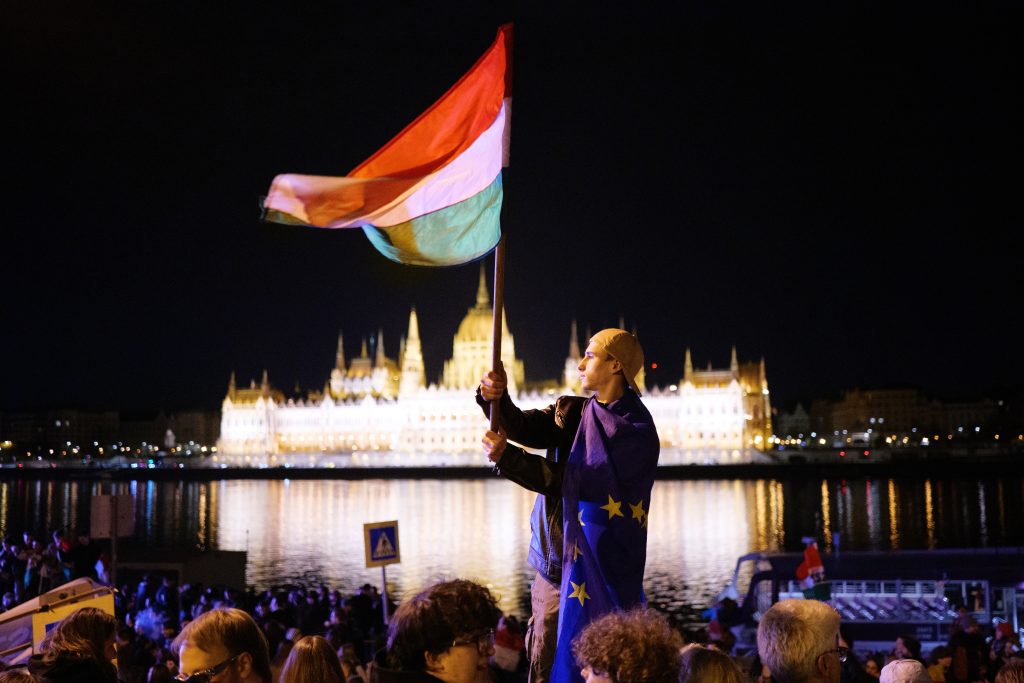
At the same time, a generational shift was reshaping Hungarian politics. Szelényi points out that many young Hungarians have never known another prime minister, yet they came of age inside the European Union with more outward-looking, liberal values. This generation became increasingly alienated from a government that constantly clashed with the EU and pursued a hard line against Ukraine. According to Szelényi, younger voters saw this not only as short-sighted geopolitics but as morally wrong, especially towards a neighbouring country at war.
The election results reflected this shift: an overwhelming majority of voters under 35 backed the opposition, and many older voters also turned away from Orbán. Youth mobilisation, visible at concerts and public events where anti-government and pro-European slogans became common, signalled that apathy was giving way to open resistance.
Constructing an Illiberal State
Szelényi explains that Orbán did not simply drift into illiberalism; he consciously set out to build what he called an “illiberal” system. Drawing on the work of her colleague Zsolt Enyedi, she notes that illiberalism is not a vague label but a deliberate rejection of liberal democracy’s core principles: a neutral state, separation of powers, and genuine political pluralism. From his first days in power, Orbán worked systematically to erode all three.
Rather than abolishing democratic institutions, his government kept them formally intact but staffed them with loyalists. Within a few years, key posts across state institutions—from the presidency and Constitutional Court to oversight bodies and the public prosecutor—were filled with figures closely tied to Fidesz. In practice, this meant that institutions designed to act as checks and balances became extensions of the ruling party.
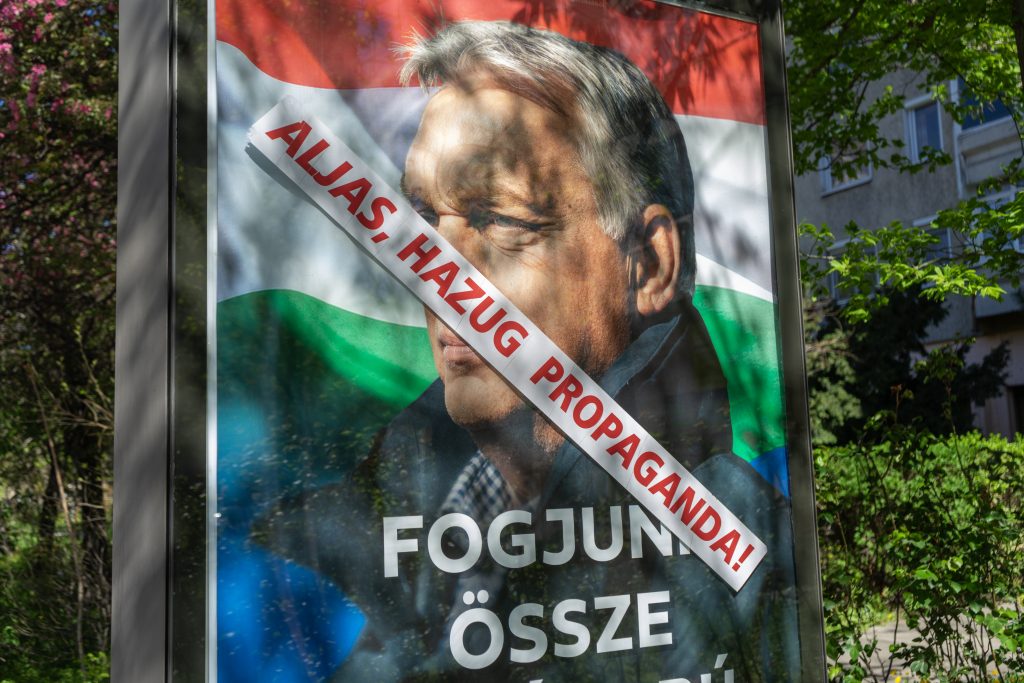
Media capture was central to this project. Szelényi describes how pro‑government actors gradually took over major media outlets, culminating in the consolidation of hundreds of outlets into a single holding structure overseen from the centre. The result was a tightly controlled information environment in which citizens were exposed to the same messages across television, billboards, print, and online channels, with this system funded by public money.
Critics—journalists, civil society groups, watchdogs, and academics—faced mounting pressure. Szelényi notes that the government used legal and administrative tools to harass those who challenged it and to strip critical organisations of funding. In parallel, Orbán re‑created a dynamic reminiscent of “Goulash communism,” in which people could live relatively undisturbed in their private lives as long as they avoided political engagement.
The Electoral Advantage
Orbán’s dominance did not rest on majority popular support but on an electoral system skewed in his favour. Szelényi underlines that he never won more than half of the votes, yet a heavily majoritarian system, repeatedly tweaked by Fidesz, translated this into sustained constitutional super-majorities. Frequent rule changes ensured that even a modest plurality could deliver overwhelming control of parliament.
This structural advantage allowed the government to rewrite the constitution multiple times and reshape key laws at will, all while maintaining the appearance of formal legality. For Szelényi, this illustrates how illiberal governments can use legal mechanisms to hollow out democracy from within.
The Corruption Network
One of the most complex tasks facing the new government will be dealing with the economic legacy of Orbán’s rule. Szelényi describes a web of politically connected business interests that now hold major stakes in strategic sectors such as banking, energy, and telecommunications. She stresses that this is not about minor deals at the margins of the economy but about control over core infrastructure.
She traces the pattern back to the early 1990s, when Orbán began using party funds to build private business structures around him. Over time, these vehicles expanded into media and other sectors, guided by a strategic belief that political power and financial power had to be built together. Today, much of this wealth is shielded behind opaque ownership structures and international financial arrangements, making any attempt at asset recovery both technically difficult and legally sensitive.
The New Government’s Paradox
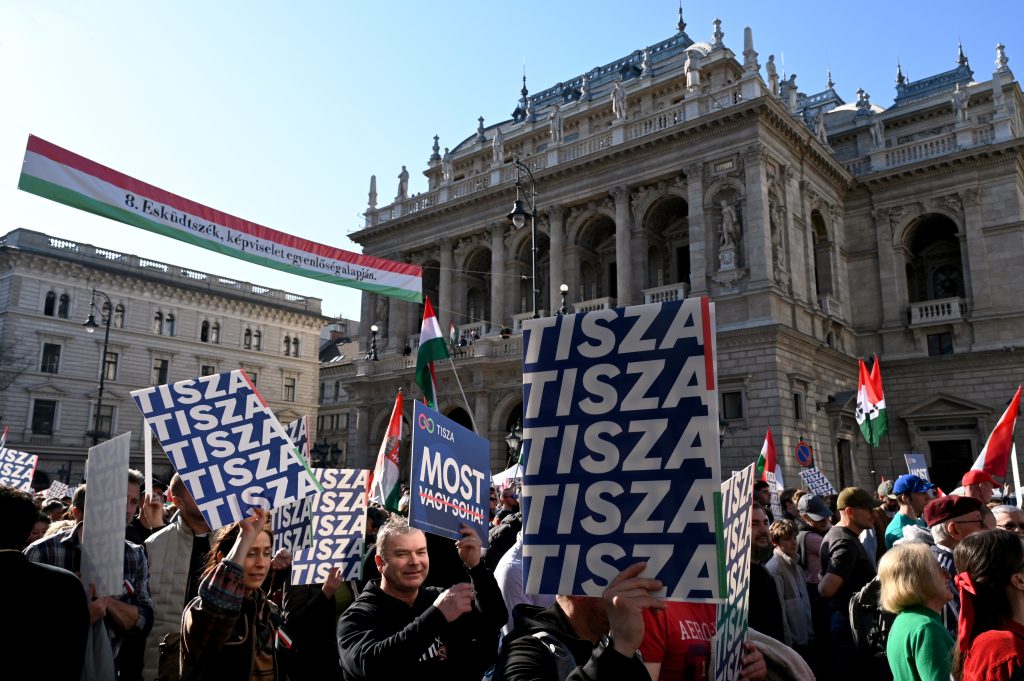
The TISZA Party, led by Péter Magyar, now finds itself in a paradoxical position: it holds the same kind of constitutional majority that enabled Orbán’s excesses. Szelényi notes that the party has deliberately filled parliament with newcomers who have not previously held national office, in an effort to break with the old political class.
However, she stresses that this concentration of power is inherently risky, regardless of who holds it. The central test for the new leadership, she argues, will be whether it can exercise self‑restraint—choosing not to exploit every legal tool at its disposal—in order to rebuild a truly pluralistic system. For Hungary to move beyond illiberalism, the governing party will have to accept limits on its own power and undertake constitutional and electoral reforms that reduce the dominance of any single actor.
At the same time, TISZA will face pressure from an opposition that includes both Fidesz and a far-right party, both of which remain committed to illiberal ideas. This will complicate efforts to steer a consistently pro‑European and democratic course while holding together a broad and diverse domestic coalition.
European Implications: Liberalism Is Not Finished
Szelényi argues that Hungary’s experience carries important lessons for the rest of Europe. She emphasises that Hungarian voters’ determination to remain firmly embedded in the EU was a key driver of change, as many feared that continued illiberal rule would leave the country sidelined or even pushed out of the European project.
The new government is likely to adopt a more cooperative, predictable approach in Brussels, engaging in disagreements “the European way” rather than through constant confrontation. Yet for Szelényi, the deeper significance lies in what Hungary’s election says about the wider struggle between liberal and illiberal forces.
She contends that Hungary shows it is still possible to reverse entrenched illiberalism through elections, even after many years of institutional capture and propaganda. This challenges the growing assumption across Europe and the United States that societies must simply learn to live indefinitely with powerful far-right and illiberal actors. Instead, she suggests, there is an opportunity to renew liberal democracy by addressing the social and political gaps that illiberal movements have exploited.
Russia and Sovereignty
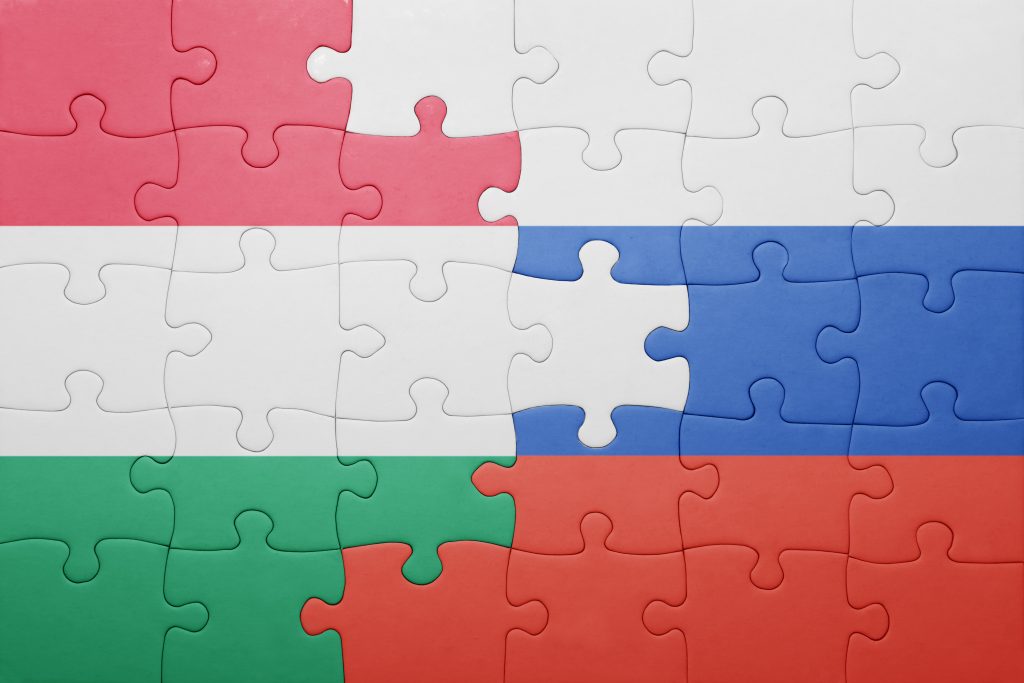
On foreign policy, Szelényi expects a marked shift in Hungary’s approach to Russia. She argues that under Orbán, talk of “sovereignty” masked a deeper erosion of national independence, as Russian influence penetrated Hungarian politics and institutions with little resistance from the government.
The new leadership, she believes, is far more likely to treat Russian interference as a direct threat to Hungary’s sovereignty and to align more closely with broader European efforts to strengthen security and resilience. A rebalanced Russia policy in Budapest would have implications not only for Hungary but for EU cohesion on security and sanctions.
International Risks and Unpredictability
In the closing part of the conversation, Szelényi points to the growing unpredictability of the international environment as one of her main concerns. She notes that this uncertainty poses particular challenges for Europe, which must adapt to an era of overlapping crises and shifting power balances.
Yet she also sees this as a moment of opportunity: a chance for Europe to rethink how it manages risk, defends democratic values, and supports societies that are trying to move away from illiberal models. Hungary’s transition, she suggests, offers a real-time case study in both the vulnerabilities and the strengths of democratic systems when faced with determined illiberal projects.
Hungary’s experience underscores that dismantling an illiberal system is a long, complex process that extends well beyond a single election. It demands institutional redesign, economic reform, and a cultural shift towards genuine pluralism. The choices Hungary’s new leaders make—especially regarding restraint, transparency, and European alignment—will shape not only the country’s future but also how other democracies understand and confront similar risks.



One Comment
Comments are closed.