Srebrenica and the Politics of Memory: Enduring Genocide Legacies in the Western Balkans
The massacre at Srebrenica in July 1995, during which more than 8,000 Bosniak men and boys were killed, is one of the most devastating atrocities in Europe and the only genocide to be legally recognized on the continent since the Second World War.
Despite this, the event’s memory has become deeply contested, which has significantly shaped the politics and identity dynamics of the Western Balkans. This article explores the historical facts of the genocide, how memory and denial have become political tools, and the contemporary social tensions in Bosnia and Herzegovina, Serbia, and Kosovo. Helping us understand regional developments through expert lenses is Professor Aidan Hehir, who, during the interview, highlighted how unresolved trauma and political manipulation of history continue to fuel instability in the region.
History and Jurisdiction of Srebrenica
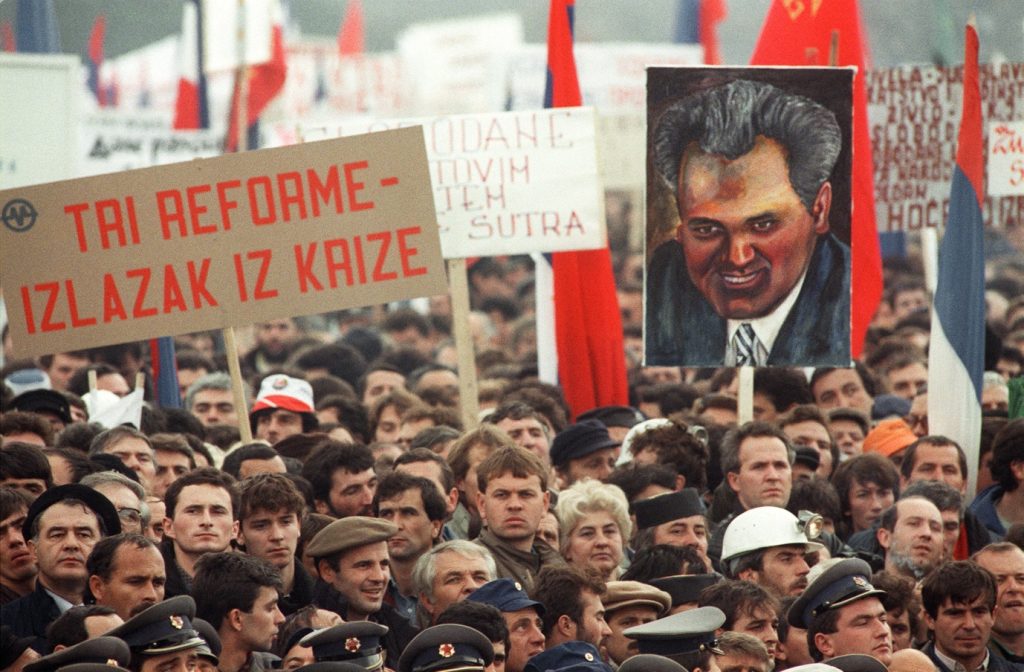
The National, World Europe, How the break-up of Yugoslavia 30 years ago led to bloody wars and lingering tensions, James Langton, April 27, 2022
The roots of the Srebrenica genocide lie in the collapse of the Socialist Federal Republic of Yugoslavia between 1991 and 1992. The Republic was a multi-ethnic federation led by Josip Broz Tito until he died in 1980. Ethnic separatist and nationalist parties gradually emerged as the economy declined, and Yugoslavia disintegrated due to competing territorial claims. As Bosnia and Herzegovina declared independence in 1992, armed conflicts began among Bosniaks (Bosnian Muslims), Croats, and Serbs. Serbia being more unified and the conflict being backed by the government, the civil war made way to systematic violence between communities and led to ethnic cleansing and mass displacement.
In July 1995, units of the Bosnian Serb Army, under the command of General Ratko Mladić, went through the UN-declared “safe area” of Srebrenica and executed more than 8,000 Bosniak men and boys.
These killings took place even under the watch of a weakened Dutch UN battalion who were supposed to protect civilians. Subsequent efforts by survivors to flee through nearby forests were met with further killings.
International courts have well established the gravity of this crime. In 2001, the International Criminal Tribunal for the former Yugoslavia (ICTY) delivered the first conviction for genocide related to Srebrenica.
In 2007, the International Court of Justice (ICJ) gave the genocide verdict concluding the Bosnia and Herzegovina’s case against Serbia. While the ICJ ruled that Serbia itself was not directly responsible for committing genocide, it did find that Belgrade failed to prevent the crime and to punish those responsible, in violation of its obligations under the Genocide Convention.
These rulings underline both the specific character of the Srebrenica killings and the broader responsibility of the international legal system to define and adjudicate crimes of this magnitude.
Memory, Denial, and Political Identity in the Balkans
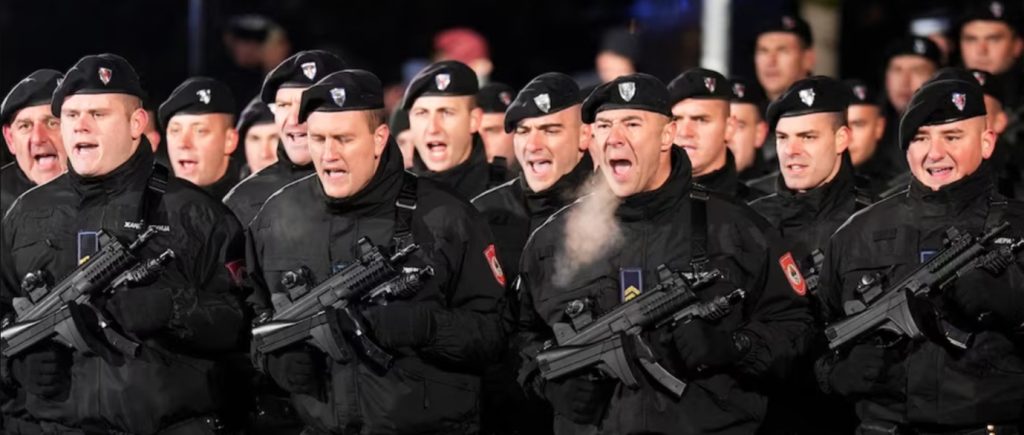
Source: Revista Idees, 23/01/2025, Proxy denialism and the culture of impunity: the social legacy of war in the Balkans, Esma Kučukalić, Description: Members of the special police take part in a parade in Banja Luka, January 9, 2024, during the celebration of the day of Republika Srpska. The celebration defies a ban by Bosnia and Herzegovina’s Constitutional Court and warnings from Western overseers. Photo: Reuters/Fedja Grulovic
Despite clear legal rulings, denial and revisionism have taken root, particularly in Serbian and Republika Srpska politics. Nationalist leaders have promoted false narratives that paint the Srebrenica massacre as either exaggerated or mischaracterized, often framing the conflict as mutual or victimizing Serbs themselves.
Professor Aidan Hehir emphasizes that national stories are never neutral: states and political elites construct narratives that simplify the past into either heroic triumphs or unfairness. In Serbia’s case, entrenched nationalism has drawn on a long history of collective memory that positions Serbs as wronged, a narrative that resurfaced in the 1980s and under Slobodan Milošević, contributing to the violence of the Yugoslav wars. Hehir explains that this framework remains powerful, shaping both internal Serbian politics and Serbia’s external relations with Bosnia and Kosovo.
The expert also notes that the failure of early international engagement allowed these nationalist myths to take a lot of space in the public sphere, in an environment where modern Serbian political leadership (including figures like Aleksandar Vučić) could leverage denialism for political support, presenting Serbia as a misunderstood and unjustly criticized nation rather than acknowledging past crimes. Hehir’s point is that this dynamic is not unique to the Balkans; it’s a phenomenon seen wherever states resist confronting uncomfortable truths.
This denial is embodied by the Republika Srpska’s actions. In 2024, the parliament passed a report explicitly rejecting the genocide label, asserting that the victims were not civilians, and downgrading casualty figures.
Such revisionism not only denies the lived experience of victims’ families but also institutionalizes falsehoods within government policy and public education.
Commemoration and Contestation: the politics of remembrance
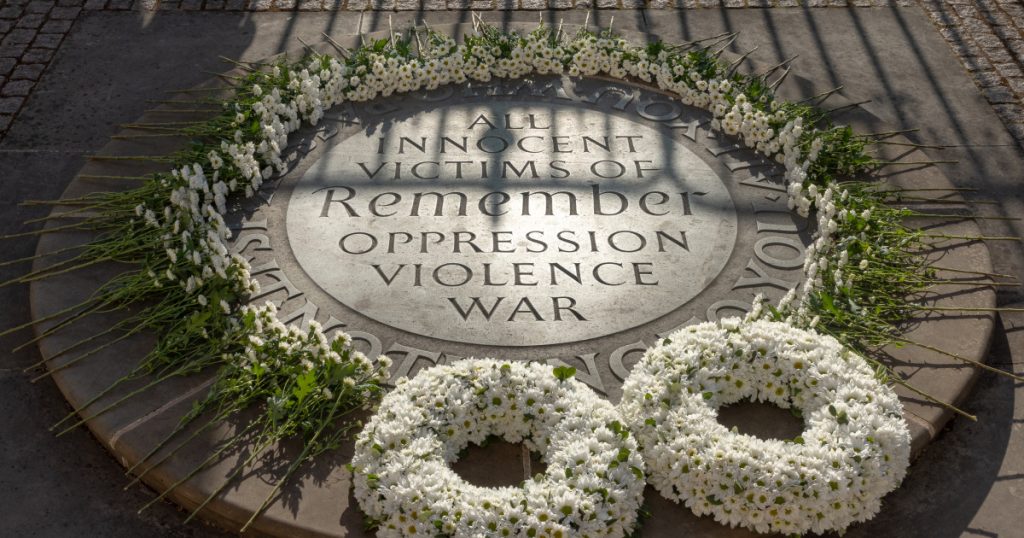
Remembering Srebrenica, Wreath-laying ceremony at Westminster Abbey to mark the 30th anniversary of the Bosnian genocide, August 7, 2025
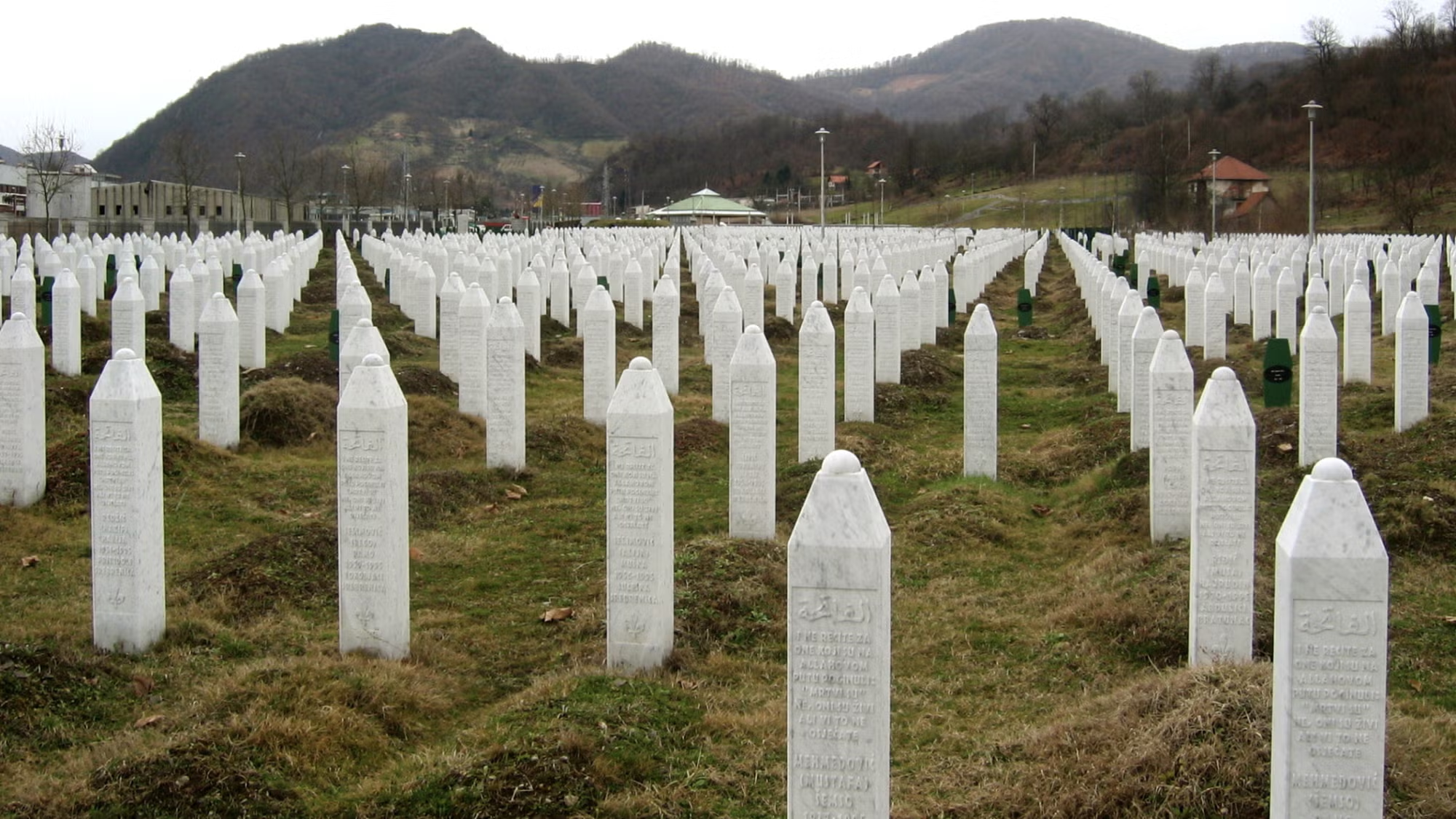
Memory of Srebrenica remains highly contested within Bosnia and beyond. On July 11, 2025 -marking the 30th anniversary of the genocide- thousands of people gathered at the Potočari Memorial Centre in Bosnia and Herzegovina to honour the victims and bury newly recovered remains.
The memorial itself has become a symbol of resistance to denial and an educational site preserving artifacts and testimonies.
Yet the context in which this remembrance was set is not ideal. While the United Nations General Assembly has adopted a resolution condemning genocide denial and urging the preservation of historical truth -initiated by occurrences of Shoah denialism- in 2024, the Serbian government criticized it, arguing it might destabilize the Dayton peace framework.
This leads to a challenge: honoring victims and promoting reconciliation demand shared acknowledgment of facts, yet regional political actors find it diminishes their legitimacy and, overall, their power.
In Bosnia itself, division remains high. Many Bosniaks see remembrance as essential for justice and healing, while some Bosnian Serbs remain silent or hostile toward commemorations, reinforcing hatred.
The legacy of war: social and political consequences
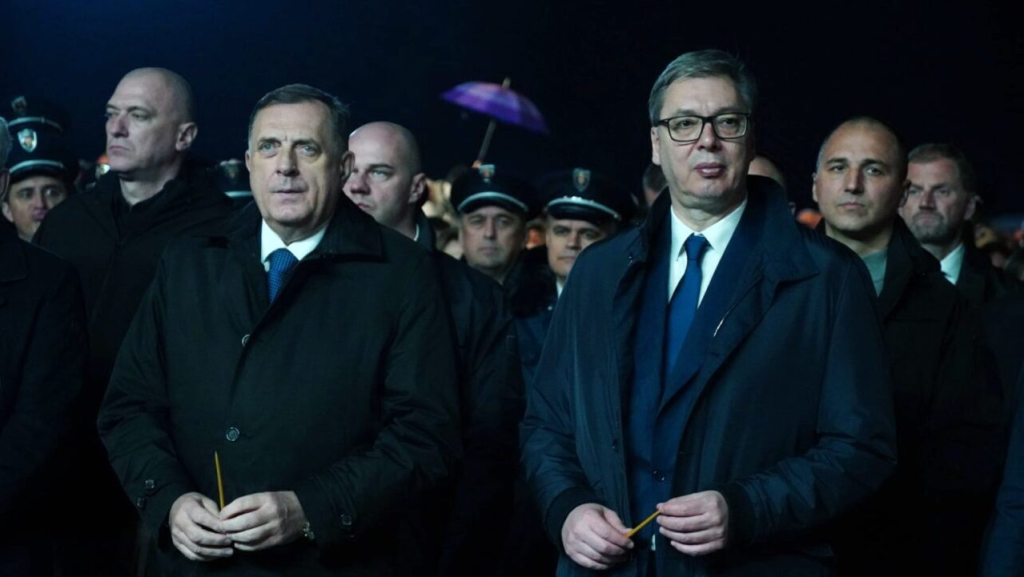
Genocide Watch, May 2025. Bosnia-Herzegovina Country Report 2025. Image description: Milorad Dodik and Aleksandar Vucic in Serbia on March 24. Photo: Serbian Presidency.
The legacy of Srebrenica and the 1990s wars in the region left demographic and social scars: displaced populations, fragmented communities, and enduring mistrust among ethnic groups. Hehir points out that the inability of post-conflict reconstruction to lead to true reconciliation reflects both the severity of traumas and the limited state-building efforts in the 1990s and 2000s.
In Bosnia, many families still do not know the fate of missing loved ones. Despite decades of international engagement, unresolved grief persists.
Aidan notes that attempts to “move on” without addressing past trauma (exemplified by the Dayton Peace Agreement’s emphasis on stability over “truth-telling”) have left societies with a legacy of resentment.
Similar patterns are visible in Kosovo, where, decades after NATO’s 1999 intervention ended Serbia’s repression, ethnic segregation persists. Serbian communities in northern Kosovo often remain politically and socially detached from Kosovo’s majority Albanian governance, setting integration back and reinforcing old feuds.
Moreover, many in the Balkans feel that promises of European integration and economic prosperity have stalled, leaving yet again an open space for nationalist rhetoric. Our expert highlights that the sense of unfulfilled expectations since the 1990s -especially after the waning enthusiasm following expansion promises in the early 2000s– fuels populist leaders who exploit historical grievances for support.
What would meaningful memory politics look like?
The persistence of denial and unresolved conflict narratives carries real security risks. Hehir warns that the Western Balkans, particularly Kosovo, could deteriorate into new violent crises if political rhetoric continues to escalate and if nationalist leaders perceive weakness or indifference from the international community. As he argues, appeasement has historically failed to contain aggressive nationalist agendas, and a lack of firm responses can leave these actors in full control over territorial revision or renewed open conflict, for example.
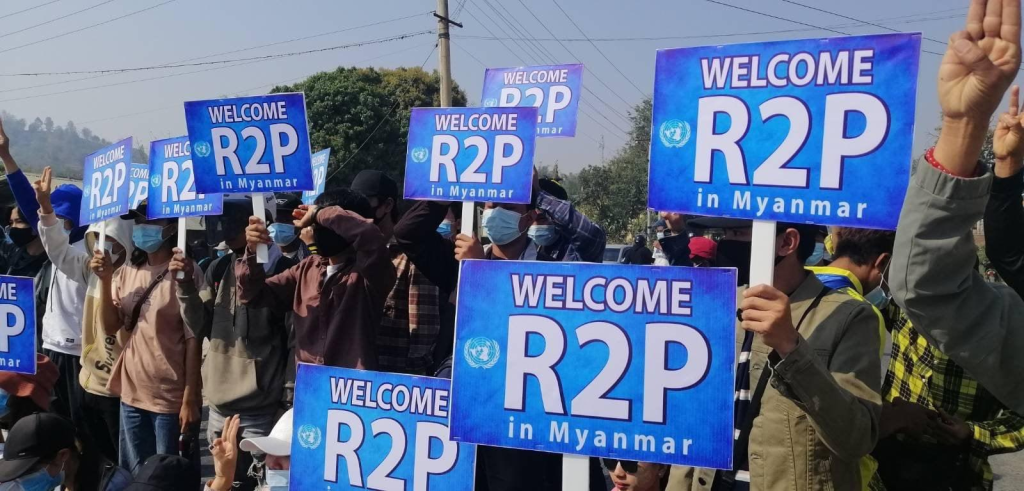
European Center for the Responsibility to Protect (ECR2P), The Responsibility to Protect in Myanmar, March 26 2021
This dynamic has parallels with other global crises where denialist rhetoric and unchecked aggression have had catastrophic outcomes. The Responsibility to Protect (R2P) framework -designed in the early 2000s to prevent genocides like Rwanda or Srebrenica happening again- has largely failed due to reliance on UN Security Council authorization and the shifting political interests of powerful states. Hehir says R2P is a “hollow norm” lacking enforcement mechanisms and meaningful consistency.
Without credible international mechanisms to prevent atrocity crimes and protect vulnerable populations, the risk of recurrence remains. In the Balkans, genocide denial and memory politics strengthen narratives that justify territorial and sovereignty disputes -particularly between Serbia and Kosovo-, threatening regional stability.
Conclusion: why the past remains present
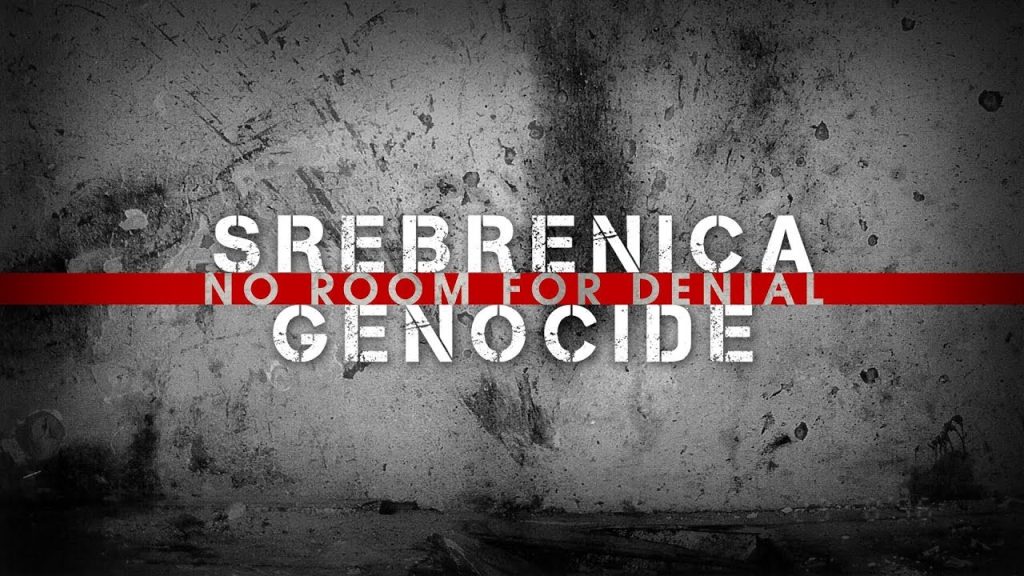
The United Nations, International Day of Reflection and Commemoration of the 1995 Genocide in Srebrenica, 11 July
The legacy of Srebrenica is therefore not only a matter of history; it is a true, living political force in use. Where genocide is recognized and memorialized, societies are offered a foundation for reconciliation. But where it is denied, downplayed, or even manipulated, the past fuels present insecurity.
Resolving this requires more than judicial rulings or commemorative resolutions. It demands a collective willingness to confront uncomfortable truths, hold leaders accountable, build political cultures that reject denial, and embrace a shared commitment to human dignity. In the Western Balkans, such a transformation remains to be seen, but it is essential if the region is to move beyond its tragic past.