
Syria’s Shifting Identity and Political Landscape
Syria is often examined primarily through the angle of geopolitics, armed conflict, and regional power competition. Yet one of the most consequential, and comparatively underexplored, dimensions of the Syrian crisis concern identity: how Syrian identity was historically constructed, how it fragmented under the pressures of war, and whether it can be meaningfully reconstituted in a post-Assad order.
One year after the fall of the Assad regime, Syria now faces a deeper societal challenge beyond material devastation. Rebuilding infrastructure is measurable and visible; rebuilding trust, institutional legitimacy, and a shared sense of national belonging is far more complex. Understanding the evolution and politicisation of identity is central to evaluating Syria’s long-term stability and the durability of any renewed social contract. For context, the UN estimates that over 13 million Syrians remain internally displaced or living as refugees, highlighting the societal scale of displacement and its implications for identity reconstruction.
Understanding Syrian Identity
Syrian national identity is neither singular nor static; it is layered, fluid, and deeply contingent on historical and social dynamics. Individuals in Syria may simultaneously identity with multiple affiliations, including the Syrian nation-state, Arab nationalism, religious beliefs, sectarian communities, ethnic heritage and tribal or regional loyalties.
In inclusive and stable political environments, these overlapping identities can coexist without friction, contributing to a shared sense of belonging. Tensions arise when political authorities privilege one dimension over others, manipulate identity for strategic ends, or treat differences as a source of threat. In such circumstances, identity becomes politicised, and at times securitised, transforming a natural social affiliation into a control mechanism.
Prior to 2011, the Assad regime cultivated a highly calibrated model of identity governance designed primarily to ensure regime survival rather than foster genuine social integration. Arab nationalism was promoted as the predominant ideological frame, under which religious and sectarian distinctions were formally downplayed, yet monitored and regulated behind the scenes. The regime projected the image of a unified, secular Syrian state while concurrently employing networks of patronage and selective enforcement to maintain authority.
This governance strategy relied on a delicate balancing act. Sunni elites in Damascus were co-opted into the system of power. Minority communities were placated or constrained through targeted privileges and sectarian identities were either mobilised or constrained depending on the regime’s immediate needs. Far from eradicating social divisions, the system contained and instrumentalised them, embedding latent tensions beneath the veneer of unity. Data from sociopolitical studies indicates that Alawites, representing roughly 12% of the population, were disproportionately positioned in security services, while Sunni communities dominated urban commercial sectors—a pattern that maintained regime control but intensified post-conflict grievances.
Identity Governance Under the Assad Regime
The management of identity under Hafez al-Assad and subsequently Bashar al-Assad was highly strategic and meticulously calibrated. It combined ideological projection, selective inclusion, and coercive oversight. This can be understood through three interlocking systems.
Controlled Pluralism in Syria
Syria has historically been a mosaic of religious and ethnic communities, including Sunni Muslims,
Alawites, Christians, Druze, Kurds, and smaller minorities. The Assad regime maintained a fragile equilibrium by refining selective alliances, particularly with influential segments of the Sunni urban elite in Damascus and Aleppo. This ‘managed pluralism’ allowed the regime to project an image of inclusivity while preserving ultimate authority. Communities were neither fully integrated nor entirely autonomous, their participation in governance and access to resources was contingent on loyalty to the regime. In effect, pluralism was tolerated only insofar as it served to stabilise the political order.
Institutional Centralisation and Security
State institutions, including the military, judiciary, and civil bureaucracy, were formally presented as impartial and secular. In practice, they were deeply enmeshed in regime security structures and subordinated to the preservation of Assad authority. Independent institutional development was constrained, and meritocratic or democratic processes were subordinated to personal loyalty and patronage. While this ensured short-term stability, it undercut genuine state-building, leaving Syria with formal institutions that appeared robust externally but were hollow in terms of autonomy and accountability.
Group Solidarity (Asabiyyah) and Power
Drawing on the fourteenth-century work of Ibn Khaldun, the regime leveraged asabiyyah, cohesion based on group solidarity, to consolidate power. Alawite networks, for instance, were cultivated as a loyal core around which the regime’s authority revolved, while Sunni and other communities were incorporated selectively to prevent unified opposition. These internal solidarity networks reinforced loyalty and operational cohesion but also curtailed broader civic identity and egalitarian citizenship. Political survival was prioritised over inclusive governance.
Over time, these maintained a precarious balance. They contained latent divisions, co-opted elites, and enforced a controlled narrative of national unity. Yet the system’s successes sowed the seeds of its vulnerability. When widespread protests erupted in 2011, the carefully managed boundaries of identity fractured, revealing deep-seated grievances and sectarian fault lines that had been constrained but never resolved – what had functioned as a instrument of stability became a trigger for conflict.
The Politicisation of Identity During Conflict
The escalation of conflict rendered identity inseparable from survival: communal affiliation, sectarian belonging, and regional ties were mobilised to navigate a landscape of pervasive insecurity.
Two factors were particularly catalytic. First, collective trauma and sustained violence entrenched boundaries between communities. Prolonged sieges and targeted attacks generated intergenerational memories of victimhood, hardening social divisions. Second, large-scale displacement and demographic restructuring disrupted historical patterns of coexistence. Entire neighbourhoods were emptied, populations were resettled according to sectarian or political affiliation, and property expropriation became a control mechanism. UNHCR reports indicate that over 6.6 million Syrians were displaced internally by 2020, pointing out the scale of this social rupture.
This was uneven across the country. Differences between Homs and Damascus reveal that local social structures and the nature of state presence meditated the intensity and form of identity politicisation. This variation features the inadequacy of reductive narratives that portray Syria’s conflict solely through a Sunni-Alawite binary. Identity, in this context, was neither static nor monolithic; it was strategically manipulated and shaped by violence.
Citizenship and the Crisis of State Formation
The Syrian conflict exposed the fragility of formal citizenship, illustrating a broader model observed in authoritarian states where state-building and nation-building have not progressed in tandem. Citizenship implies the equal protection of the law, access to public services, secure property rights, and political participation. Yet, under the Assad regime, the state’s institutions were subordinated to regime survival rather than structured for autonomous governance. Bureaucratic centralisation and patronage networks ensured loyalty but precluded resilience.
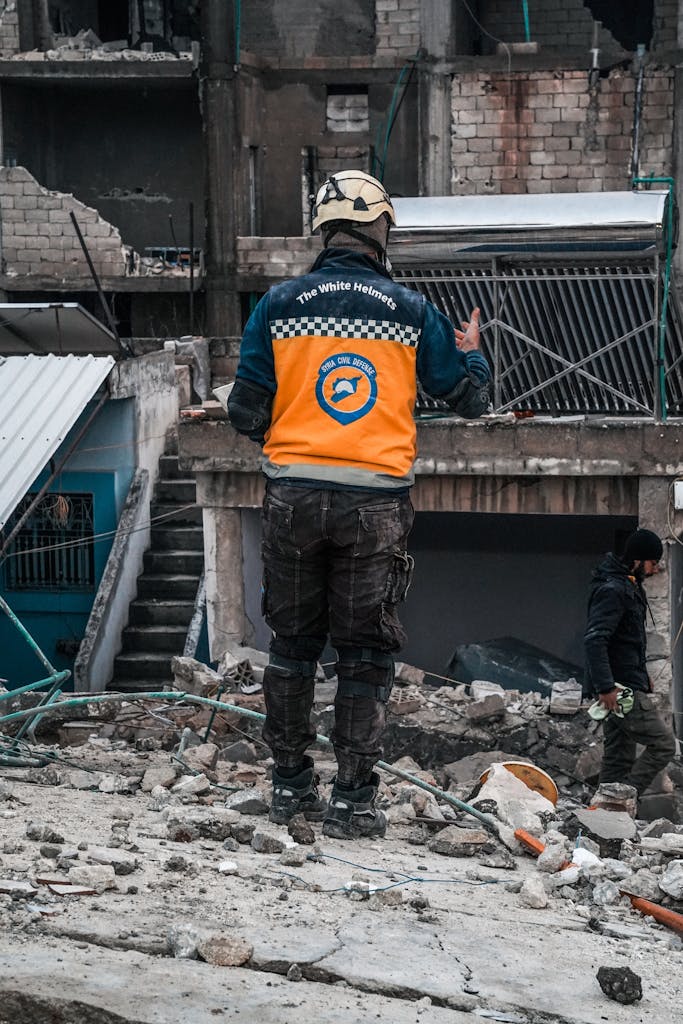
When the uprising emerged, institutional weaknesses amplified social fracture. Legal protections were unevenly applied, public services disrupted, and citizens experienced heightened insecurity, reinforcing communal self-protection. Rebuilding Syria’s social contract requires more than political or infrastructural reconstruction. Without structural reforms, reconciliation efforts remain symbolic.
Reconstructing Syrian Identity
Post-conflict reconstruction in Syria extends beyond roads and power grids. It is about reweaving the social fabric and reconstituting trust between communities and between citizens and the state. Addressing grievances arising from prolonged violence, forced displacement, and sectarianised governance is essential. Collective trauma that remains unacknowledged risks perpetuating identity boundaries, hardening intercommunal suspicion, and challenging reconciliation.
International support, domestic political commitment, and transparent governance structures could foster a reimagined Syrian identity, one that integrates historical pluralism, promotes social cohesion, and anchors the legitimacy of the post-Assad state. As past transitions demonstrate, opportunities in post-conflict settings are temporally fragile; delayed or superficial interventions may entrench the very fractures reconstruction seeks to resolve. As we discuss in Episode 323 with Anne Kumelstad, the international risks and opportunities remain significant.



2 Comments