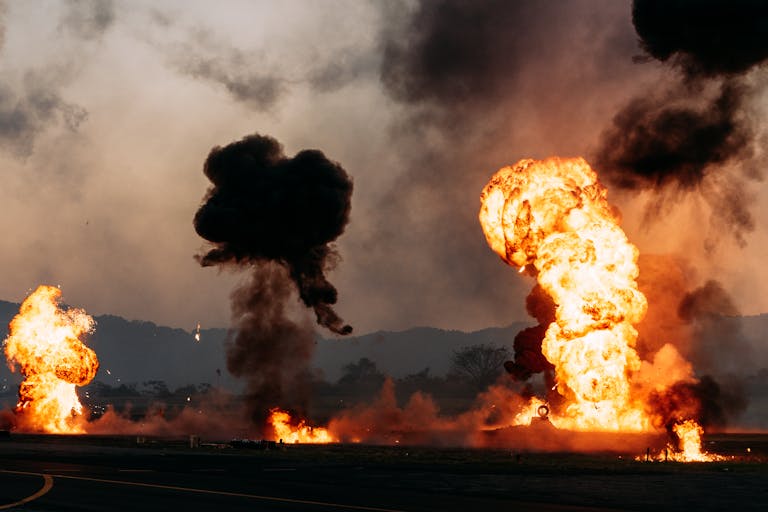
Intense fireball explosions with thick smoke in an outdoor setting.

The Iran War’s Hidden Front: Carbon, Fire and the Cost of Modern Warfare

When missiles strike refineries and cities burn, the damage is measured in casualties and territory. Far less visible is another front line: the atmosphere. In the first 14 days of the conflict involving Iran, an estimated 5 million tonnes of CO₂-equivalent emissions were released, roughly comparable to the annual footprint of a small state, and…


Frederick Otu-Larbi

Frederick Otu-Larbi

Frederick Otu-Larbi is a climate and environmental scientist whose work focuses on climate change, natural resource governance, and environmental management, particularly in West Africa. With over a decade of experience, he has delivered practical, climate-focused solutions for governments, businesses, and communities. He is currently based at the University of Energy and Natural Resources in Ghana,…

Benjamin Neimark

Benjamin Neimark

Benjamin Neimark is a Reader at the School of Business and Management and a former Fellow at the Institute of Social Science and Humanities (IHSS) at Queen Mary University of London. He is a human geographer and political ecologist whose research focuses on the environmental and social impacts of global supply chains, extractive industries, and…

Episode 356: War on the Climate: Conflict, Carbon, and the Hidden Cost of War in Iran with Benjamin Neimark and Frederick Otu-Larbi

This episode hosts Benjamin Neimark and Frederick Otu-Larbi to examine the environmental and climate consequences of modern warfare, with a particular focus on the ongoing conflict involving Iran and its rapidly escalating global impact. The conversation explores how conflict is generating emissions at unprecedented speed and scale, with millions of tonnes of carbon dioxide released…

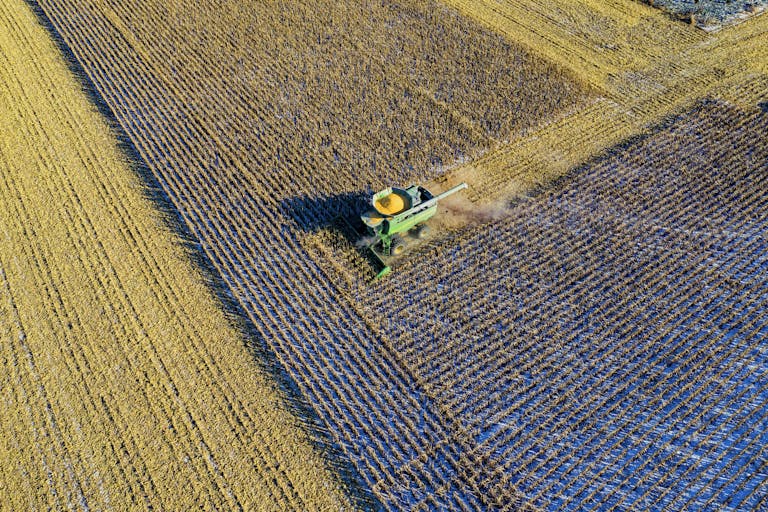
Aerial shot of a harvester working a cornfield in rural Austin, MN during fall season.

Food Security and Systemic Resilience: Preparing for Cascading Risks in Modern Food Systems

Food security is frequently treated as a domestic policy metric: a function of agricultural output, food prices, and household purchasing power. Yet, in an era defined by dense global trade networks and digitally mediated supply chains, national food systems operate as interdependent nodes within a transnational system. Producers, maritime corridors, energy markets and regulatory authorities…

Ultra-Processed People - Chris van Tulleken

Ultra-Processed People: Why Do We All Eat Stuff That Isn’t Food … and Why Can’t We Stop? – Chris van Tulleken

Written by Elisa Garbil – 21.11.2025 Chris van Tulleken’s Ultra-Processed People is not merely a book about nutrition. It is a sweeping indictment of the industrial food system, an investigation into human physiology, an exploration of global economics, and, perhaps most importantly, a warning about systemic risks accelerating beneath society’s feet. As an infectious diseases doctor and…