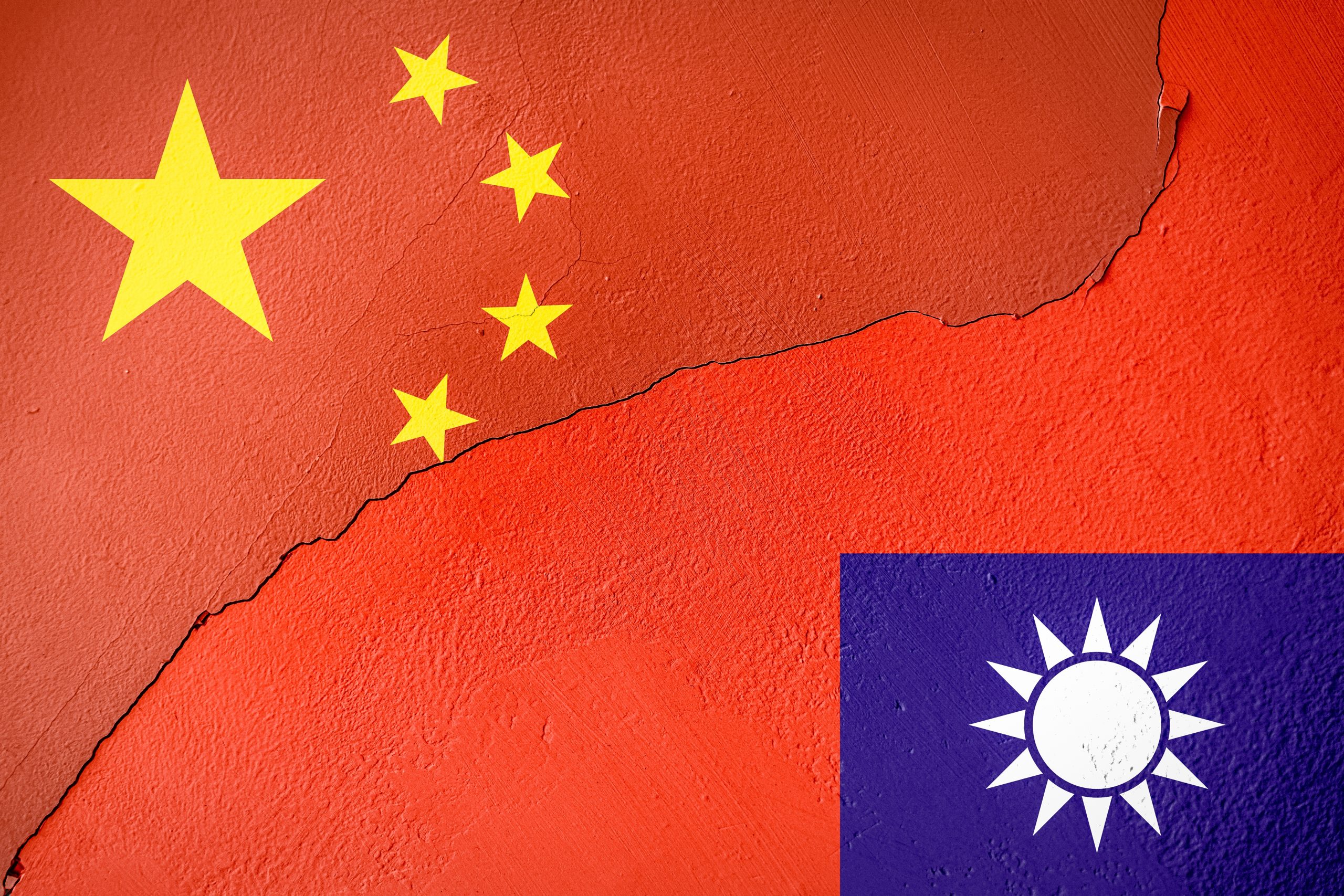
Taiwanese Politics and the China Question
Cross-strait tensions are once again at the centre of geopolitical risk. For much of the post-Cold War period, Taiwan existed as a persistent but often background issue in international politics. Today, that is no longer the case. Intensifying US–China competition, rising military pressure from Beijing, and shifting domestic dynamics within Taiwan have brought the island’s political trajectory into sharper global focus.
In a recent episode of the International Risk Podcast, host Dominic Bowen spoke with Ava Shen, a China and Taiwan analyst at Eurasia Group. Their discussion explored how Taiwan’s internal politics, historical identity, and external pressures intersect to shape one of the most sensitive flashpoints in the international system.
Politics Without a Left-Right Divide
Unlike many Western democracies, Taiwan’s political landscape is not primarily structured along economic ideology. Instead, the defining cleavage is the island’s relationship with China.
Two dominant parties have historically shaped this landscape. The Kuomintang (KMT) advocates closer engagement with Beijing and tends to draw support from older and more traditionally oriented voters, particularly in northern Taiwan. In contrast, the Democratic Progressive Party (DPP) has been associated with a stronger emphasis on Taiwanese identity and political distance from China. While earlier iterations of the party supported formal independence, its position has moderated in recent years toward maintaining the status quo.
This alignment reflects a broader political culture in which electoral competition is fundamentally tied to cross-strait strategy. As Shen notes, both parties operate within an electorate that views relations with Beijing as the central political question. This dynamic shapes not only domestic discourse but also how Taiwan is framed internationally, often reducing a complex political system to a binary geopolitical narrative.
A third force in Taiwanese politics
The 2024 presidential election introduced a notable shift. While the DPP secured a historic third consecutive victory, the emergence of the Taiwan People’s Party (TPP) signalled growing voter fatigue with the dominance of cross-strait issues.
Founded in 2019, the TPP positions itself as pragmatic on China while attempting to redirect political attention toward domestic concerns. Its support base is disproportionately young and urban, reflecting dissatisfaction with stagnating wages and rising living costs.
This development suggests a potential recalibration of Taiwanese politics. While the China question remains structurally central, its relative salience may be challenged by generational priorities. Whether this represents a durable shift or a temporary protest dynamic remains an open question.
Pressure Without War
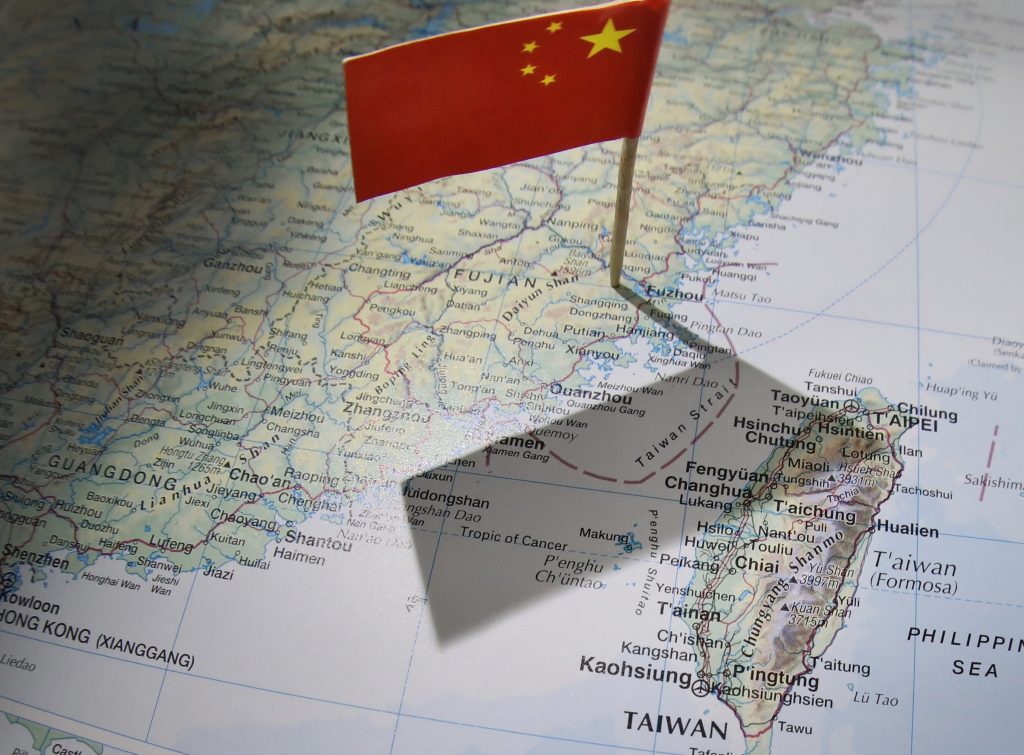
From Beijing’s perspective, Taiwan is not a sovereign state but a breakaway province that must ultimately be reunified with the mainland. As China’s global influence has grown, so too has the intensity and scope of its pressure on the island.
Rather than relying solely on the threat of direct military action, China has developed a spectrum of coercive measures often described as “grey-zone” tactics. These include frequent incursions into Taiwan’s air defence identification zone, naval activity around the island, and large-scale military exercises simulating blockade or invasion scenarios.
Such actions often coincide with political developments that Beijing views as provocative. For example, the 2022 visit by Nancy Pelosi triggered a significant escalation in military activity. Similarly, the election of DPP candidate Lai Ching-te in 2024 prompted strong rhetorical and strategic responses from Beijing.
Beyond the military domain, China also seeks to diplomatically isolate Taiwan by pressuring states to avoid formal recognition. Information operations represent another critical vector. Taiwan has effectively functioned as a testing ground for disinformation campaigns, targeting elections, public opinion, and crisis narratives such as the COVID-19 pandemic.
Beyond invasion: strategic options
Despite frequent discussion of a potential invasion, significant operational constraints remain. Amphibious assaults across the Taiwan Strait would be among the most complex military operations conceivable, requiring sustained control of sea and air domains under highly contested conditions.
As a result, analysts increasingly focus on alternative coercive strategies, including blockade scenarios, cyber operations, economic pressure, and incremental escalation in grey-zone activities. These approaches aim to erode Taiwan’s autonomy and resilience without triggering the risks associated with full-scale conflict.
Misreading Taiwan
A recurring theme in Shen’s analysis is that external actors—particularly in the West—often misunderstand the nature of Taiwan’s political system. The tendency to interpret Taiwanese politics through a familiar left–right framework obscures the centrality of identity, sovereignty, and strategic ambiguity. Furthermore, China’s actions particularly their military drills around the island are, according to Shen, misunderstood. Beijing sees them as a way to avoid potential conflict. It uses them as a way to avoid conflict through a projection of strength.
Equally, there is a tendency to over-securitise the issue, underestimating the importance of domestic socioeconomic concerns and the agency of Taiwanese voters. The rise of the TPP underscores this point. Even in one of the world’s most geopolitically sensitive democracies, everyday economic issues retain political weight.
A narrowing margin for error
The cross-strait relationship is not static. It is shaped by the interaction of domestic politics in Taiwan, strategic calculations in Beijing, and the policies of external actors, particularly the United States.
What emerges is a system characterised by increasing pressure, but not inevitability. Conflict is not predetermined. Yet the combination of military activity, political signalling, and mutual mistrust reduces the margin for miscalculation.
For policymakers and analysts, the implication is clear. Taiwan is no longer a peripheral issue. Understanding its internal dynamics is essential to grasping the trajectory of great power competition in the 21st century.