
Canada’s Defence Dilemma: Sovereignty, the Arctic, and the Limits of Strategic Autonomy
Written by Edward Penrose – 01.04.2026
For defence leaders across Europe and North America, Canada has become an unusually revealing test case. The question is no longer simply whether Ottawa will spend more on defence. The harder question is whether a middle power can remain credible inside NATO while reducing dangerous overdependence on the United States. That tension now sits at the centre of Canadian defence spending, Arctic security, procurement, and industrial policy. It also sat at the heart of Dominic Bowen’s recent conversation with military historian and international business adviser Norman Leach on The International Risk Podcast.
In many ways, Canada is confronting a broader Western problem in concentrated form: how to hedge against political volatility in Washington without pretending that geography, interoperability, and alliance structures can simply be wished away. Canada’s answer, at least for now, is not strategic independence in any absolute sense. It is a search for greater room for manoeuvre.
From slow growth to a harder rearmament debate
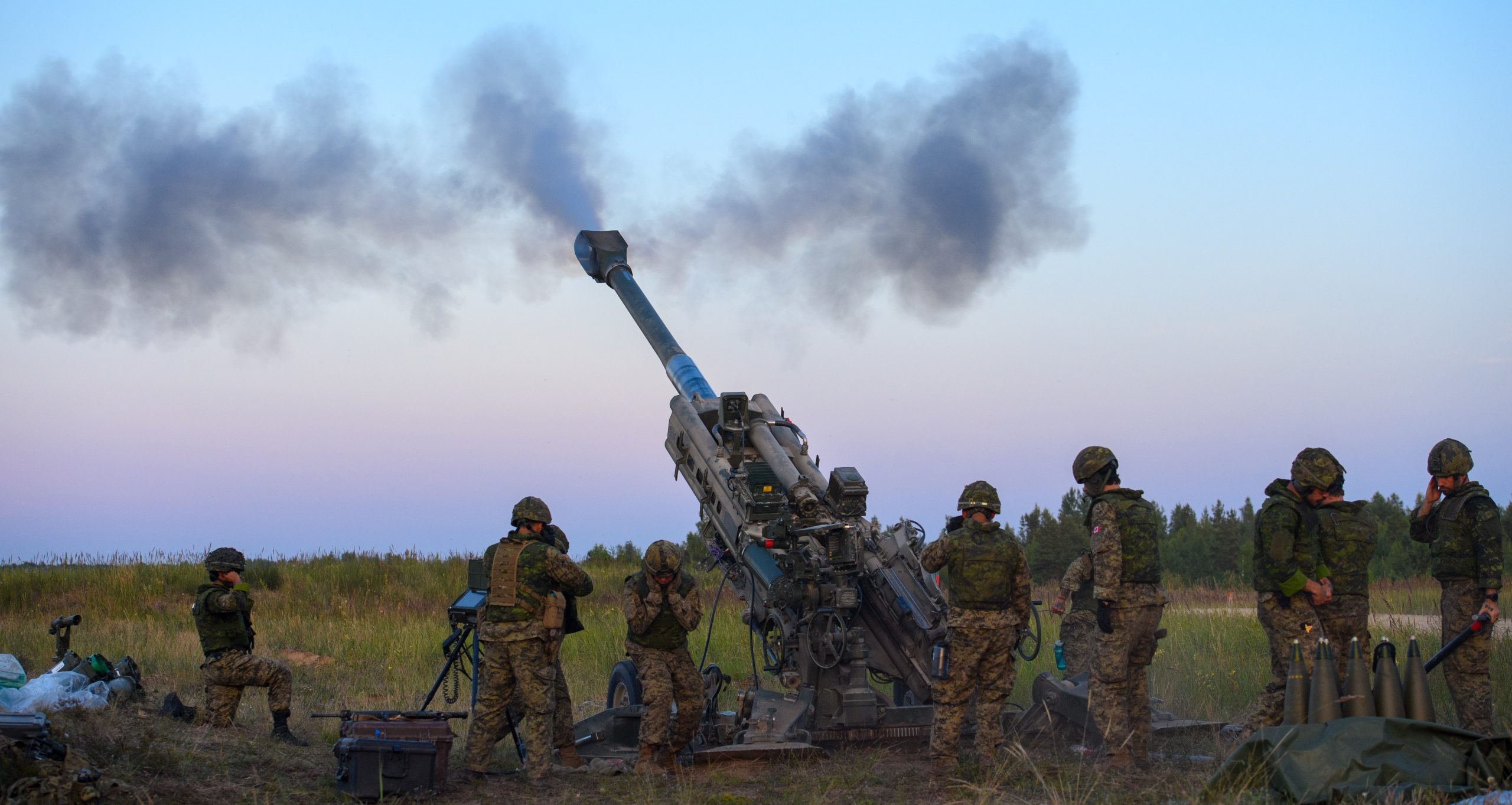
The speed of Canada’s rearmament shift is striking. In 2024, Ottawa was still projecting that defence spending would only rise to 1.76 per cent of GDP by 2029–30; in NATO’s 2024 estimate (1.47%), Canada ranked 27th of 31 Allies by defence spending as a share of GDP. By 2025–26, however, Canada’s defence spending was projected to reach 2.01 per cent of GDP, and Ottawa had formally joined NATO’s new 5 per cent by 2035 investment pledge, with 3.5 per cent earmarked for core defence and 1.5 per cent for broader defence and security-related spending. What had been a relatively cautious trajectory has become a much more ambitious debate about capability, urgency, and sovereignty.
Yet spending alone does not explain this shift. Canada’s 2024 defence policy, Our North, Strong and Free, still frames North American defence explicitly in partnership with the United States, including through NORAD. Canada’s 2026 Arctic Foreign Policy makes clear that security in the North American Arctic still requires closer collaboration with Washington, even as Ottawa deepens ties with the five Nordic allies. The real change is not that Canada has abandoned alliance thinking. It is that Canadian policymakers are now far more conscious of the risks of overdependence within those alliance structures.
The dependency problem
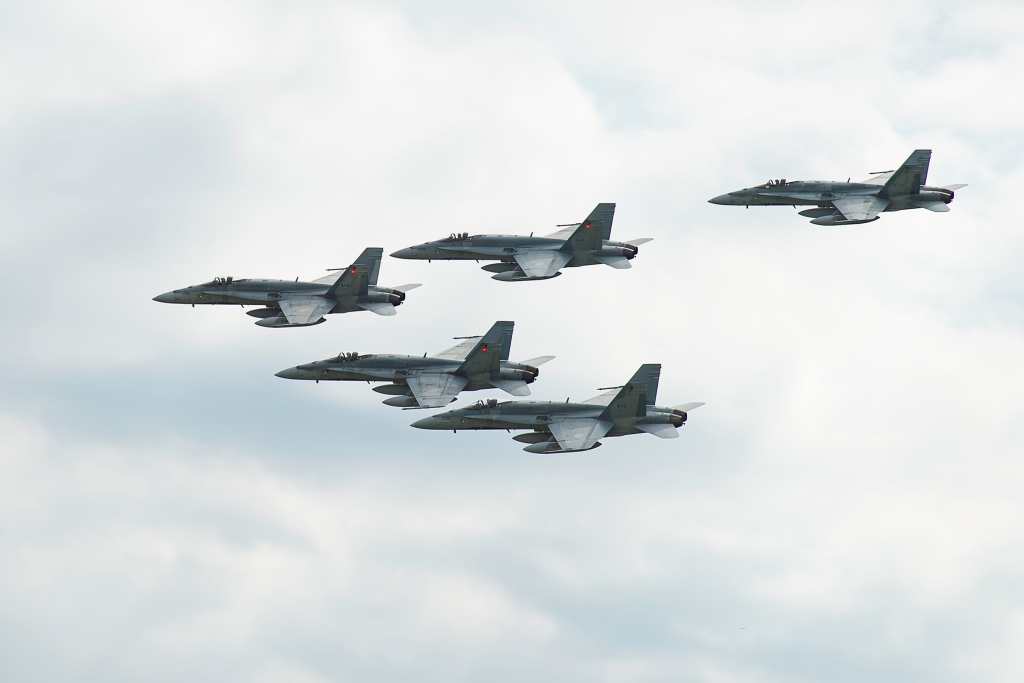
That vulnerability is most obvious in procurement and industrial policy. Canada’s government has acknowledged that about 70 per cent of its weapons budget goes to U.S. products. In response, Ottawa’s 2026 Defence Industrial Strategy set ambitious targets: raising the share of defence acquisitions going to Canadian firms to 70 per cent, increasing defence-related research and development spending by 85 per cent, boosting defence exports by 50 per cent, and creating 125,000 jobs. Canada has also formally joined the EU’s SAFE initiative, opening a route toward deeper defence-industrial cooperation with Europe.
This is not just economic policy dressed up as national security. It is also a response to uncertainty in Washington. U.S. President Donald Trump’s repeated rhetoric about Canada as the “51st state”, his tariff threats, and broader concerns about the reliability of U.S. policy have forced the Canadian debate to move beyond burden-sharing and into the terrain of sovereignty and strategic insurance. That does not mean Canada believes it can replace the United States. It means Ottawa increasingly believes it needs more options if Washington becomes less predictable.
Leach argues that what Canada is building is “an insurance policy”, not full strategic autonomy. That distinction matters. Insurance recognises exposure; autonomy implies escape from it. Canada’s geography, industrial base, and military integration with the United States mean escape is not realistic in the near term.
Why the Arctic sharpens everything
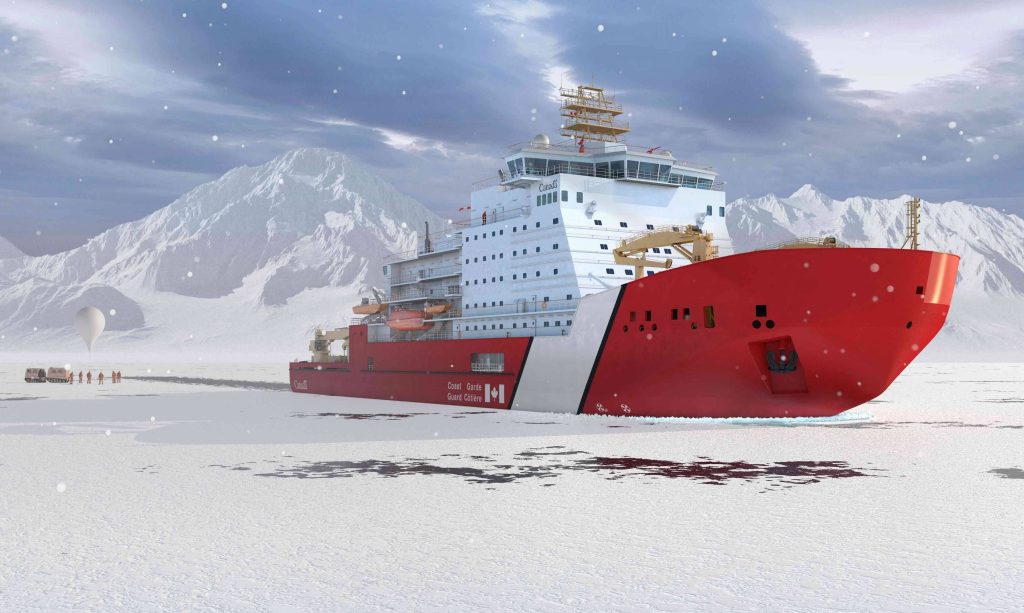
Nowhere is that clearer than in the Arctic. In March 2026, Prime Minister Mark Carney announced a new northern defence plan in more self-reliant language, saying it would enable the Canadian Armed Forces to defend the Arctic “without the help of Allies”. That is not quite a contradiction of existing policy so much as a reflection of the moment: Canada remains embedded in alliance structures, but wants more direct control over its own northern security.
The Arctic has become the clearest expression of the gap between Canadian rhetoric and Canadian capability. Leach is blunt on this point, arguing that Canada is “not very capable at all” of defending the North at present, given the scale of the territory, the lack of infrastructure, and the absence of sufficient heavy-duty icebreaking and logistical capacity. For years, Canada could afford a degree of benign neglect because the United States was assumed to be the ultimate backstop. That assumption now looks much less comfortable.
Official policy documents reinforce the sense of urgency. Canada’s Arctic Foreign Policy points directly to rising geopolitical competition and to non-Arctic states, including China, seeking greater influence in the region. Carney’s March 2026 northern plan was framed not only around military infrastructure, but around the need to reduce vulnerability in a more contested Arctic. For Canada, that means protecting trade routes, securing access to resources, and responding to the growing recognition that the North has real geographic and economic value. Arctic policy is therefore no longer just about military symbolism. It is about access, infrastructure, supply chains, and who is positioned early enough to shape the next decade.
The deeper problem: strategic clarity
Canada’s problem is not simply underinvestment. It is also a loss of strategic clarity. Leach suggests that Canada was once strongly defined by peacekeeping, but gradually lost that organising identity without replacing it with a clear alternative. His metaphor is telling: Canada is trying to turn an ocean liner around in a harbour. It is possible in theory, but not quickly. Given Canada’s current position, meaningful self-sufficiency, even in relative terms, is at least a decade away.
That is why interoperability remains a hard constraint. Leach recounts how, during operations over Libya, Canadian aircraft were able to borrow Spanish start units because both forces were flying compatible platforms. The anecdote captures a larger truth: in real operations, political slogans about independence collide with the practical need for systems, parts, ammunition, and platforms that work together under pressure. Any serious Canadian diversification strategy, therefore, has to be selective. It can reduce exposure, but it cannot sever the U.S. link without creating new operational risks.
What Europe and business leaders should take from this
The conversation is relevant to more than just defence planners. Geopolitical change is not only about disruption; it also creates winners. Institutions and firms able to think longer term will be better positioned than those still trapped in a three-year executive horizon. That is a business insight as much as a strategic one. It applies to defence manufacturing, Arctic infrastructure, critical minerals, research partnerships, logistics, and technology adoption.
For Europe, the opening is especially clear. If Canada wants to reduce its reliance on U.S. defence suppliers, Europe is the most realistic place to look next. Canada’s SAFE participation and its push to deepen cooperation with Nordic partners already point in that direction. The opportunity for European firms is not to displace the United States entirely, but to become part of the hedge: more present in Canadian procurement, more embedded in northern infrastructure, and more useful to a country seeking resilience without overhauling its entire defence-industrial architecture.
Canada’s defence debate is therefore not really about choosing between alliance and sovereignty. It is about how to live with both. Canada cannot decouple itself from American military power, but it also no longer wants to assume that proximity to the United States is, by itself, a strategy. The most important takeaway from this debate is that Canada’s biggest risk is complacency. Countries, like companies, are often most exposed when they continue acting as though yesterday’s assumptions still hold.


One Comment