
Episode 362: The Amazon Rainforest, Gold Mining, and the Development Dilemma in Suriname with John Goedschalk
This episode hosts John Goedschalk to examine the relationship between environmental sustainability, economic development, and long-term climate resilience in the Amazon rainforest and the Guiana Shield. The conversation explores why the forests of Suriname are disproportionately important to global climate stability, regional rainfall systems, and food production across South America. Drawing on the science behind the “Flying Rivers” system, the discussion explains how rainforest evapotranspiration helps generate and transport moisture across the continent, and why large-scale deforestation could trigger ecosystem collapse, water scarcity, and agricultural disruption far beyond the Amazon itself. The episode also examines the environmental and socioeconomic risks associated with deforestation, illegal gold mining, agricultural expansion, and weak land governance, particularly in regions where communities face poverty, limited education, and few economic alternatives.
The episode further explores the intersection of environmental governance, state capacity, and international economic incentives. We discuss how weak institutions, limited enforcement capacity, and poor land-use planning contribute to illegal mining, mercury contamination, and long-term ecological degradation in rainforest regions. The conversation also examines the role of international demand for commodities such as gold, timber, and agricultural products, alongside broader debates within the United Nations Framework Convention on Climate Change around carbon markets, sequestration, and compensation for maintaining standing forests. A central theme throughout the episode is the argument that the perceived trade-off between economic growth and environmental preservation is often false, particularly when sustainable industries, indigenous stewardship, regenerative sourcing, and nature-based economic models are properly supported. The discussion also highlights the role of indigenous and tribal communities in protecting the Amazon rainforest, the pressures these communities face, and the geopolitical and economic dynamics shaping the future of one of the world’s most critical ecological systems.
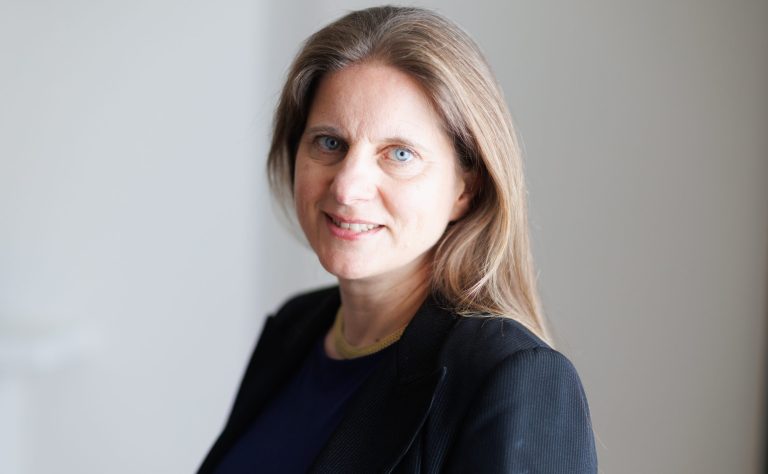
John Goedschalk is a climate economist, sustainability advocate, and former climate negotiator for Suriname. He previously served as Executive Director of Conservation International Suriname and currently advises on climate and biodiversity finance. His work focuses on sustainable economic development, rainforest conservation, carbon finance, and creating commercial models that support standing forests and indigenous communities while reducing pressure from extractive industries.
The International Risk Podcast brings you conversations with global experts, frontline practitioners, and senior decision-makers who are shaping how we understand and respond to international risk. From geopolitical instability and organised crime to cybersecurity threats and hybrid warfare, each episode explores the forces transforming our world and what smart leaders must do to navigate them. Whether you’re a board member, policymaker, or risk professional, The International Risk Podcast delivers actionable insights, sharp analysis, and real-world stories that matter.
Dominic Bowen is the host of The International Risk Podcast and Europe’s leading expert on international risk and crisis management. As Head of Strategic Advisory and Partner at one of Europe’s leading risk management consulting firms, Dominic advises CEOs, boards, and senior executives across the continent on how to prepare for uncertainty and act with intent. He has spent decades working in war zones, advising multinational companies, and supporting Europe’s business leaders. Dominic is the go-to business advisor for leaders navigating risk,
Transcript
00:00
John Goedschalk
There’s still so much more that we don’t know than what we do know, and what we do know is already frightening. That’s why I say certain forests should simply not be degraded, because we don’t know what the tipping point looks like. There are certain things where you should just leave them alone because they work, rather than trying to figure out how much you can destroy before they stop functioning.
00:22
Elisa Garbil
Welcome back to the International Risk Podcast, where we discuss the latest world news and significant events that impact businesses and organisations worldwide.
00:31
Dominic Bowen
And before we start today, I have a quick favour to ask you. If you listen to The International Risk Podcast and you find it useful, please follow and subscribe wherever you are watching and listening today. In return, my commitment to you is simple that every week we will keep raising the bar with better guests, sharper questions and more practical takeaways for you that you can use to make better decisions. And if there is someone you want on the show, tell me. We read all of your comments, and we act on them. Let’s get onto the show.
01:03
Dominic Bowen
On today’s episode of the International Risk Podcast, we’re going to look at one of the biggest strategic questions of our time: whether economic growth and environmental sustainability can genuinely coexist.
As we see growing climate pressure, increasing resource constraints, and policy shifts reshaping markets, political leaders and business leaders alike are being forced to think much harder about the intersection between business, resilience, and, of course, Mother Nature.
Joining me today is John Goedschalk. He’s a climate change economist and sustainability advocate. I’m Dominic Bowen, and this is the International Risk Podcast, where we discuss the risks shaping business, politics, and society around the world.
John, welcome to the International Risk Podcast today.
01:49
John Goedschalk
Thank you.
01:50
Dominic Bowen
Whereabouts in the world do we find you today, John?
01:53
John Goedschalk
Well, in my home: Paramaribo, Suriname.
01:56
Dominic Bowen
For our listeners, Suriname is one of the most forested countries in the world, with about 90% of the country covered by rainforest, which sounds absolutely beautiful. It’s also part of the Guiana Shield, which I’d love to explore with you and understand how this plays such a critical role in rainfall systems and carbon storage.
From what I understand, it’s disproportionately important to both regional and global climate stability. But underneath what sounds like a huge environmental strength, there are also significant risks, including illegal gold mining, deforestation, pollution in rivers, and challenges around state control and governance.
Before we unpack all of those important issues, why should our listeners care? Why is this topic so important today?
02:49
John Goedschalk
The Amazon rainforest is not just what people like to think about as the lungs of the Earth or this big carbon reservoir. It’s also a very intricate water production and water transportation system.
The Guiana Shield, which covers parts of Venezuela, all of Guyana, all of Suriname, all of French Guiana, and a small part of northeastern Brazil, is where the entire Amazon rainforest system kind of started growing out. Those forests create what is called the flying river system.
The flying river system is this huge amount of moisture that travels from the northeastern point of the continent all the way through to Argentina. The reason why they originate is because of our rainforests and the ionic exchange those rainforests have with the atmosphere above them. That vacuum then pulls in moisture coming from above the ocean.
As that air moves over the canopy, which has a lower temperature than the ocean, it turns into rain. That rain feeds the soil and the trees, and then the trees breathe it out again in vapor, creating this continuous cycle called the flying rivers.
If our rainforests are degraded to a certain extent, and nobody knows what that extent is, that system cannot just weaken — it can break. If we break that, the world’s food provision would be in trouble. Brazil, Argentina, and Colombia are some of the largest producers of food in the world.
04:41
Dominic Bowen
Maybe we can unpack that a little bit, because I think that sounds both beautiful and frightening. You mentioned the breadbaskets of South America and the huge amount of food production that countries like Brazil generate.
Help us understand what collapse would actually look like. We’ve all heard about the 1.5-degree threshold, and I think most of our listeners are aware that we’re very close to breaching that. But what would happen if this ecosystem started collapsing? Would crops stop growing altogether? Would productivity decline? What would we expect to see, and what would actually cause that to happen?
05:17
John Goedschalk
Well, if the flying rivers stop flowing or are reduced in volume, there would be less water available to irrigate fields. Crops would stop growing. It would trigger a reinforcing system where large parts of what is now lush rainforest would become savanna.
As there’s less water, certain species would die out and other species would take over. It’s not that all life would disappear, but different species would survive. And that would mean much less water availability. Again, without water, you can’t farm.
It would also mean that many creeks and rivers would dry out. And you’re already seeing some of that happen because large parts of the Amazon have already been degraded and deforested — I think as much as 17%. So you’re already seeing rivers dry out.
Now, for Suriname specifically, that is even more of a risk because we are a self-contained water system. We are not connected to the Orinoco water system, nor to the Amazon water system. All our water here comes from the rain our forests generate.
So if the flying river system, or what’s called the biotic pump system, were to start failing, our water supplies would dwindle very rapidly.
There’s still so much more that we don’t know than what we do know, and what we do know is already frightening. That’s why I say certain forests should simply not be degraded, because we don’t know what the tipping point looks like. There are certain things where you should just leave them alone because they work, rather than trying to figure out how much you can destroy before they stop functioning.
07:02
Dominic Bowen
When we talk about the threats to that, I’d love to hear, John, what are the risks to upsetting this — whether in Suriname or in Brazil, or anywhere along that chain? What are the risks that could disrupt it?
07:13
John Goedschalk
Right. So I think before talking about the risks, it’s important to talk about the underlying drivers of those risks. A lot of folks where I live, and across the Amazon, are still living on the first or second level of Maslow’s hierarchy of needs. A lot of people are simply trying to survive. They’re trying to feed their children day to day and keep a roof over their heads.
And that means people sometimes choose short-term solutions that can have long-term negative effects. One example is converting primary rainforest into agricultural land because they need to sell soy or maize to make a living, send their children to school, or access medication. Agriculture and livestock are some of the biggest drivers right now in Amazonia.
Now, when it comes to a more specific location like Suriname, one of our biggest threats right now is small-scale gold mining, which again is driven by a lack of opportunity and limited access to education for many people living in the interior. A lot of the Indigenous and Maroon, or tribal, communities have not been afforded the same privileges that, for example, I’ve had in terms of education and access to different jobs.
So for many people, they turn to what I call irrational land use, because it’s using your land for a very short-term gain that could have a very long-term negative impact. That could be agriculture, gold mining, or other forms of mineral extraction. Once you permanently convert these primary rainforests, that’s where the real risk begins.
And then there’s also the way mining is done. What you often see happening in the Amazon is people with very limited training and little access to technology going into the forest looking for gold. They start cutting down trees, destroying creeks and rivers, hopefully find something, and then move on to the next site. So it expands outward instead of downward.
So the threats are not just the fact that mining exists, but also the way that mining is carried out.
09:17
Dominic Bowen
What we often see in countries with resource-rich regions is that environmental degradation is closely linked to governance challenges — or in some areas, a lack of governance altogether.
How would you describe the relationship between illegal mining, state capacity, and enforcement in the interior regions? Is that also part of the problem and contributing to the risks we’re seeing?
09:39
John Goedschalk
Absolutely. But it begins with zoning, right? It begins with proper land-use planning. A country like Suriname, which is incredibly rich in natural resources, needs land-use planning, and we simply do not have that. And that’s something that is also absent in many other countries.
So when you talk about governance, if you want to appropriately engage in activities that societies depend on — mining, agriculture, forestry, timber extraction — then you need governance structures in place. But that starts first with adequate land-use planning.
Then, once you have that planning, you need enforcement. And in countries like Suriname, our institutions are incredibly weak. They are not well staffed, they are not well resourced, regulations are not enforced as they should be, and enforcement capacity is extremely limited.
Which means that if you allow people to mine but cannot enforce regulations or standards, then you create additional risks through the use of things like mercury or arsenic, which poison the land where people live and also affect downstream communities that may not even be involved in mining.
Then you get the bioaccumulation of mercury in fish. Small organisms absorb it, fish eat those organisms, and eventually it ends up in humans. Which is why, in Suriname, many river fish species are no longer safe as food sources for local communities.
So again, if you want to engage in mining or infrastructure development, you need government enforcement capacity and institutional clarity around responsibility.
11:30
Dominic Bowen
I’d like to keep unpacking the international dimension of this, but I’ll just take a moment, John, to remind our listeners that if you prefer to watch your podcasts, the International Risk Podcast is always available on YouTube. So please search for the International Risk Podcast, and if you enjoy the content, remember to subscribe, like, and maybe even share it with a friend.
But John, tell us about the extent to which these challenges are driven by external demand. You mentioned gold, and of course global gold markets have been on a significant rally over the last six months. How should international actors think about the demand side and the role they play in contributing to these risks?
12:06
John Goedschalk
Well, see, this is the thing. I started my career in conservation as a climate negotiator for my country at the UN. At one point, I had the privilege of leading the climate negotiations for Suriname from 2011 through 2013, before my stint as Executive Director of Conservation International Suriname.
And the reason I mention that is because it helps frame this discussion within the United Nations Framework Convention on Climate Change. What we see is that Canadian companies and Chinese companies are more than willing to pay for our gold. But actors under the UNFCCC are not willing to pay for the carbon storage and carbon sequestration services our forests provide.
If they were willing to do that, we would no longer have this urgent need for gold mining, because our forests absorb around 20 million tonnes of carbon every year. If people paid even around 50 euros per carbon credit, that would amount to roughly a billion euros annually — far exceeding what we currently earn from gold mining.
I’ve been in the room during these discussions, and there’s this concept that I believe has been deeply detrimental to climate efforts, and that’s additionality. When the climate convention and later the Kyoto Protocol were negotiated, there was this idea that countries should only be paid for additional carbon removals — in other words, something that would not have happened without the funding.
So the international community is effectively voting with its wallet. It is willing to pay for gold, timber, and other commodities, but not for the service of maintaining forests. And that is one of the major flaws in the current UNFCCC system.
I have personally raised this issue with the Executive Secretary of the UNFCCC, and it was ignored. Our country has spent years trying to gain recognition for the environmental services we provide as a carbon-negative country, but those efforts continue to be blocked.
14:23
Dominic Bowen
It’s very interesting. Thanks for exploring that with us, John.
You mentioned Indigenous communities earlier, and I’d love to hear more about that, because I understand Indigenous communities play a central role in managing large parts of the rainforest. I’d be keen to hear how these communities are both affected by environmental degradation and the role they play in protecting and managing these ecosystems.
And then, more broadly, how should we think about the tension between economic development, social development, and environmental protection — and the trade-offs between livelihoods tied to mining and the long-term sustainability of the rainforest and its ecosystems?
15:02
John Goedschalk
Let’s go to the internal economics, the internal dynamics of this. Let’s make one thing really clear: if it were not for Indigenous and tribal communities, the Amazon rainforest would have fallen a long time ago.
They are the ones protecting it, maintaining it, and, on an almost daily basis, dying to do so. If you look at the violence being perpetrated against Indigenous and tribal communities — not only physical violence, but also social violence through the withholding of education, healthcare, and other services they have a right to as human beings — it weakens them.
And that vulnerability can force people into situations where they have to sell their land simply because they need to feed their children today.
Under normal circumstances, Indigenous communities understand that there is no separation between forest and humanity. There is only nature, and we are all part of it. They also tend not to think only about the present moment — they think about the next seven generations. They understand that the forest is not theirs. It belongs to the next generation, and they are there to steward it and ensure it does not degrade.
But as I said, social violence and other forms of pressure have weakened some communities to the point where they are sometimes forced to compromise simply to maintain their current existence. In other cases, their land is ignored, stolen, or overridden altogether.
Empowering these communities and recognising their rights is absolutely central to maintaining Amazonia’s stability. Sadly, my country has still not fully recognised those rights, and that is holding us back in terms of development and progress.
The reason this remains blocked is because there are so many conflicting interests — politicians involved in gold mining, timber, and other extractive industries. As long as we don’t resolve that, it will continue to obstruct progress on many levels.
But taking a broader view, the idea that economic development and environmental preservation are somehow opposites is a false dichotomy. I state that very clearly, especially here in Amazonia.
If you can recognise the value of standing forests and translate that value into commerce, then forests can compete economically with gold, soy, and other commodities any day of the week.
But to do that, industries — in this case, the cosmetics industry — need to properly integrate these natural ingredients into their supply chains. What my company does is help build that bridge.
We work with communities and co-operatives in Brazil to ensure they meet regulatory requirements, and then we work with companies in Europe and the US to explain how natural sourcing can function responsibly. By creating that bridge, you start generating significant revenues from standing forests.
And when those revenues are captured by local communities and agro-co-operatives, they become more capable of resisting the pressure to convert land into soy plantations or cattle operations because they can see that the standing forest is already meeting their economic needs.
This comes back to donut economics — Kate Raworth’s work, which I’m a huge fan of. You need decentralised productive assets. The forest is the base. And when you create low-tech agro-processing centres that can be owned and maintained by co-operatives, that’s where innovation happens. That’s where real ownership happens. And that’s how you build economic systems that are regenerative rather than extractive and destructive over the long term.
Because using Amazonian land for cattle is incredibly unproductive — incredibly unproductive. If you look at the dollar yield per hectare from cattle or soy, it’s remarkably low. Indigenous wisdom has kept these forests standing for as long as we can remember.
18:15
Dominic Bowen
And John, one question that we ask all the listeners on the International Risk Podcast: when you look around the world, what are the international risks that concern you the most?
18:27
John Goedschalk
Well, honestly, and this is probably weird for a lot of people, I’m super optimistic because I have to thank President Trump for what he did in Iran, because by doing that he exposed, once and for all, our addiction to oil. That has now caused people to really start investing more seriously in innovation and thinking differently about mobility and just how much oil we should be using.
When we talk about international risk, I’m of course super concerned about the violence and war that is currently taking place. Not only because that disrupts international trade, but because it could escalate, and that could lead to even more isolation and even more death. God forbid we start thinking about things like nuclear weapons, which, of course, is the nightmare that I grew up with. I grew up during the Cold War, at the height of the Cold War.
But from my perspective, I think one of the biggest risks that we have is really global war. Really, that’s what I’m seeing. But at the same time, I’m glad that the risks and exposure we have to things like chemical-based farming, with these fertilisers now being exposed again as a risk in the supply chain, and to oil, are finally forcing us to recognise that we need a different way forward.
And that is something that I am positive about.
19:22
Dominic Bowen
Thanks very much for mentioning that. I think the current concerns around the attacks against Iran are significant. The current data, as of early May, suggests that about 3,500 people have been killed, 26,000 injured, and the cost of food for families in Iran has risen by 100%. We’ve also seen thousands of flight cancellations. The impact on aluminium and gold prices has been significant, and we expect global GDP growth to reduce from about 3% to around 2.5% this year.
Inflation has already been affected in the US and across Europe, supply chains have come under pressure, and we’ve seen oil prices spike from around $70 up to $120.
So I think the impacts are substantial, and that’s over and above all the environmental concerns. We’ve had a few great guests on the podcast already discussing the environmental impacts of the war in Iran.
But John, thanks very much for raising those concerns, and also for highlighting some of the opportunities and reasons to remain optimistic. It’s been a pleasure, and thank you very much for coming on the International Risk Podcast today.
20:19
John Goedschalk
Of course. You’re very welcome. Thank you.
20:21
Dominic Bowen
Well, that was a great conversation with John Goedschalk. I really appreciated hearing his thoughts on the socioeconomic and environmental state of our rainforests, the opportunities ahead, and some of the international risks shaping the future of the region.
Today’s podcast was produced and coordinated by Ella Burden. I’m Dominic Bowen, your host. Thanks very much for listening, and we’ll speak again in the next couple of days.

One Comment