Beyond the Energy Crisis: The Growing Threat of Energy Warfare
“Now, the lesson that the European Union and European countries, and indeed any country in the world can learn from Ukraine, is that energy infrastructure is a prime target.
And for that reason, they need to prepare.”
- Aura Sabadus, Episode 413: Europe and Energy Dependency – How At Risk Is The Continent?
Warfare has constantly evolved. From the advancements into mechanized weapons to cyberwarfare, from the creation of nuclear arms to the rise of drones warfare amongst non-state actors, how we seek to create a new advantage over another party has never deterred from the aim to progress.
We commonly think of warfare as weaponry. But indeed it includes any method that could be utilised in the practice of war. Sitting in Western Europe, this may seem abstract – Ukraine has been at war with Russia since the invasion in 2022, yet we are not at war? We are also not aware of what war, a battle for hegemony may in fact look like in a new international order. If we assess control and dominance as a core motivation – in what ways could one indeed be waged?
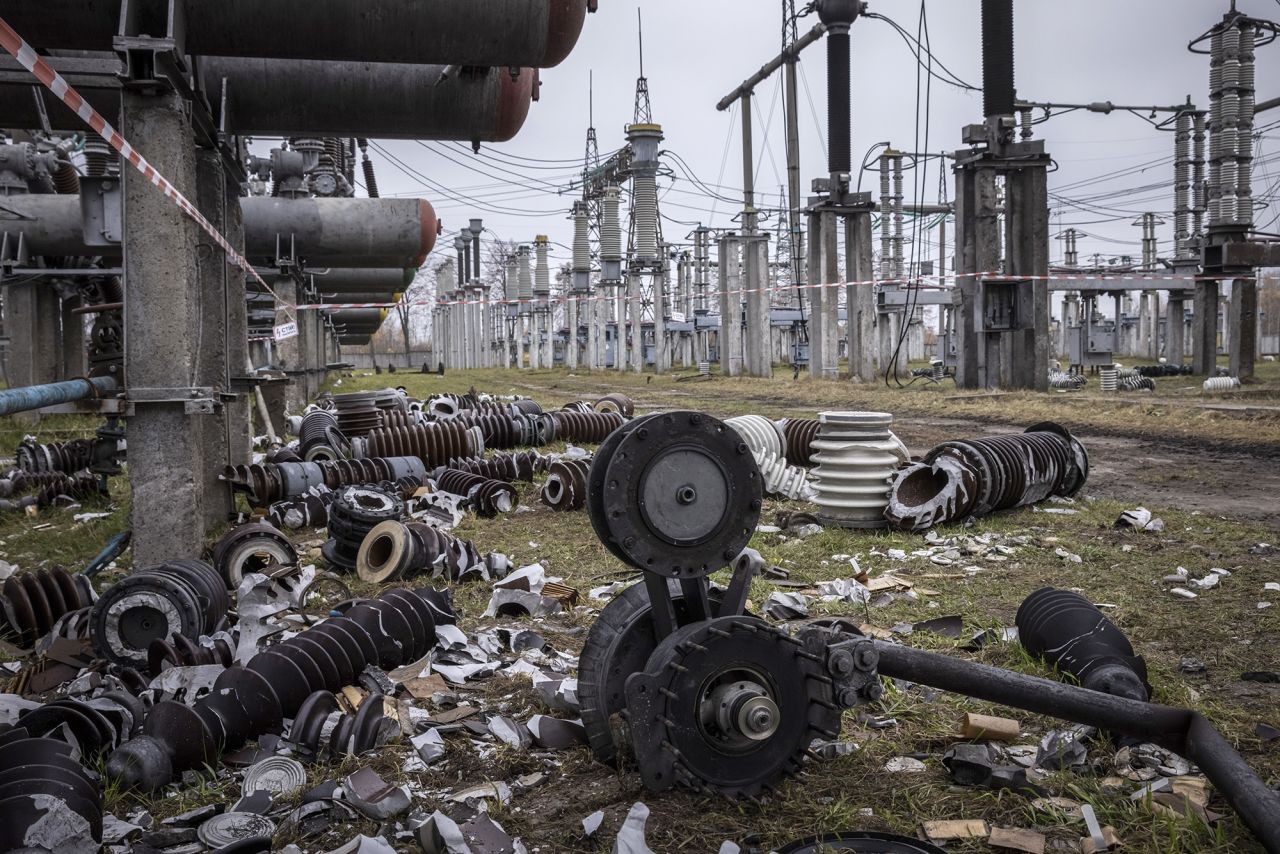
Using missile and drone strikes Russia systematically targeted Ukrainian energy infrastructure destroying or occupying roughly two-thirds of Ukraine’s pre-war power generating capacity. On August 26th in 2024, more than 200 missiles were fired, systematically aiming for Ukrainian energy infrastructure. Around 8 million households lost power without warning; the capital, Kyiv, experienced its first unscheduled blackout since November 2022. As of November 2026, Ukraine faces continued energy crises from this targeting. In the central Dnipropetrovsk region, “more than 600,000 residents of the region have been left without power”.
As System Capital Management recently reported (directly quoted from How Ukraine’s Electricity System Works: A Guide to a European Energy Model Under russian Attack):
- Nuclear energy is the backbone of Ukraine’s electricity supply. Even during the war, it typically provides around 60 per cent of the country’s electricity. The Zaporizhzhia Nuclear Power Plant is Europe’s largest nuclear facility with six reactors. It has been under Russian military occupation since the early weeks of the full-scale invasion and all six reactors have been shut down. The plant is not generating any electricity, but it still requires a constant supply of external power to cool the shut-down reactors and spent fuel.
- By some estimates, around 70 per cent of Ukraine’s thermal generation capacity has been damaged, destroyed, or seized since the full-scale invasion began.
- The Kakhovka Hydroelectric Power Plant, one of Ukrhydroenergo’s major facilities, was destroyed in June 2023 when the Kakhovka dam was blown up by Russia.
The assault on Ukraine is overt. Destroying energy infrastructure via the use of weaponry in an on-going war may seem still distant. What occurs when weaponry is not even required – if the taps can simply just be cut off? As Aura Sabadus highlights in Episode 413 of The International Risk Podcast, a clear example of fast-tracking away from energy dependence is found in Moldova. The nation-state relied heavily on Russian energy imports. In 2021, Moldova’s primary energy supplier Gazprom, “cut gas deliveries and raised prices, plunging the country into a state of emergency”.
“Additionally, Gazprom’s suspension of supplies under the pretext of a $709 million debt has left Transnistria in crisis. Heavily reliant on Russian gas, the region faces a potential humanitarian disaster. Research from Crisis Group (2024) indicates that schools and kinder gardens are without heat, while 72,000 households lack gas. If the crisis persists, mass migration from Transnistria is inevitable.”
- Francesca Dumitru – The Atlas Institute For International Affairs
Are the the tangible lessons from Ukraine, and indeed Moldova’s energy crisis’s at risk of being forgotten? Is Europe too behind the new reality that complex interdependence of our utilities is now the largest showcase for continental vulnerability? Is our head is the sand that geoeconomics is the new norm of warfare?
Geoeconomics: “the use of economic tools to advance geopolitical objectives. Other definitions reverse the ends and means, emphasizing how flexing geopolitical muscle is used for economic results. Broadly, one can think of geoeconomics as the interplay of international economics, geopolitics and strategy”
- Marianne Schneider-Petsinger – Chatham House
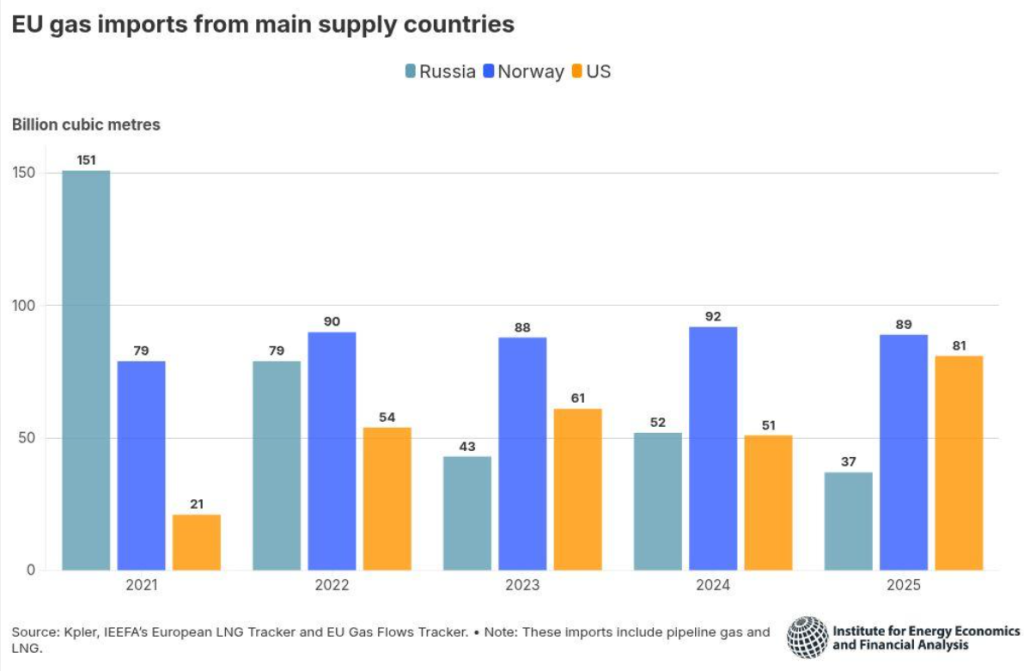
Europe has hugely shifted its use of Russian energy imports since the war in Ukraine. Russia supplied approximately 45% of the European Union’s gas imports. By 2025, that figure had fallen to around 12%. Europe has fundamentally restructured its energy relationships, turning increasingly towards Norway, the United States, ME, and Africa. So the continent is in the clear?
Under the pretence that it does not take an overt war for a nation-state to be able to pressure and control another actor, in fact it may not even take direct causalities but the complete undermining of a countries ability to function, then are we still vulnerable? How much should we prioritise the long term reliability of our energy suppliers? Should we in fact be prioritising not needing to rely?
What lessons can we learn from Ukraine and Moldova?