Climate, Infrastructure, and Strategic Stability: Rethinking Security in a Physically Changing World
Climate change is no longer a distant or abstract risk in the context of global security. It is actively reshaping the physical environment in which military systems operate, altering the reliability of infrastructure, and introducing new forms of uncertainty into strategic decision-making. As Dr Florian Krampe of the Stockholm International Peace Research Institute (SIPRI) argues in a recent episode on The International Risk Podcast, security today is being degraded not only by geopolitical tensions, but by environmental change itself.
At its core, modern deterrence depends on predictability. Early warning systems, submarine detection, and critical infrastructure are all designed around stable environmental assumptions. What is now emerging is a structural disruption to those assumptions, one that challenges how states understand threat, signalling, and escalation.
The Degradation of Strategic Infrastructure
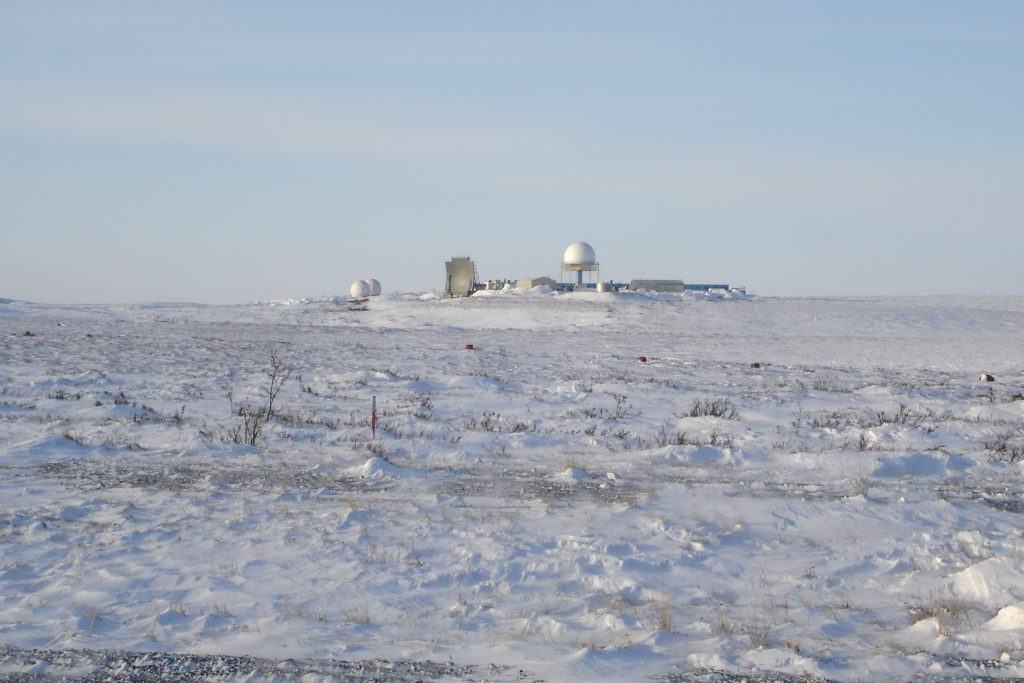
One of the clearest illustrations of this shift is found in the Arctic. Much of the region’s critical defence infrastructure, including early warning radar systems, was built during the Cold War on permafrost foundations.
As those foundations thaw, the physical stability of these systems is being compromised. Runways are buckling, radar installations are becoming less reliable, and the cost of maintaining operational readiness is rising sharply.
These are not future projections, but present-day realities. As Dr Krampe argues in his recent Financial Times piece, the real transformation is not only geopolitical but physical, with changing environmental conditions in the Arctic actively undermining the foundations on which defence systems depend.
Recent publications note that European governments are already responding to this shift, with updated Arctic strategies increasingly integrating environmental change alongside traditional geopolitical and security considerations.
Changing Oceans, Changing Detection
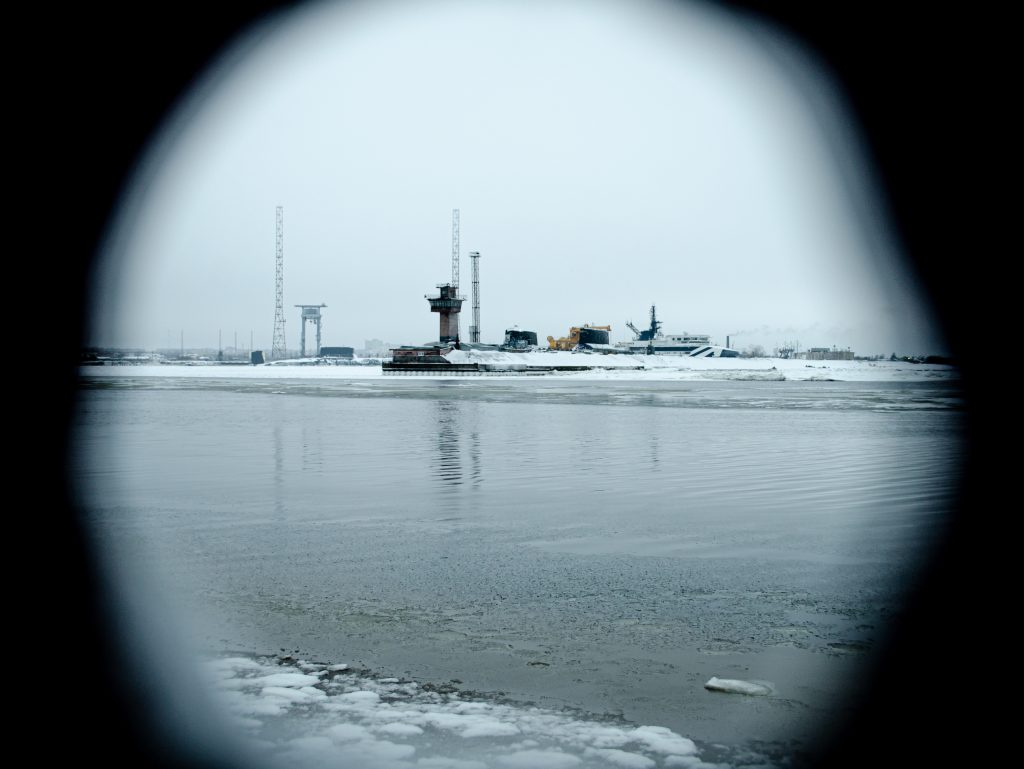
The impact of climate change is not confined to land-based infrastructure. It is also altering the physics of the oceans, with direct consequences for naval operations and strategic stability.
Submarine detection relies heavily on predictable acoustic conditions. Sound propagation in the ocean depends on temperature layers and salinity gradients, which create known patterns of reflection and absorption. These patterns underpin the ability to detect or evade detection.
As melting ice introduces large volumes of freshwater into the oceans, these acoustic conditions are shifting. The result is not simply that submarines become easier or harder to detect. Rather, the underlying assumptions about detection are becoming less reliable.
This creates an epistemic challenge. Military systems are designed based on known environmental conditions. When those conditions change faster than detection systems can adapt, uncertainty increases. In a domain where second-strike capability depends on concealment and detection, this has direct implications for nuclear stability.

From Predictability to Uncertainty
Taken together, these changes point to a broader transformation. Traditional security models assume a relatively stable physical environment, where uncertainty is driven primarily by adversary behaviour. Climate change disrupts this by introducing uncertainty at the level of the environment itself.
In Dr Krampe’s framing, this is akin to removing the chessboard while the pieces remain in play. States continue to act, signal, and manoeuvre, but the underlying structure that made those actions legible is shifting.
This has implications for miscalculation. As Arctic routes become more accessible, increased civilian and commercial activity raises the risk of accidents and misidentification. Distinguishing between intentional actions and environmentally driven events becomes more difficult, particularly in already tense geopolitical contexts.
The Investment Gap
At the same time, global military expenditure continues to rise, reaching record levels in recent years. Yet investment in climate adaptation within defence systems remains limited in comparison.
There are signs of change. For example, recent US budget requests have included dedicated funding for enhancing combat capabilities while mitigating climate risks. However, these efforts remain partial and uneven.
The broader issue is structural. Climate change is still often treated as a secondary concern, separate from core security priorities. This separation is becoming increasingly untenable. Environmental change is not an external factor. It is directly affecting the systems that underpin security itself.
In a recent report by The Guardian, the scale of this disconnect is highlighted, with military emissions still largely absent from national climate targets, reinforcing how defence remains a persistent blind spot in climate policy.

Rethinking Security as a System
What emerges from this discussion is the need for a more integrated understanding of security. Traditional approaches tend to compartmentalise threats, treating military, environmental, and societal risks as distinct domains.
In practice, these domains are increasingly interconnected. Climate impacts are influencing military readiness, straining infrastructure, and redirecting resources toward disaster response. At the same time, energy systems, supply chains, and technological innovation are becoming central to both environmental resilience and defence capability.
This points toward a broader conception of security, one that incorporates human security, environmental stability, and traditional defence considerations within a single analytical framework.
This reflects a broader shift identified in works such as SIPRI’s 2022 publication Environment of Peace: Security in a New Era of Risk, to which Dr Krampe contributed, showing how environmental change interacts with political, economic, and security systems to produce cascading and compounding risks.

Adaptation, Innovation, and Governance
Addressing these challenges requires both adaptation and innovation. On the operational side, this means investing in resilient infrastructure, updating detection systems, and integrating environmental data into military planning.
On the strategic level, it requires governance frameworks that can account for increased uncertainty and reduce the risk of miscalculation. This is particularly important in regions like the Arctic, where environmental change is accelerating and geopolitical tensions are rising.
There is also a longer-term innovation dimension. Advances in energy systems, logistics, and infrastructure resilience can enhance both environmental sustainability and defence capability. The challenge is to prioritise investments that deliver both, rather than treating them as competing objectives.

A Structural Shift in Global Risk
The key insight from this discussion is that climate change is not simply an additional risk layered onto existing security concerns. It is a structural force that is reshaping the conditions under which security operates.
Deterrence, signalling, and strategic stability all depend on physical systems that can no longer be taken for granted. As those systems become less predictable, the risk landscape becomes more complex.
This evolving reality is increasingly reflected in NATO’s own strategic framing, where climate change is recognised as a “threat multiplier” that exacerbates existing security risks and pressures on military systems.
In this context, the question is no longer whether climate change should be integrated into security thinking, but how quickly and effectively that integration can take place.
As Dr Krampe puts it, increasing security is no longer possible without addressing climate change. The two are now inseparable