Episode 335: Water Scarcity and Systemic Risk in Iran with Milad Jafari
Iran is facing what many experts describe as a looming state of “water bankruptcy”— a crisis where demand has so profoundly outstripped supply that the very foundations of economic stability, social cohesion, and national security are under strain. From drying reservoirs in Tehran to collapsing aquifers and land subsistence, water is no longer just an environmental issue — it’s a political one. Into Iran’s fifth consecutive year of drought, the president has openly warned that we may have no other choice but to move the capital if sufficient rainfall doesn’t come.
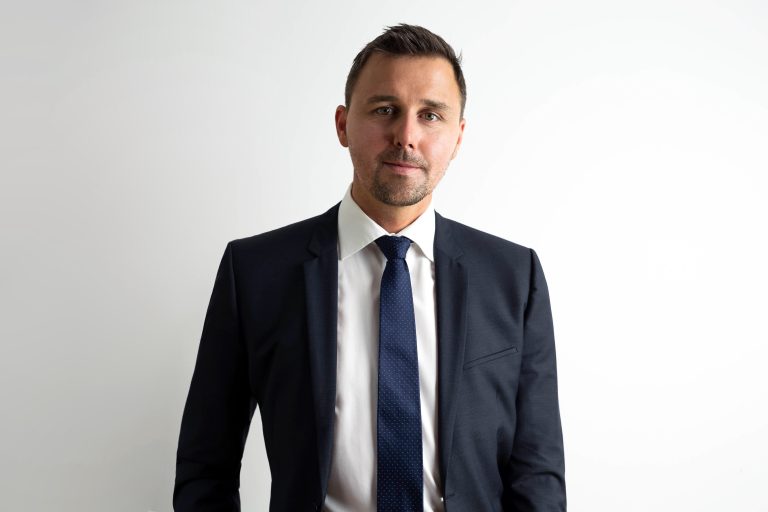
And to unpack this, today we are joined by Milad Jafari. He is an Iranian political scientist, rearcher and policy analyst specialising in water diplomacy and governance with a water science and engineering background, specialising in water governance issues in Tehran and transboundary challenges of the Helmand and Yarmouk rivers. He serves as an editorial board member at World Water Policy, a member of the Iranian Water Diplomacy Associate and a youth associate with the Blue Peace Middle East.
The International Risk Podcast brings you conversations with global experts, frontline practitioners, and senior decision-makers who are shaping how we understand and respond to international risk. From geopolitical volatility and organized crime, to cybersecurity threats and hybrid warfare, each episode explores the forces transforming our world and what smart leaders must do to navigate them. Whether you’re a board member, policymaker, or risk professional, The International Risk Podcast delivers actionable insights, sharp analysis, and real-world stories that matter.
The International Risk Podcast is sponsored by Conducttr, a realistic crisis exercise platform. Conducttr offers crisis exercising software for corporates, consultants, humanitarian, and defence & security clients. Visit Conducttr to learn more.
Dominic Bowen is the host of The International Risk Podcast and Europe’s leading expert on international risk and crisis management. As Head of Strategic Advisory and Partner at one of Europe’s leading risk management consulting firms, Dominic advises CEOs, boards, and senior executives across the continent on how to prepare for uncertainty and act with intent. He has spent decades working in war zones, advising multinational companies, and supporting Europe’s business leaders. Dominic is the go-to business advisor for leaders navigating risk, crisis, and strategy; trusted for his clarity, calmness under pressure, and ability to turn volatility into competitive advantage. Dominic equips today’s business leaders with the insight and confidence to lead through disruption and deliver sustained strategic advantage.
Transcript
Relocating the capital now because of the ecological collapse would be totally surprising. It would signal that the environmental security has become the core national security issue. Welcome back to the International Risk Podcast, where we discuss the latest world news and significant events that impact businesses and organisations worldwide.
And this episode is brought to you by Conducttr. Conducttr software helps you design and deliver crisis exercises without needing a big team or weeks of preparation. You can create a central exercise library with Conductor Worlds, and you can generate reports that support your governance and compliance requirements.
So if you want flexible, realistic crisis exercises that are easy to adopt, then Conducttr is worth a look. And I have a quick favour to ask before we start today. If you’re a regular listener, please subscribe and follow the International Risk Podcast.
It’s the simplest way to support the show, and it helps us reach more listeners who need this content. And my commitment to you is that we’ll keep improving every part of the experience from our guests, the quality of the research and the practical insights we provide. And if there’s a guest you think we should bring on the podcast or a risk that you want unpacked, send it through to us.
And I promise we read all of your comments. Please hit the subscribe or follow button now. And let’s jump in to today’s episode.
The situation in Iran today is extremely complex, and the challenges are many and varied. One of them is what experts are describing as a looming state of water bankruptcy. A crisis where water demand has so profoundly outstripped water supply that the very foundations of economic stability, maybe even social cohesion and national security are under strain.
So from drying reservoirs in Tehran to collapsing aquifers and land subsistence, water in Iran is no longer just an environmental issue. It’s also a political and a societal one too. And to unpack this really important topic, we’re joined by Milad Jafari.
He’s an Iranian political scientist. He’s also a researcher and policy analyst that specialises in water diplomacy and governance with a water science and engineering background. I’m really excited for the conversation that we have with Milad today to unpack what’s happening in Iran and why it matters today.
Milad, thank you very much for joining us on the International News Podcast today. Thank you so much for having me, Dominic. It’s a real pleasure to join you today.
I’m really looking forward to this conversation. The situation in Iran, you know, it’s very urgent. And the water governance, of course, is not the main topic, but it also carries important lessons for other cases.
It really does. And we’re here to talk about this water bankruptcy and the climate impacts in Iran. But noting the very significant events occurring right now, is your family okay? Is everyone safe right now? Yes, my family are safe.
I could talk to them two days ago. They are safe and secure. And you’re in Iran today.
Is that right? You’ve been based there? Yes, I’m based in Amman. It’s been around 16 months that I’m here. I’m conducting my second master’s degree on water diplomacy.
Amman’s beautiful. I was in the region last week and it really is such a fantastic area. I’m very jealous.
I’m keen to get back there already. When experts describe Iran as approaching water bankruptcy, and others are referring to day zero, can you tell us what do these terms actually mean in Iran? Is Tehran truly at risk of running completely dry? Or is this more a topic of equality or social justice? Yeah, the case of water bankruptcy, which is mainly defined and elaborated by United Nations University, when a system has spent beyond its hydrological means for so long that it cannot longer meet demands without irreversible damage. You’re literally bankrupt.
You cannot pay for what is needed. So just think of collapse aquifers, land subsidisers, reservoirs that are simply, completely, they cannot refill in the wet years. The scenario of day zero is not what we expected to emerge in the public.
Tehran and Iran generally face its sixth consecutive drought year. And when I was in Iran and I did my research on the water governance of Tehran, it was not that obvious that we would reach this point now. I did my research in 2023.
And at that time, I expected to water bankruptcy or this water scarcity situation to happen after 2030. But it happened earlier. In late 2025, we saw that the main dams supporting Tehrans with surface water reached to the 5 to 12% of their capacity.
So it’s very serious. It’s very existential. This is a real threat to the nation.
So can you help us understand, Milad, when we talk about the daily challenges that people in Tehran face and other major cities in Iran, what do these chronic water shortages actually look like? Is this something that people actually see and experience? I mean, I understand that most Iranians have grown up with water shortages and water challenges for decades, but how do they view water? And what is this like for a family living in Tehran today? Yeah, I haven’t been in Tehran for about a year. I cannot give you the exact experience of what they’re using in Tehran now. But what I can say that the information published in the media is not what’s exactly happening in Iran.
There are some biases in the media publication, I would say. But during the time, during the summer time that I was in Iran, I didn’t notice any water shortage either in major cities like Isfahan, Karaj or Ghazni or in Tehran. The day zero scenario didn’t happen, actually.
I think such measures that they did for supplying more water should have trade-off for other sectors like industries and agriculture. What I saw when I was talking with the people in the city where I live, Karaj, and most of the agricultural lands are getting drier and drier. And that’s the kind of situation that we can see in Iran.
But the chronic water shortage is not what we can see from when you’re living in Tehran, it’s not the case. And I wonder, about mid-2025, so about eight months ago, the Iranian President Massoud, he started talking again about relocating the capital to Makran, which is in the southeast of Iran. And he cited Tehran’s severe overpopulation, water-scarce power shortages, ecological strain.
And he used words like it’s unavoidable and we have no choice left. And this is potentially a positive move because the Makran coast is largely underdeveloped and presents a big opportunity. It might mean shifting the economic focus closer to where some of the large ports are, closer to the sea.
It might boost trade with the Gulf of Oman routes. It might ease the burden on the northern part of the country. Of course, with the ongoing conflict damage in the capital Tehran, this might add further weight to it.
But when you heard President Massoud talk about this unavoidable need, do you think this is a serious long-term strategy? It is both serious and symbolic, but there are some constraints to this policy, let’s say. Actually, the President was very blunt about it, that we are in a serious need to think of a water situation in Tehran. He said in November 2025 that we no longer have a choice.
It’s true because Tehran is a city that receives water from three rivers outside the city of Tehran. One of them is inside the Tehran province. Two others are even outside of Tehran.
So just consider how much water it needs to survive. And with the demographic pressure caused by the development, it needs more water. Relocating the capital to the Makran city, which is the front runner of the location, as the President said.
And there are also other nominates in the social media and I think in the policy, in the decision-making circles to relocate the capital there. But it’s not like… No one expects trucks moving ministries the next year or whenever they wanted to do that. But if you want to talk about the reason why Tehran becomes such a tourist city, it’s only because that Tehran has a priority for water supply and urban development.
And I talked about numerous experts and they say, we can see that even the parliament members are saying that it’s prioritised to be supplied with water. They’re urbanising too much, you know, more than its hydrological capacity. And they’re just supplying more water, supplying more water.
It’s like the mitigation and mitigation, no adaptation at all. That’s the case about why we need to change from Tehran to other cities. This is not new in Iran.
I think over the last 3,000 years, Iran’s had 30 different capitals, which over such a long history is not unreasonable. But these moves have normally been for strategic reasons, for political reasons or military reasons. As far as I’m aware, the capital in Iran has never moved because of ecological collapse.
So I wonder, with water becoming really a core national security issue, does this surprise you? You’ve studied water for a long time and this is your career. Is this something that you’ve expected or is this a surprise to even you when you started hearing this dialogue? Yeah, actually relocating the capital now because of the ecological collapse would be totally surprising. It would signal that the environmental security has become the core national security issue.
It was never been the same case because, for example, this was the capital of Iran. This one was the capital because of its borders and central location. But every time that capital changed, it was, as you said, because of other reasons except for ecological ones.
The government of Iran would be physically relocating its centre of power because the old centralised model obviously hits its national limits. What I found in my research is that such over-concentration in Tehran has caused unequal life chances in the whole country, unbalanced development, and the constant pull of migration that overloads the city. So if they wanted to change the capital city to another area, they need to develop the other areas first.
And it’s very challenging. And I wonder, many analysts, when you look and you read the research, as you definitely do, they’re arguing that Iran’s water crisis is less about natural drought and more about decades of policy choices since 1979, decisions that have prioritised food self-sufficiency, which many countries have, but also military-linked agriculture. We know that 90% of the water is being used for what can be called inefficient food irrigation.
And in countries like my own, Australia, it’s had lots of debates about inefficient food irrigation. You know, water-thirsty crops like rice and wheat in arid zones, should we be even trying to grow plants in those areas? But then, of course, you’ve got well drilling from about 40,000 wells to over a million today. So I wonder, what’s your opinion about whether this is an engineered drought rather than something that’s purely climatic? I’ll say, you know, I admit of some, because there is a siren going here now, you know, emergency siren.
Are you okay to keep talking? Yeah, I’m okay. But when I hear it, it’s just, you know, make me distracted. Have there been many blasts in the last couple of days? There is no blast here.
Just, we are in the middle of the missiles from Iran and air forces from this way. Yeah, I just got distracted because the noise is very intense. I’m not sure if you can hear it.
I can hear you. No, no, no, we can definitely hear it. No, do stay safe and let us know if you need to pause.
No, it’s fine here. Actually, everyone is just hearing. And even we used to go to the window to see the missile, but now it’s impossible to see them for the distraction.
So what was the question again? How much it’s engineered. I do agree with this statement that it’s an engineering drought here in Iran, but it’s not only because of that. There is a climate change.
Nobody can deny the existence of climate change. We can see that there are differences in the patterns of rainfall in Iran and many other countries in the Middle East. And also the different impacts in the European countries, let’s say, the more floods.
But in the Middle Eastern countries, there are more droughts. As you said, since there are some changes in the policies and there are some food self-sufficiency policies for the agriculture ministry, and ironically, it’s the agricultural jihad. So it’s like a jihad to produce more food.
That’s also caused the drought here in Iran. And I’ll take this opportunity just to remind our listeners that if you prefer to watch your podcasts, please do go to YouTube and subscribe to our content there. And if you like it, please also like our content.
That really is important for our success. I wonder, because Iran ramped up its dam construction in the 1950s under the previous monarchy, and they built 14 major dams with foreign expertise before 1979. And this was huge.
This really modernised Iran, it asserted state control over arid landscapes. But after the revolution, the Islamic Republic dramatically increased this. There was over 500 dams built up until this year.
Certainly lots of positives around self-sufficiencies, the sanctions, it’s provided more food security, provided hydroelectricity to about 12 gigawatts of power. It’s helped control flooding in some parts of the country. We’ve spoken about supplying urban water to places like Tehran and the Islamic Republican Guard Corps firms and companies linked to them have really mastered what are complex construction activities, but there’s also some negatives.
So I’d be really keen to hear from you about how building these hydraulic infrastructure has been so central to state building and in what ways it’s helped the country, but also in what ways has this now backfired and led to some of the problems that we’re facing today? Yeah, you’re right. You know, the dams, the hydraulic mission, as we said in the science of hydro politics and water resources management, we call it hydraulic mission. Hydraulic mission has become the symbol of the state power, modernity, and self-sufficiency, regardless of the political regime.
Environmental policies in Iran, like Afghanistan and like Syria, they’re following one track that is unrelated to the political regime. In the case of Afghanistan, we can see that Afghanistan is building too many dams nowadays, but all of their design was the design of the dams were date back to the monarchy system. This is the same for Iran.
Most of the dams are built during the Islamic Republic. Most of them are designed during the monarchy. They’re a handful of dams that are designed and completed by the Islamic Republic of Iran.
And yet there are some backfires that you can see that there are lots of reservoir loss in the evaporation. The river dried up, salinity rose, and the ecosystems collapsed. And what I did in my research was about the Amir Kabir Dam, which is one of the most strategic dams in Iran.
It was literally a symbol of power. Yeah, it’s backfired. It’s not good that you put all of your efforts only to control the nature.
It’s obviously wrong, but this hydraulic mission that came from the Western societies, the Western science, is still continuing in the Middle East, but it’s changed in the Western area itself. Thanks very much for explaining that. And we talked a little bit about agriculture before, and agriculture consumes about 90% of Iran’s freshwater, yet conversely only contributes about 10% of the country’s gross domestic product.
So that seems a little bit out of whack when you look at those numbers. So I wonder, when you look at agriculture and irrigations, massive water consumption, combined with the over-pumping and illegal wells that I mentioned earlier, how is this contributing to the crisis? And how politically difficult would it be to reform it? I mean, Iran’s got a series of really difficult decisions. We know that 14 of the top leaders in Iran have been killed in the last few days alone.
Looking at an issue like agriculture, around irrigation, around water, and the employment that agriculture is associated with, how difficult will it be for the government to reform this, to be able to make sustainable and climate-positive decisions around this topic? Actually, politically, the reform of the agriculture sector is brutal because cheap water and energy subsidies keep rural waters’ powerful network happy, as I can say. So there are some saying that there are some so-called water mafia linked to insiders. I’m not agreeing totally with those terms, but it creates a policy pathway that if you want to change it, you will be like the national betrayal, because it’s very important to keep self-sufficiency.
And I mean, even if it’s using 90 to 92% of Iran’s fresh water, and it contributes around 10% of GDP, its aim is to create as much food as needed for the survival of the country. I do agree that it’s not reasonable in some ways, but like, for example, what Syria did during the Assad government, this is the scenario that mostly the countries that prefer to be isolated try to seek, and they wanted to be self-sufficient to not rely on the other countries for their food, which is very strategic, right? Changing it is very brutal in two ways, as I said, either politically, well, you know, the domestic politics, but most of the people are farmers, so changing the situation would be hard, to increase the water price, and also it’s very hard to change the overall policy of the country to be more exposed to the global trade of food, for example, that’s very hard. I agree with you, and I think certainly we’ve seen this, the post-revolution government has made self-sufficiency a really key objective, and something that they’ve been pursuing consistently.
But I wonder, you know, the combined impact of years of sanctions, this economic isolation, is this potentially undermines Iran’s long-term water security, and as a result of that, I can’t help but wonder, if in trying to insulate itself from external vulnerabilities, did the state actually create a deeper internal vulnerability with its now significant water bankruptcy? I cannot agree more with this statement, actually it’s one of the problems that we have, is that if you see any water-related discussion in Iran, in the managerial level, or in the decision-making level, they’re always saying that agriculture is the main cause of problem in Iran, because as you said, using 90% of the water, and it’s ineffective, and it’s not contributing to the economy of the country. Yes, they’re trying to avoid any external threats, but they’re overpopping groundwater, drying wetlands, and the result is the collapsing of agroforests in Iran. Actually, the same logic appears in how Tehran water is securitised at the expense of neighbouring provinces, and I did my research, sanctions block water efficiency and finance for agriculture.
Yeah, I think that’s a really important point, and some of the research that I’ve seen, there’s a very clear link between where there’s been a spike in protests and community unrest in areas facing severe water shortages. Last summer, we saw protesters that were chanting water, electricity, life, our basic right. I’m wondering, have you seen in your research and your work, a link between water insecurity and then immediate links to political and social unrest? Actually, in my research, no, I didn’t, but there is a fear that it might be a reach and something happened in real life.
I was talking to many of the experts in the Alborz province, the water authorities. They were always saying that it’s really important to provide sufficient water to the people in Tehran and then in Karaj, because if the day zero scenario would happen, the people would come out and chant for their water as a basic need. So this is a fear of water becoming a very important element in the people’s reaction.
But in Tehran, I didn’t see anything like this. But for example, in Bafsanjan, I think in Khuzestan, there are some even protests, especially in the Isfahan, the people of the farmers of Isfahan, they are very serious about the water shortage in the city. There’s possibility of water to become more and more important in the political sociology of Iran.
You talked about what’s happening inside Iran, and I wonder about the transboundary water systems like in Helmand and Yarmouk rivers. I know certainly when I was in Afghanistan, you could see just the absolute devastating impact of dried up aquifers in parts of the country, especially in places like Helmand. Also, dynamics in places like Yarmouk, Jordan and Syria, you see places that have been previously flushed with water and are barren.
I wonder about the patterns, and we’ve discussed these when looking at other parts of the world on the Internationalist podcast, but we’ve talked about hydro hegemony, where upstream powers exploit downstream vulnerabilities when it comes to water. And I understand Iran’s crisis was exacerbated by the Taliban building dams in Helmand, which dramatically slashed water flows. Can you talk to us about the international impacts and the dynamics of controlling water flows that go between countries? Yeah, actually, it’s the main speciality to talk about water diplomacy and transboundary waters.
Thinking about the Helmand, it’s a very interesting case for anyone who doesn’t know where the Helmand is. It’s the river between Iran and Afghanistan. Afghanistan is in upstream, and Iran in the downstream, and we have a shared aquifer, a shared wetland called Yarmouk Wetlands.
And it’s a very interesting case because controlling water in the upstream area, like Afghanistan in upstream, it impacts downstream areas very seriously. The building of the Kajiki Dam and revamping it, and the Kamal Khan Dam, the most downstream area in Afghanistan, part of the base has caused the Yarmouk Wetland to be impacted seriously. The most interesting point about the base of Helmand is that the building of the Kamal Khan Dam, the water was diverted 180 degrees from its natural pass to another route.
Literally, it goes to the Gold Zero Depression, another part of the basin, but the ending point, instead of moving towards its natural pass, which is Kamal Wetlands. This is the case in all over the world that anyone who can control the water, they will build dams, they will do some infrastructural measures like what we can see in Turkey, even Iran in the Tigris Basin, literally all over the world. But the point is, it’s very important to keep it sustainable.
If it’s not sustainable, it’s not useful. Maybe you can benefit from dams in the short term, but it’s not sustainable in the future. You need to keep it balanced between the water-related benefit that you can gain and the environmental sustainability.
Now, of course, there’s a much bigger conflict right now between Israel and the US attacking Iran. But of course, we saw a couple of years ago that there were armed clashes between Iran and Afghanistan over access to this area and parts of Helmand before a truce was reached. Is this something that concerns you in the future once we get through the current conflict that water could become a sustained flashpoint between Afghanistan and Iran and maybe even other countries if these water truces and water sharing agreements aren’t strengthened? So far, this is the kind of a narrative of a water war that they will assume that reducing available water in the transboundary bases contribute ultimately fight each other on conflict to access more water.
It’s not happened yet. Even I think the latest example is the Helmand River that some scholars waiting, observing the developments, the former president of Iran, kind of threatened Afghanistan to give more water to the CISAN area of Afghanistan, the Taliban government administration. They replied with other threats.
It was kind of missed at that time. But people were waiting, it’s called hydro-political to see if finally water war scenario would actually happen in the real world or not. So maybe someday it will happen, but it’s very hard to expect water war scenario to happen because at the end of the day, water is not as important as other issues in the bigger picture.
So Malad, when we look forward, if Iran’s going to genuinely confront the structural causes of this water bankruptcy, where should reform begin? Because of course there’s potentials for agricultural sector reform, desalination of which many of Iran’s neighbours are already heavily invested in. There’s the ability to recharge aquifers. There’s also raising awareness with that consumption within many communities, wastewater resources.
I mean, there’s many things that could happen that are not just about treating the symptoms of the crisis, for example, building more dams, but actually addressing the systemic and the structural. What would your advice be to the Iranian government about how to address this in the long term? If you consider the structural causes of the water shortage or water scarcity, the water scarcity in Iran, it’s not a technical problem. It’s never been a technical problem.
You know, since 1940s, Iran started to become more centralised in demographic planning. So they wanted to relocate everyone from the borders to the central Iran. And now we can see that most of the problematised rivers in Iran are in the central Iran, like Karaj and Taleghan River, which supplies Tehran, Zayandeh-Rudiver and Hash-Bakhteghan River.
One of the points that we need to change extremely structural is to having the reverse migration from the central Iran to the other areas. And it’s not an easy task because most of the developments, most of the wealth accumulation happened in Tehran and other cities in the central Iran. So it needs decades, but it’s not as easy as we can expect.
And this is part of the potential solutions for the scarcity. You can see that most of the best universities are all located in Iran and then Isfahan. They are all in central Iran.
If you want to find a job, it’s very hard to find. You know, it’s an unequal chance of life in Iran. So it’s not an engineering solution, indeed.
It needs a social scientist to go and see how these social factors can be dealt with. I wanted to emphasise something here that what we assume in the, not we as Iranians and most of the engineers, we assume that if there is an engineering problem, if there is a problem with the materials, for example, water, oil or anything like that, you can solve it easily by a technical solution. It’s not the case.
And we need to move on from that idea that’s taking economic solutions will solve all of the problems. And Milad, one question that we ask all of the guests on the International Risk Podcast is, when you look around the world today, what are the international risks that concern you the most? That’s a very interesting one. And I need to think about it.
Dealing with the water resources and still most of the people, most of the researchers, try to politicise water issues in order to attract more political attraction from it. But it’s not the case. I mean, if you want to solve what to do with the transboundary water issues, which is, I think, one of the important, but not the highest importance issue around the world, we need to understand how people can work together.
Thanks very much for explaining that, Milad. And thank you very much for coming on the International Risk Podcast today. Thank you very much.
Thank you for having me and pleasant discussion between me and you. Well, that was a great conversation with Milad Jafari. He’s an Associate Editor at the World Water Policy Journal, and he’s a researcher at the Water Diplomacy Centre.
Today’s podcast was produced and coordinated by Anna Kummelstedt. I’m Dominic Bowen, your host. We’ll speak again in the next couple of days.
Thank you for listening to this episode of the International Risk Podcast. For more episodes and articles, visit theinternationalriskpodcast.com. Follow us on LinkedIn, Blue Sky and Instagram for the latest updates and to ask your questions to our host, Dominic Baldwin. See you next time.