Hypersonic Missiles, Nuclear Deterrence and the New Arms Race
Nuclear weapons are back at the centre of global politics. For much of the post Cold War era, they lingered in the background, casting a long but often ignored shadow over international affairs. Today, that shadow has sharpened. Great power rivalry has returned, arms control agreements are eroding, and emerging technologies are reshaping how states think about survival and escalation.
In a recent episode of the International Risk Podcast, host Dominic Bowen spoke with Ankit Panda, Stanton Senior Fellow in the Nuclear Policy Program at the Carnegie Endowment for International Peace and author of The New Nuclear Age: At the Precipice of Armageddon. The discussion focused on hypersonic missiles in the Asia Pacific, but quickly expanded into a broader reflection on deterrence, crisis stability, and the structural risks shaping today’s strategic environment.

Public debate often treats hypersonic missiles as revolutionary. The term itself suggests something unprecedented. In reality, as Panda explains, hypersonic simply refers to speeds greater than five times the speed of sound.
Missiles have travelled at hypersonic speeds for decades. Intercontinental ballistic missiles developed during the Cold War re-entered the atmosphere at speeds exceeding Mach 20. What distinguishes today’s systems is not speed alone, but how and where they travel.
Traditional long range ballistic missiles follow a high arc through space before descending toward their targets. By contrast, hypersonic glide vehicles re-enter the atmosphere and glide within it, manoeuvring at high speed. Manoeuvrable re-entry vehicles can adjust their course during descent. Hypersonic cruise missiles use specialized engines to sustain flight within the atmosphere at extreme velocities.
These variations complicate detection and interception.
Missile Defence and the Return of Strategic Competition
To understand why major powers are investing heavily in hypersonic systems, Panda argues that we must look at missile defence.
Since the early 2000s, the United States has expanded missile defence capabilities, particularly after withdrawing from the 1972 Anti-Ballistic Missile Treaty. Systems such as ground based midcourse defence were designed to intercept ballistic missiles outside the atmosphere during their midcourse phase.
For Russia and China, this raised a fundamental concern. Nuclear deterrence depends on the credibility of a secure second strike. If one side believes its retaliatory capability could be neutralized by missile defences after absorbing a first strike, the foundation of deterrence weakens.
Hypersonic systems offer a response. By flying within the atmosphere and manoeuvring unpredictably, they are designed to evade systems optimized for tracking and intercepting ballistic trajectories in space. In this sense, hypersonic development is not about novelty for its own sake. It is about restoring confidence in retaliatory capability under changing technological conditions.
This dynamic underscores a broader reality. Technological innovation in the nuclear realm rarely eliminates risk.

China’s Expansion and a Multipolar Nuclear Order
Beyond specific weapons systems, Panda highlights a more consequential shift. China is undertaking a significant expansion of its nuclear arsenal. Just a few years ago, public estimates placed China’s stockpile in the low two hundreds. Today, projections suggest it could reach around one thousand warheads by 2030. This growth signals not only quantitative change, but a rethinking of China’s role in the global nuclear balance.
The result is a more complex triangular competition among the United States, China, and Russia. During the Cold War, deterrence calculations were primarily bilateral. Now, each actor must consider two nuclear peers, each with distinct doctrines and capabilities.
.
If great power competition defines the global structure, the Korean Peninsula illustrates how geography intensifies instability. North Korea has tested manoeuvrable re-entry vehicles and hypersonic glide systems. Yet Panda emphasizes that the most destabilizing factor may be time rather than technology. The peninsula is small. Missile flight times between North and South can be measured in under two minutes.
Under ideal conditions, detecting a launch from space may take sixty seconds. That leaves minimal time for decision making. In such an environment, doctrines emphasizing pre-emption become attractive. South Korea’s strategy of targeting launchers before they fire reflects this logic.
This dynamic echoes what Cold War strategist Thomas Schelling described as the reciprocal fear of surprise attack. Each side fears being struck first. Each may conclude that striking first is safer than waiting. Hypersonic systems may marginally worsen this instability, but the deeper driver is compressed geography and limited warning time.
Artificial Intelligence and Perception Shifts
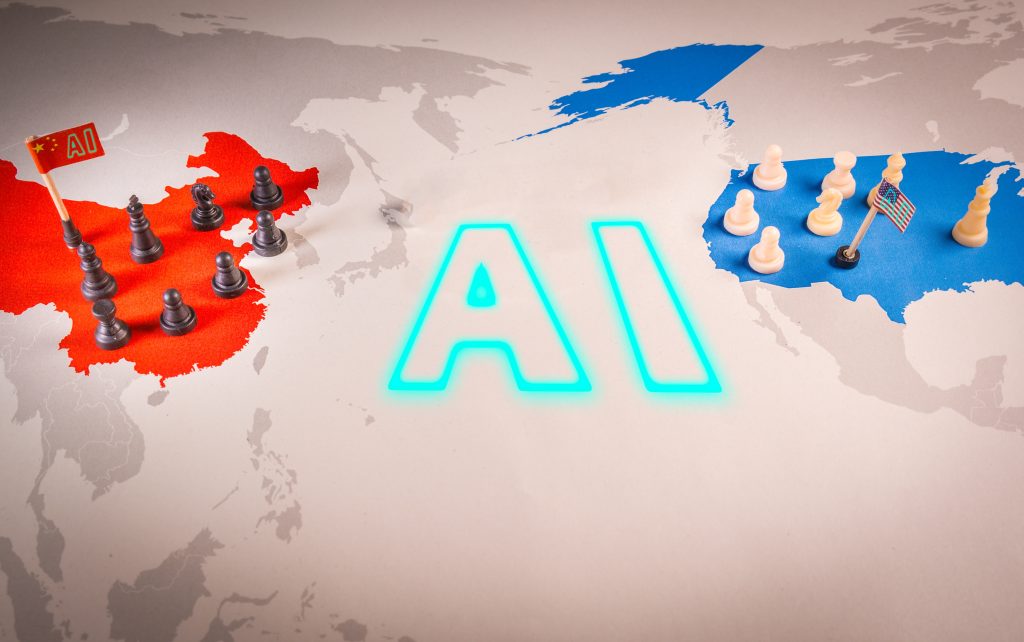
Looking ahead, Panda identifies artificial intelligence as a transformative factor. The concern is not that machines will autonomously launch nuclear weapons. Nuclear armed states have strong incentives to retain human control. The more subtle risk lies in perception. AI systems excel at pattern recognition. Applied to military intelligence, they may enhance the ability to track mobile missiles or detect submarines. If one side believes its adversary can suddenly locate and target previously survivable forces, confidence in second strike stability may erode. Even if such capabilities are limited in practice, the perception of vulnerability can drive arms racing and doctrinal change. In nuclear strategy, belief can be as consequential as reality.
The overarching theme of Panda’s argument is that nuclear weapons are no longer peripheral. Policymakers who could once focus on counterterrorism or regional conflicts without engaging deeply with deterrence theory must now reconsider.
Technological change, geopolitical rivalry, and institutional decay have converged.
We are not inevitably on the brink of Armageddon. Yet the margin for error appears thinner than it did a decade ago. For those working in security, defence, or international policy, the implication is unavoidable. Understanding how nuclear weapons shape power, perception, and risk is once again essential.