Inside the War in Ukraine: Strategy, Technology and the Future of Security
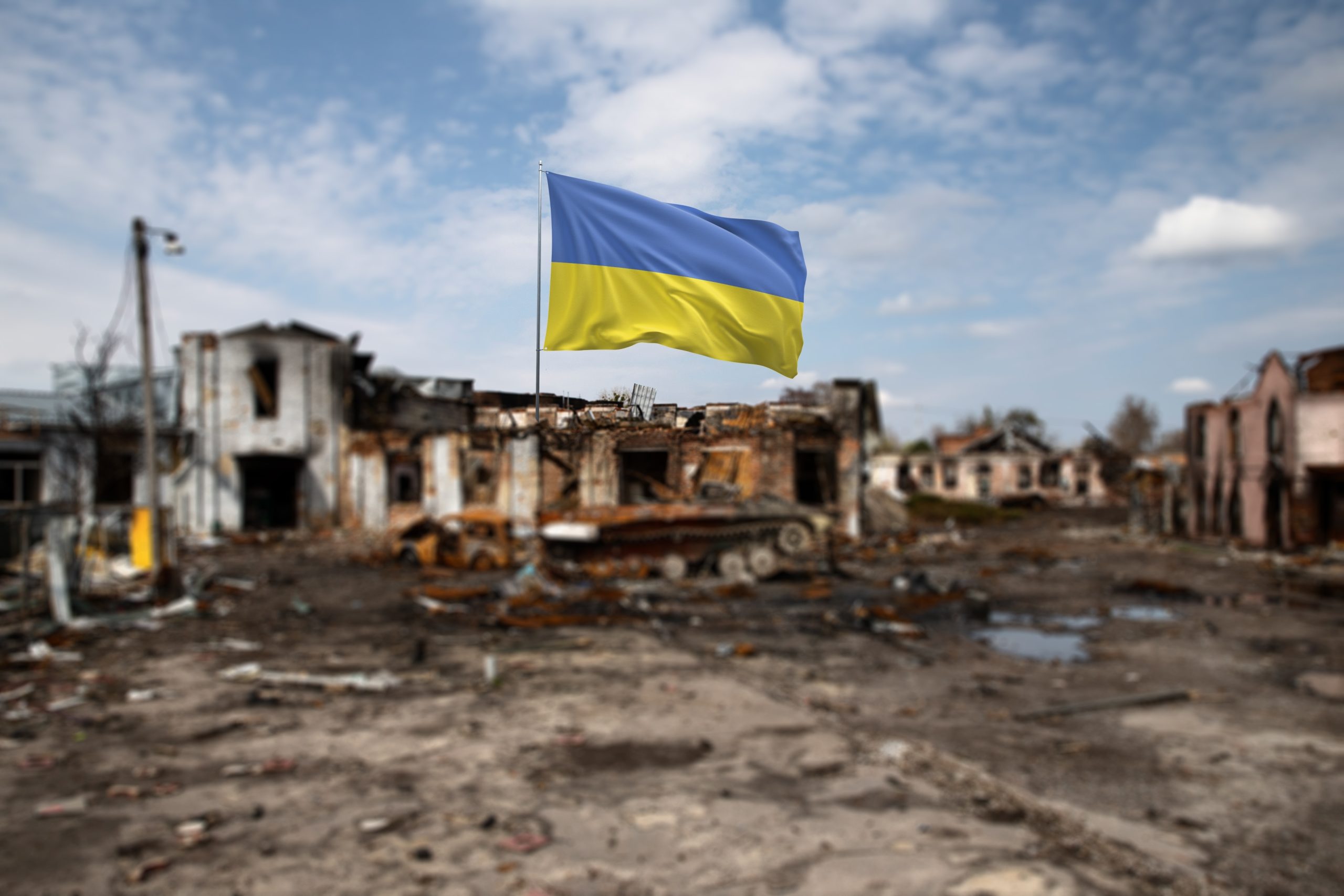
The war in Ukraine did not begin in February 2022. That date marks the escalation to full-scale invasion, but the conflict itself began in 2014 with Russia’s hybrid warfare in eastern Ukraine and the annexation of Crimea. Since February 2022, however, the war has evolved into Europe’s largest conventional conflict since the Second World War. What was expected by Moscow to be a rapid regime-change operation has instead become a grinding war of attrition defined by technological adaptation, industrial endurance, and civilian resilience.
A War of Attrition
Much has been made of Russian military might. Yet the statistics tell a different story. Russian forces are estimated to have suffered approximately 1.2 million casualties, including as many as 325,000 killed since February 2022. No major power has experienced such losses in any war since 1945. Ukrainian forces have likely suffered around 600,000 casualties. Civilian losses, according to the UN, total over 55,000, with nearly 15,000 killed.
Despite the scale of destruction, territorial change has been marginal relative to the human cost. Since 2024, Russian advances in major offensives have averaged between 15 and 70 metres per day. The war has become a constant “back and forth” of incremental gains at extraordinary cost.

Advanced Technology, Hype vs Reality
The war has often been framed as a laboratory for advanced military technology. Hypersonic missiles in particular have been heralded as “game changers.” However, critics challenge that narrative directly.
Regarding Russia’s Oreshnik missile the first thing to dispel is the idea that this is a new weapon system. It is a modified variant of the RS-26. More importantly is the linguistic manipulation around the term hypersonic.
True hypersonic cruise missiles manoeuvre at sustained hypersonic speeds within the atmosphere. Ballistic missiles, by contrast, have always travelled at hypersonic velocities during descent. The deliberate conflation of these terms’ forms part of Russia’s information strategy.
The Oreshnik’s challenge lies not primarily in speed, but in payload dispersal. A single missile separates into six MIRVs, each of which can further divide into sub-munitions — up to 36 simultaneous incoming targets. Interception becomes exponentially more complex.
Furthermore, even non-nuclear payloads are far from symbolic. When Oreshnik struck Dnipro, it used heavy tungsten components, reportedly laced with thermite. These kinetic weapons are particularly effective against underground infrastructure, including gas storage sites and hardened facilities.
Policymakers must therefore differentiate between psychological signalling and genuine capability.
The Evolution of Drone Warfare
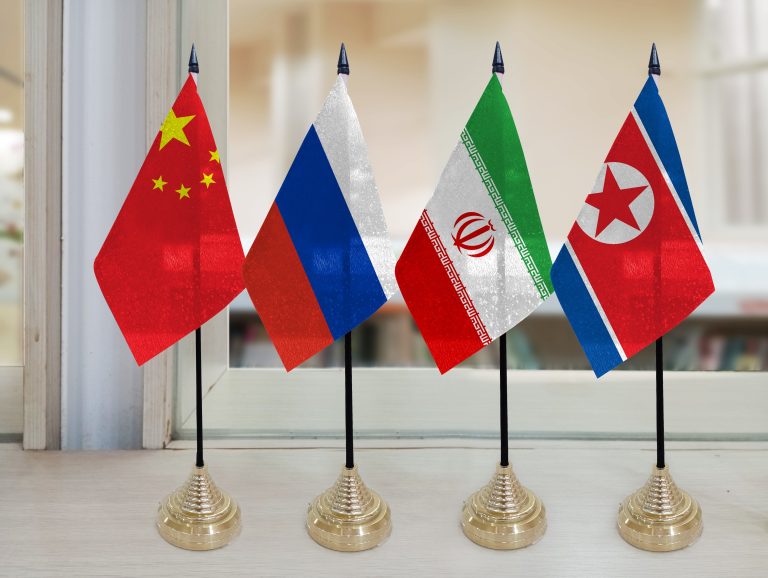
If artillery remains the largest killer, drones define the character of this war. Chinese made quadcopters such as the DJI Mavic 3 have been used for reconnaissance and “kamikaze style offensives.” Russia has relied heavily on Iranian-supplied Shahed drones for strikes on both military and civilian infrastructure.
The proliferation of drones fundamentally altered operations. In 2022, evacuations could occur within one kilometre of Russian positions. Frontlines are now so saturated that soldiers must march 15 kilometres to positions rather than drive, to avoid detection.
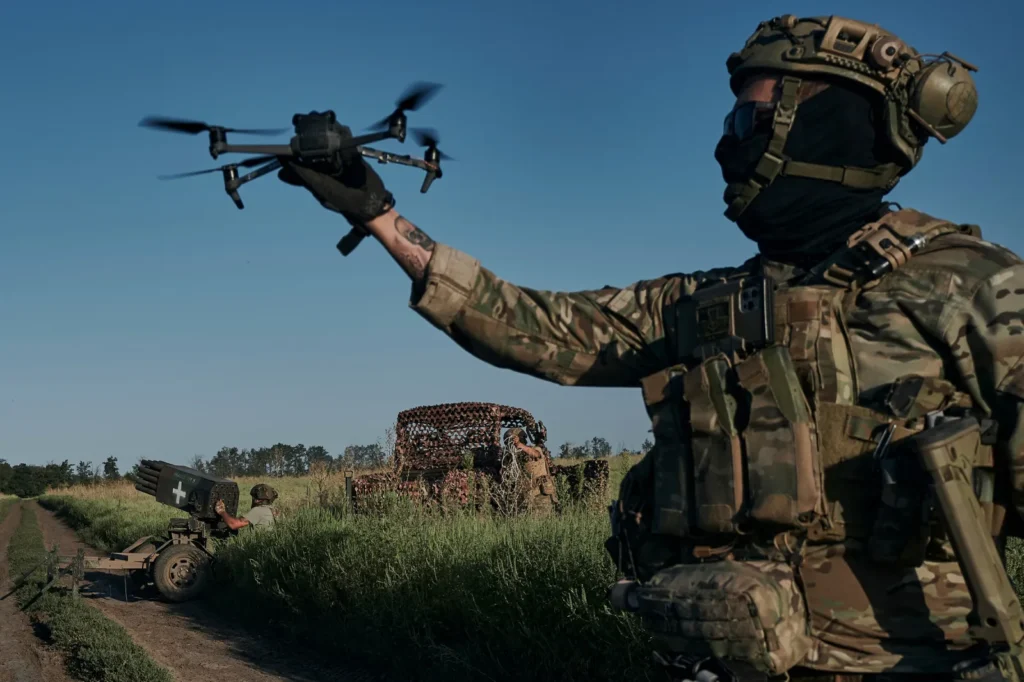
Innovation has been constant. When Ukraine dominated drone “kill zones,” Russia responded with fibre-optic drones, essentially reverting to a physical cable link to prevent electronic jamming. Fields across the front are now littered with wires.
Ukraine has countered with unmanned ground vehicles (UGVs) to conduct casualty evacuations and supply runs, reducing exposure to loitering munitions. This cycle of adaptation defines the tactical environment.
Civilian Infrastructure as a Weapon
Perhaps the most important lesson lies not in missiles or drones, but in infrastructure.
Especially Russia’s systematic targeting of civilian systems. In Mykolaiv, pipelines were destroyed to such an extent that tap water became undrinkable. The destruction of the Nova Kakhovka dam in 2023 resulted in catastrophic flooding and the collapse of drinking water supply.
This is not just a problem for Ukraine. Critical national infrastructure — energy grids, water systems, subsea cables, financial networks — throughout Europe is profoundly vulnerable. The landing stations for undersea cables are often not protected at all. The implications of coordinated disruption would be severe and immediate.
The war demonstrates that resilience is not abstract. It is measured in access to water, electricity, and communication.
Air defence
Air defence is arguable Europe’s most urgent conventional vulnerability. During one incident, approximately 20 drones entered Polish airspace; only a few were shot down. The defence response relied primarily on aircraft rather than ground-based systems.
This concern extends beyond current capabilities to emerging ones: autonomous drone swarms capable of saturating small territories such as the Baltic states, creating panic, clogging transport networks, and paralysing response before ground forces ever cross a border. While hypothetical, the scenario is technologically plausible.
This is a shift in strategic imagination. The threat is not necessarily tanks rolling into Estonia; it may be the paralysis of society through low-cost, high-volume aerial systems.
Lessons for Europe
The war in Ukraine is not simply about territory. It is about adaptation, industrial capacity, and societal endurance.
Advanced weapons are rarely decisive alone Hypersonic missiles, for example, compress timelines but do not overturn deterrence logic. Drone swarms and infrastructure sabotage may prove even more destabilising.
Civilian infrastructure is a primary battlefield. It is also one of Europe’s most acute vulnerabilities. Water systems, critical infrastructure, undersea capable all pose a genuine threat if targeted.
The conflict continues into 2026 with no clear resolution. Peace plans drafted without Ukrainian input have been criticised, and strategic uncertainty persists.
What Ukraine reveals is not a revolution in warfare, but an acceleration. Technology, tactics, and society are intertwined more tightly than ever.
Ukraine adapted under fire. The question is whether others will adapt before they are forced to.