Doug Weir

Doug Weir

Doug Weir is Director at the Conflict and Environment Observatory, where his work focuses on the environmental dimensions of armed conflict and military activity. His research examines how war and security policies contribute to environmental degradation, with a particular emphasis on pollution, ecosystem damage, and the long-term risks associated with military emissions. Doug is widely…
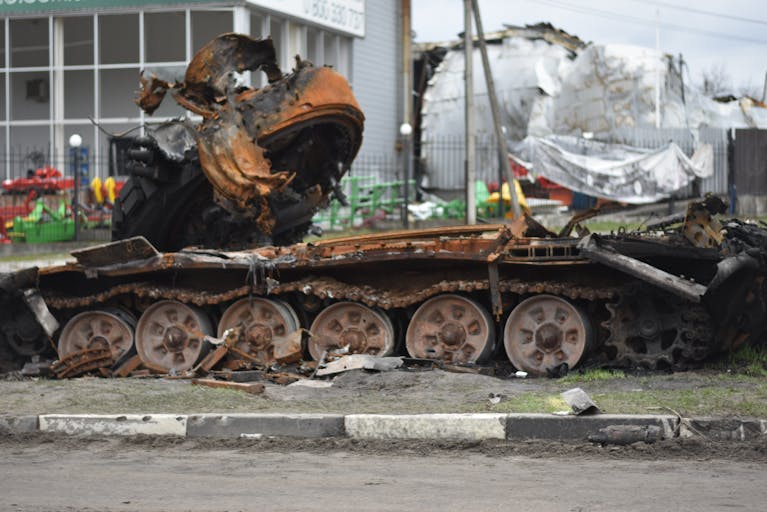
A rusted and damaged military tank lies abandoned on a city street.

Unreported, Unregulated, Unresolved: Military Emissions and the Climate Crisis

Traditional approaches to transitional justice continue to treat environmental harm as a peripheral concern. In global climate diplomacy, the environmental cost of war predominantly exists outside formal accounting. Such an emission is becoming harder to sustain as conflicts intensify and military spending rises across major powers. When delegates gathered for COP30 in November 2025, the…

Episode 359: Conflict Pollution: How Modern War Damages Climate, Water, and Land for Generations with Doug Weir

This episode hosts Doug Weir from the Conflict and Environment Observatory to examine the environmental consequences of modern warfare and the wider ecological risks created by armed conflict. The conversation explores how conflict generates complex forms of pollution, from toxic air emissions and oil fires to groundwater contamination and long-term ecological damage, often with impacts that persist…

Episode 351: Climate, Infrastructure, and Nuclear Risk: Rethinking Strategic Stability with Dr Florian Krampe

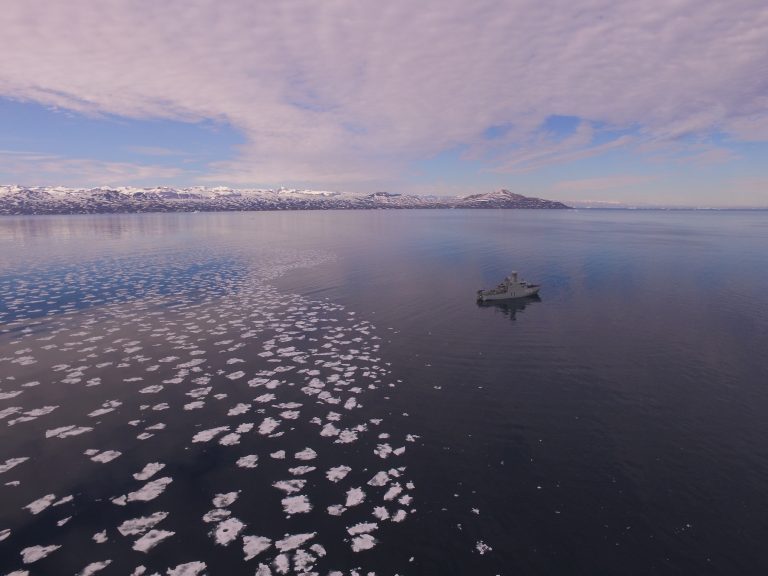
This episode with Dr Florian Krampe explores how climate change is no longer a peripheral environmental issue but a central factor reshaping global security. The conversation examines how environmental shifts are already degrading critical military infrastructure, from Arctic early warning systems built on melting permafrost to changing ocean conditions that affect submarine detection and strategic…

Climate, Infrastructure, and Strategic Stability: Rethinking Security in a Physically Changing World

Climate, Infrastructure, and Strategic Stability: Rethinking Security in a Physically Changing World

Climate change is no longer a distant or abstract risk in the context of global security. It is actively reshaping the physical environment in which military systems operate, altering the reliability of infrastructure, and introducing new forms of uncertainty into strategic decision-making. As Dr Florian Krampe of the Stockholm International Peace Research Institute (SIPRI) argues…

Episode 335: Water Scarcity and Systemic Risk in Iran with Milad Jafari

Iran is facing what many experts describe as a looming state of “water bankruptcy”— a crisis where demand has so profoundly outstripped supply that the very foundations of economic stability, social cohesion, and national security are under strain. From drying reservoirs in Tehran to collapsing aquifers and land subsistence, water is no longer just an…

Dr Rupert Stuart-Smith

Dr Rupert Stuart-Smith

Dr Rupert Stuart-Smith is the Deputy Director and a Senior Research Fellow in Climate Science and the Law at the Oxford Sustainable Law Programme, University of Oxford. His work sits at the intersection of climate science, legal accountability, and financial risk, examining how scientific advances are reshaping accountability in the climate transition. Trained in climate…

Episode 332: Who Pays for Climate Damage? Climate Litigation, Attribution and Accountability with Dr Rupert Stuart-Smith

In this episode of The International Risk Podcast, Dominic Bowen speaks with Dr Rupert Stuart-Smith about the rapid expansion of climate litigation and what it means for corporate strategy, financial stability, and international risk. The discussion explores how climate lawsuits have evolved from targeted environmental challenges into a structural feature of the climate transition, reshaping…

Peter Schwartzstein

Peter Schwartzstein

Peter Schwartzstein is an environmental journalist, researcher and advisor who focuses on environmental peacebuilding and the conflict-climate nexus. He’s spent more than a decade reporting across more than thirty countries in the Middle East, Africa, and farther afield, mostly for National Geographic. He’s a fellow at the Stimson Center, journalist-in-residence at The Center for Climate and Security, and…

Christina Dixon

Christina Dixon

Christina Dixon is the Ocean Campaign Leader at the Environmental Investigation Agency (EIA), responsible for overseeing a team of legal, campaigning and policy experts working on various multilateral, regional and national policy processes related to ocean and plastics governance. Having worked for EIA during the ad-hoc open-ended expert working group process, multiple UNEA sessions and…