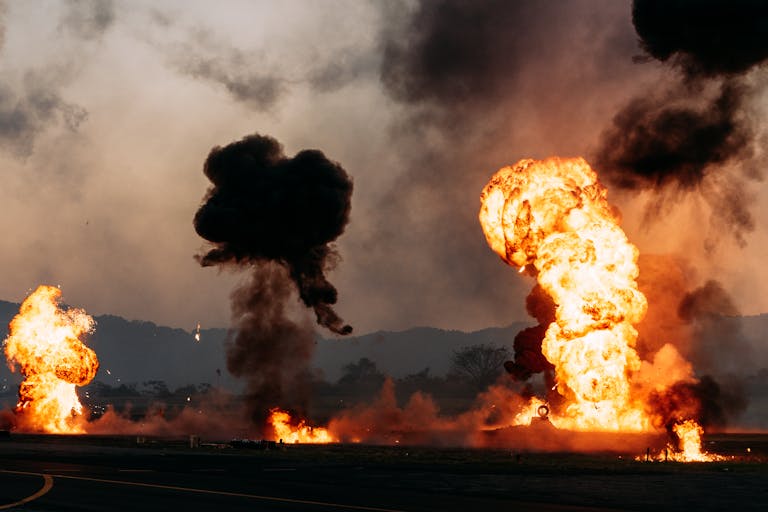
Intense fireball explosions with thick smoke in an outdoor setting.

The Iran War’s Hidden Front: Carbon, Fire and the Cost of Modern Warfare

When missiles strike refineries and cities burn, the damage is measured in casualties and territory. Far less visible is another front line: the atmosphere. In the first 14 days of the conflict involving Iran, an estimated 5 million tonnes of CO₂-equivalent emissions were released, roughly comparable to the annual footprint of a small state, and…

Frederick Otu-Larbi

Frederick Otu-Larbi

Frederick Otu-Larbi is a climate and environmental scientist whose work focuses on climate change, natural resource governance, and environmental management, particularly in West Africa. With over a decade of experience, he has delivered practical, climate-focused solutions for governments, businesses, and communities. He is currently based at the University of Energy and Natural Resources in Ghana,…

Episode 356: War on the Climate: Conflict, Carbon, and the Hidden Cost of War in Iran with Benjamin Neimark and Frederick Otu-Larbi

This episode hosts Benjamin Neimark and Frederick Otu-Larbi to examine the environmental and climate consequences of modern warfare, with a particular focus on the ongoing conflict involving Iran and its rapidly escalating global impact. The conversation explores how conflict is generating emissions at unprecedented speed and scale, with millions of tonnes of carbon dioxide released…

Episode 354: Beyond Strikes: The Ripple Effects of the US–Iran Conflict with Dr Jamie Shea

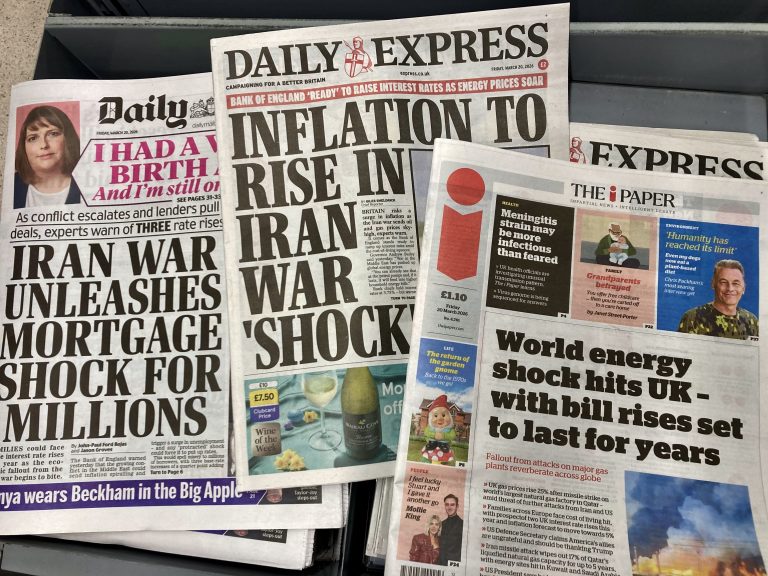
This episode with Professor Jamie Shea explores how contemporary conflict is no longer confined to the battlefield but unfolds across multiple interconnected domains, generating effects that extend far beyond the immediate theatre of operations. The conversation examines how the confrontation involving the United States, Israel, and Iran is producing systemic shockwaves across energy markets, supply…

Systemic Conflict and Global Shockwaves: Rethinking the Structure of Modern Warfare

Systemic Conflict and Global Shockwaves: Rethinking the Structure of Modern Warfare

Conflict has traditionally been understood as a transition from peace to war, defined by identifiable actors, geographic boundaries, and military engagements. Increasingly, however, this framework is becoming difficult to sustain. Contemporary conflict is less a discrete event and more a continuous process unfolding across multiple domains simultaneously, from military operations and cyber activity to financial…

Resilience, Hybrid Warfare, and the Future of Security: Lessons from Ukraine

Resilience, Hybrid Warfare, and the Future of Security: Lessons from Ukraine

In this episode of The International Risk Podcast, host Dominic Bowen joins live from Kyiv in conversation with one of our international relations specialists to examine how hybrid warfare, authoritarian cooperation, and civilian resilience are reshaping Europe’s security landscape. Speaking from Ukraine as the country endures its most intense wave of drone and missile attacks…

Episode 282: Live from Ukraine with Dominic Bowen: The Frontlines of Resilience and the Future of Leadership

Today, our host Dominic Bowen joins live from Ukraine on The International Risk Podcast for a special episode examining resilience, leadership, and hybrid warfare in the heart of Europe’s most critical conflict. In conversation with one of our international relations specialist, Dominic reflects on daily life in Kyiv amid the largest drone and missile attacks since the full-scale invasion…

Episode 95: Charles McAllister on fracking in the UK

In this episode Dominic spoke to Charles McAllister, the Director of Policy, Government and Public Affairs at United Kingdom Onshore Oil and Gas about fracking as an alternative for overcoming the energy crisis, debunking myths and discussing its benefits and associated risks. The United Kingdom Onshore Oil and Gas is the trade association for onshore…