
Hantavirus is serious. That does not make it the next pandemic.
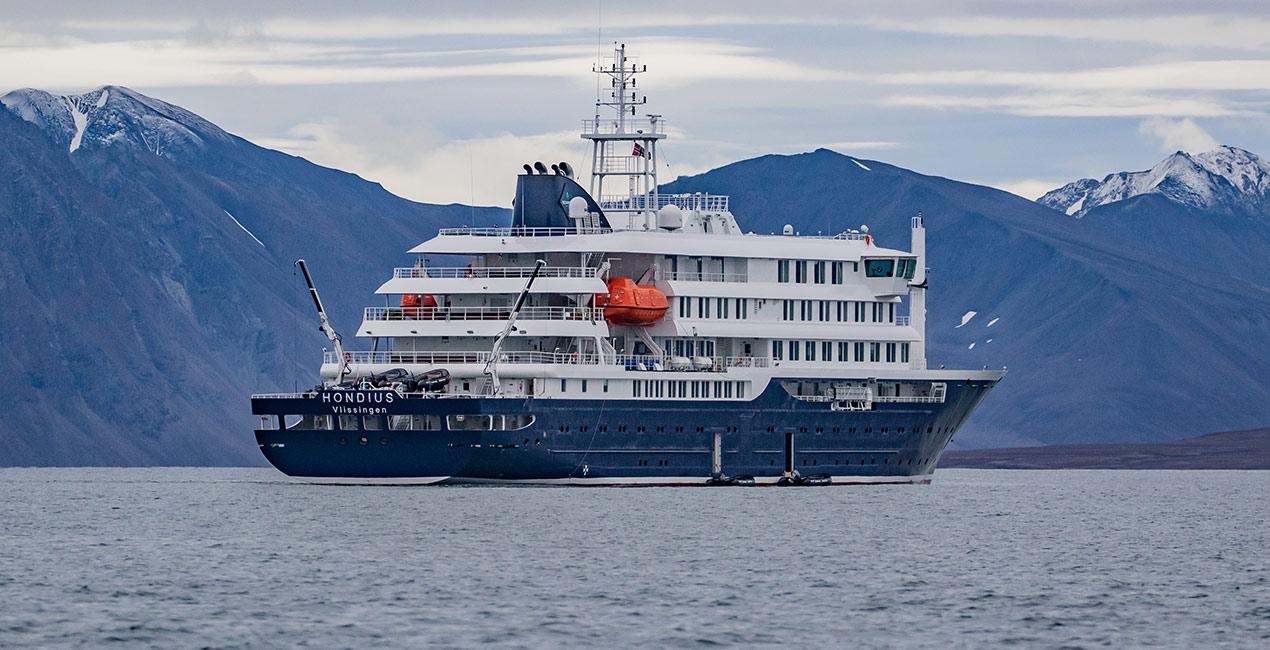
When a virus linked to a cruise ship begins appearing in global headlines just a few years after the COVID-19 pandemic, public anxiety is almost inevitable. The MV Hondius outbreak had all the ingredients of a modern health scare: an unfamiliar pathogen spreading in a confined space amongst international passengers, requiring quarantine measures, repatriation and contact tracing, and, this time, carrying a far higher reported fatality risk among severe cases than COVID-19 – as high as 40% in severe cases of hantavirus pulmonary syndrome.
As of late May 2026, the number of cases linked to the outbreak sits at 13, with three deaths reported. The virus has been identified as Andes virus, a member of the hantavirus family and the only hantavirus currently known to be capable of limited person-to-person transmission.
It is that phrase – “person-to-person transmission” – that has led to much of the public confusion and alarm. The MV Hondius hantavirus outbreak was serious. But that does not make it a COVID-style threat.
Person-to-person transmission does not mean pandemic transmission. As Dr Giulia Gallo explained on The International Risk Podcast, the key distinction is between how severe a disease can be for an infected person and how likely it is to spread widely through the general population. “In a person that’s infected, it’s very, very severe,” Dr Gallo said. “But because the person is very, very unwell, it’s quite easy to isolate the person, control the person and help the person survive.” The consequence, she explained, is that hantaviruses can be extremely serious for the affected individual while still presenting a much lower risk to the wider population.
Hantaviruses are not new. The disease was first recognised among troops during the Korean War, with Hantaan virus taking its name from the Hantan River in Korea. Hantaviruses are a group of relatively simple rodent-borne RNA viruses, with human infection usually occouring through exposure to infected rodents, or their urine, droppings or saliva.
One source of public confusion is that “hantavirus” is often discussed as if it were a single disease. Hantavirus is not one uniform threat. It is better understood as a group of related viruses. Different hantaviruses are associated with different rodent species, different geographies and different patterns of disease.
Dr Gallo explained the distinction between Old World and New World hantaviruses. Old World hantaviruses, found mainly in Europe, Asia and Africa, are more commonly associated with haemorrhagic fever with renal syndrome, which primarily affects the kidneys. New World hantaviruses, found in the Americas, can cause hantavirus cardiopulmonary syndrome, which primarily affects the lungs and, in severe cases, the heart and circulatory system.
Andes virus is the exception, not the rule. The MV Hondius outbreak involved a New World hantavirus known as Andes virus. This is unusual because most hantaviruses are not known for person-to-person transmission. Even with Andes virus, however, there are important caveats that are not always conveyed clearly in public debate. Hantaviruses do not spread efficiently through the general population in the way SARS-CoV-2 did. Outside exposure to rodents, Andes virus is thought to spread only rarely, and usually through prolonged close contact with someone who is ill, with no documented evidence of presymptomatic transmission. People infected with Andes virus are thought to be most infectious around the time they become symptomatic, making recognition, isolation and monitoring central to control.
Current public-health guidance reflects that difference, but it also explains why the response has looked serious. The incubation period can run from 4 to 42 days, meaning monitoring may need to continue for weeks after the last possible exposure. The severity of hantavirus pulmonary syndrome, combined with the absence of a standard specific antiviral treatment or widely available vaccine, explains why authorities have adopted a cautious public-health response for a defined exposed group. That response is evidence of caution and risk management, not proof of a generalised threat to the wider public.
The cruise ship setting made the response more complicated. Dr Gallo described a ship as “a very special place”. On land, exposure to infected rodent excreta often takes place outdoors, where ultraviolet sunlight, wind and open air can reduce risk. On a ship, passengers and crew share enclosed spaces, close contact, limited airflow and overlapping contact networks. If a person becomes ill on board, reconstructing who was exposed, when and for how long becomes far harder once passengers begin to disperse internationally.
According to Dr Gallo, no rodent had been found on the ship at the time of the discussion. The leading theory was that the original exposure may have happened on land in Argentina, where two passengers had reportedly been in more rural areas before returning to the vessel. If that is correct, the ship itself did not necessarily create the original exposure. Instead, it created the conditions in which onward transmission was more plausible and much harder to manage.
That distinction matters for travellers, cruise operators and public-health agencies. The lesson is not that cruise ships are inherently unsafe. It is that confined environments can turn a rare exposure into a complex operational problem. Medical evacuation, passenger communication, quarantine arrangements, testing, contact tracing and international coordination can all become part of the response.
The same virus can behave very differently in different hosts. Dr Gallo’s own research helps explain why hantaviruses behave so differently in rodents and humans. In one study, she and her co-authors examined how proteins from pathogenic, low-pathogenic and non-pathogenic orthohantaviruses interact with human type I interferon signalling, part of the body’s early antiviral defence. In rodents, orthohantaviruses are often asymptomatic. In humans, however, viral proteins can interfere with early immune responses, counteracting interferon signalling and allowing the virus to propagate in infected cells. This helps explain how viruses can be well adapted to their natural animal reservoirs, persisting without visible disease, while triggering a much stronger and more damaging response in humans.
Therefore, the outcome depends on the virus, the host and the cell type. This makes it especially hard to ascertain if a rodent exposure is risky as there are no obvious symptoms of infection in the rodent.
Severity is not the same as transmissibility. This is why public discussion of hantavirus needs to be precise. High fatality rates can frighten people, but severity is not the same as transmissibility. A virus that rapidly incapacitates a person can be easier to identify, isolate and manage than a milder virus that spreads before people realise they are ill. COVID-19 was so disruptive partly because many people could move through society while infectious. With hantavirus, Dr Gallo argued, the people most at risk of transmitting Andes virus are likely to be visibly and seriously unwell, making uncontrolled spread far less likely.
Still, the MV Hondius outbreak is a reminder that globalisation changes the context in which old pathogens appear. For businesses, governments and travel operators, preparedness rather than reactive panic is key. Rare diseases do not need to become pandemics to create significant operational disruption. They can trigger quarantine, medical evacuation, reputational risk, public anxiety, regulatory scrutiny and complex cross-border coordination.
The wider risk is operational, social and political. Dr Gallo’s reflections beyond virology are just as important here. COVID-19, she said, taught a lesson about collaboration, readiness and the importance of sharing knowledge. When asked what wider international risks concerned her most, she pointed to geopolitical fragmentation. We live in systems that rely deeply on interconnection, while political and social pressures push us towards separation and mistrust. A breakdown in that interconnection – whether through trade, the internet, scientific cooperation or public trust –can rapidly become a systemic risk.
That is the paradox of modern health security. We are more connected than ever, but trust is thinner. Outbreaks are biological events, but they are also social, political and operational events. They test hospitals and laboratories, but also communication systems, travel networks, business continuity plans and public confidence. Hantaviruses are not new; what is new is the speed with which an outbreak can become international news, move through the global information environment, cross borders and enter public fear. A rural exposure in South America, a ship in the Atlantic, passengers from multiple countries and responses from public-health agencies across continents can now be compressed into a single event broadcast globally.
The real risk is confusion. For scientists and public-health agencies, effective risk communication is therefore vital: explaining uncertainty clearly and honestly, why strict measures may be necessary for a specific exposed group, and why the wider public risk may still remain low. That means speaking plainly without talking down to the public and without allowing misinformation to fill the vacuum. Dr Gallo put it well when she said scientists should engage with journalists and the public “not treating them as ignorant or stupid”, but as people affected by the issue who deserve to understand what is known and what remains uncertain.





One Comment