The UAE Exit from OPEC: Geopolitics, Energy Security, and the Shifting Gulf Balance
The United Arab Emirates’ decision to leave OPEC marks one of the most significant shifts in Gulf energy politics in recent years. While the move is partly rooted in oil production and market strategy, it also reflects much deeper changes taking place across the Middle East and the international system itself.
Why the UAE Left OPEC
According to Dr Thafer, the UAE’s decision was not sudden or reactionary. Rather, it reflects a long-term strategic calculation accelerated by regional instability and shifting global energy dynamics.
A major driver is economic competitiveness. The UAE’s oil production costs are significantly lower than many other producers, including Saudi Arabia. As a smaller and more financially agile state, the UAE can profitably produce and export oil at lower price levels than many competitors.
This creates a strong incentive to maximise production capacity, particularly at a moment when global demand for energy remains high due to industrial expansion, technological development, and rising energy needs associated with artificial intelligence infrastructure and advanced computing.
The UAE also possesses a strategic advantage through the Fujairah pipeline and port infrastructure, allowing some exports to bypass the Strait of Hormuz entirely. This provides greater flexibility during periods of maritime instability and reduces dependence on one of the world’s most vulnerable energy chokepoints.
Dr Thafer argues that the UAE increasingly sees itself as pursuing a UAE first strategy focused on national interest, economic resilience, and independent geopolitical positioning rather than strict alignment with broader regional consensus.

The Strait of Hormuz and the Global Economy
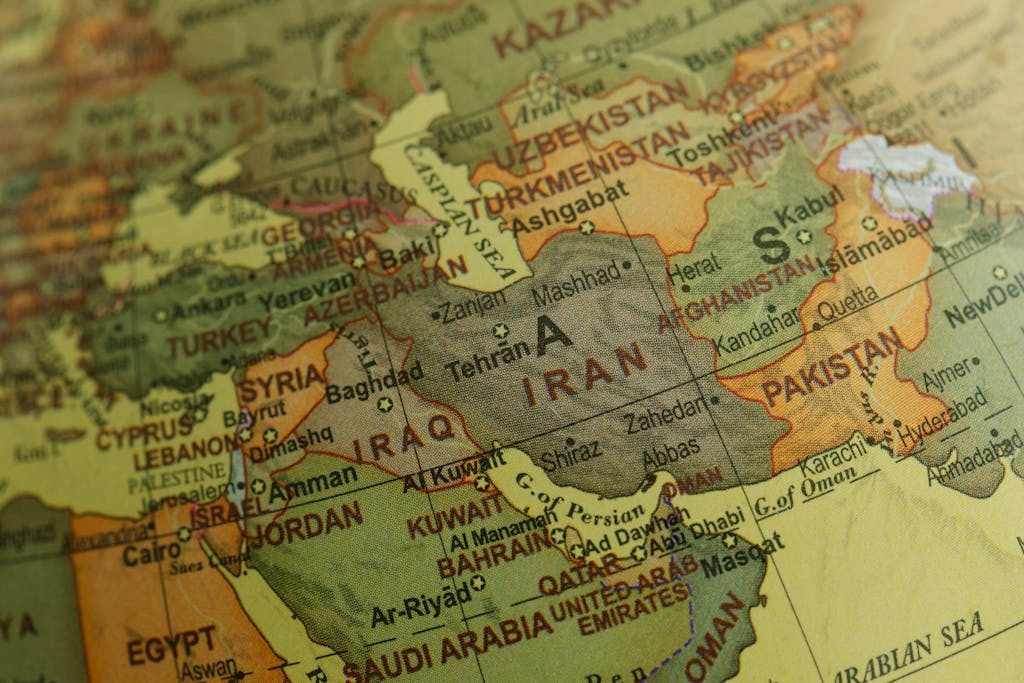
A central focus of the conversation is the growing instability surrounding the Strait of Hormuz, through which roughly one fifth of global oil flows pass.
The discussion highlights how disruptions in the Gulf affect far more than oil markets alone. The region is deeply integrated into global supply chains involving natural gas, fertiliser, shipping, aviation, tourism, logistics, and critical industrial inputs such as helium used in semiconductor manufacturing and advanced technologies.
Dr Thafer explains that while the United States is less directly dependent on Gulf energy than many Asian economies, volatility in global energy prices still creates major political and economic consequences domestically. Rising fuel prices contribute to inflationary pressure, political dissatisfaction, and economic uncertainty, particularly during election cycles.
However, the episode repeatedly stresses that the greatest burden of prolonged instability is likely to fall on the Global South. Countries across Africa and Asia remain far more exposed to fluctuations in energy and food prices, as well as disruptions to shipping and fertiliser supplies.
Dr Thafer points to growing protests and economic unrest in countries already struggling with inflation and economic hardship as early indicators of the broader consequences prolonged Gulf instability could produce.
The Gulf’s Connectivity Model Under Pressure
The conversation also explores how Gulf states have attempted to position themselves as indispensable hubs connecting Asia, Europe, and Africa.
From airlines and shipping infrastructure to tourism, finance, sports diplomacy, and major connectivity corridors, Gulf economies have increasingly diversified beyond fossil fuels while still relying heavily on regional stability.
Projects such as the Belt and Road Initiative, the India Middle East Europe Economic Corridor, and regional transport initiatives through Iraq and Turkey all depend on the Gulf remaining a reliable centre of trade and connectivity.
Dr Thafer argues that prolonged instability threatens this entire economic model. Tourism industries, hospitality sectors, aviation hubs, and investment flows all become vulnerable when international perceptions of risk rise.
At the same time, Gulf states face a strategic paradox. Their economic success has created enormous wealth and infrastructure, but also greater exposure to disruption. Unlike Iran, which has comparatively little integration into the global economy, Gulf economies have much more to lose from prolonged instability.
A More Fragmented Global Order
Ultimately, the conversation presents the UAE’s withdrawal from OPEC as part of a much larger transformation underway across international politics.
Energy security, economic resilience, geopolitical competition, and regional instability are becoming increasingly interconnected. States are reassessing alliances, supply chains, and strategic dependencies in response to a world that appears more volatile and less governed by stable multilateral frameworks.
For Gulf states, the challenge is particularly acute. Their future prosperity depends heavily on global connectivity, stable trade flows, and investor confidence, yet they sit at the centre of some of the world’s most contested geopolitical fault lines.
The episode suggests that the future of Gulf security will not be defined solely by military power or oil production, but by the ability of states to navigate a world where economics, infrastructure, and geopolitics have become inseparable.