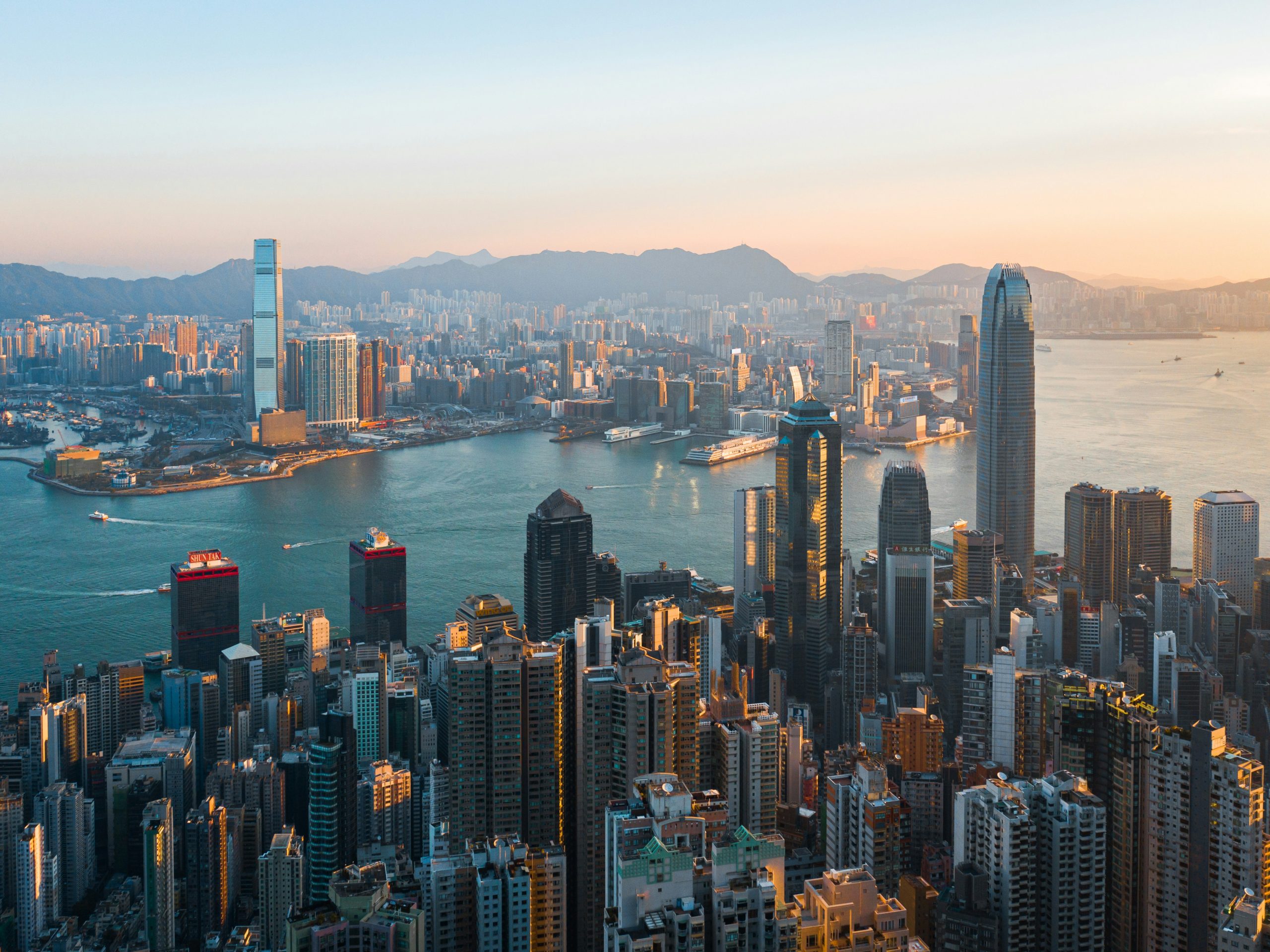
Is Hong Kong Still Safe for International Business? The Growing Risks Boards Can No Longer Ignore
For much of the twentieth century, Hong Kong established itself as one of the world’s great commercial success stories. Few jurisdictions combined a strategic location, deep capital markets and an internationally trusted legal system as effectively. Operating as a free port under British administration from 1842, the territory developed into one of Asia’s leading financial centres through a combination of English common law, low taxation, minimal barriers to trade and a consistently pro-business regulatory environment. These foundations attracted multinational corporations, international banks and investors from around the world, while Hong Kong’s deep-water harbour and proximity to mainland China made it one of the world’s most important trading hubs.
Following Deng Xiaoping’s programme of economic reform and opening-up in 1978, Hong Kong assumed an even greater strategic role. It became the principal gateway between China and the global economy. International businesses used Hong Kong as their base for accessing mainland China, while Chinese companies relied on the city to raise international capital, access foreign investors and conduct business through a legal and financial system that enjoyed widespread international confidence.
When sovereignty transferred from the United Kingdom to the People’s Republic of China on 1 July 1997, Beijing sought to preserve that confidence. Under the Sino-British Joint Declaration and the principle of One Country, Two Systems, Hong Kong would retain its common law legal system, independent judiciary, capitalist economy and extensive rights and freedoms until at least 2047. For international business, these commitments were not abstract constitutional guarantees; they were the foundation upon which decades of investment decisions were made.
For more than twenty years, that settlement largely endured. Today, however, many of the assumptions that made Hong Kong one of the world’s safest places to invest are being fundamentally reassessed.
2019 Marked the Beginning of a Fundamentally Different Era
For more than two decades after the 1997 handover, Hong Kong largely retained the characteristics that had underpinned its international commercial success. Despite periodic political tensions, the city continued to enjoy a reputation for judicial independence, regulatory predictability and openness to global business. That perception changed dramatically in 2019.
Mass pro-democracy protests erupted in response to a proposed extradition bill that would have allowed criminal suspects to be transferred to mainland China for trial. The demonstrations quickly evolved into the largest political movement in Hong Kong’s post-handover history, with millions taking to the streets over concerns that Beijing was steadily eroding the territory’s autonomy and the protections guaranteed under One Country, Two Systems.
Beijing’s response fundamentally altered Hong Kong’s political and legal landscape. In June 2020, the Standing Committee of China’s National People’s Congress imposed the Hong Kong National Security Law, creating sweeping new offences relating to secession, subversion, terrorism and collusion with foreign forces. Since then, further legislation—including the Safeguarding National Security Ordinance enacted in 2024 and subsequent subsidiary legislation—has expanded the powers available to the authorities and strengthened the state’s ability to intervene in areas previously regarded as outside the reach of national security enforcement.
For many international observers, these developments represented more than a tightening of political control. They raised fundamental questions about the durability of the legal environment that had long distinguished Hong Kong from mainland China. As Megan Khoo, Policy Director at Hong Kong Watch, argues, the One Country, Two Systems framework promised under the Sino-British Joint Declaration is now “effectively dead in practice.” For multinational companies, that assessment shifts the central question from politics to risk: if the legal assumptions underpinning Hong Kong’s success have changed, what does that mean for doing business there today?
Risks of Business in Hong Kong Today
1) Corporate Data & Information Security
For many multinational companies, the most immediate consequence of Hong Kong’s changing legal environment concerns the security of corporate information. Traditionally, businesses distinguished Hong Kong from mainland China when assessing cyber and information security risks. That distinction is becoming increasingly difficult to sustain.
The Hong Kong 2020 National Security Law, together with subsequent subsidiary legislation introduced under the territory’s expanding national security framework, has significantly broadened the powers available to the authorities. As Megan Khoo explains, recent legislation means that “anyone, foreigner, Hong Konger, even [someone] transiting through Hong Kong,” can be required by the Hong Kong National Security Police to surrender mobile phones, laptops or other electronic devices. Refusing to comply may expose an individual to arrest and prosecution.
For executives travelling with commercially sensitive information, this represents more than a personal legal consideration. Modern corporate devices routinely contain confidential board papers, merger and acquisition material, intellectual property, legal advice, customer information and access credentials to wider corporate networks. Even where companies operate robust cybersecurity systems, legislation requiring the disclosure of devices introduces a legal route through which commercially sensitive information may become vulnerable.
Many multinational organisations have already begun adapting their travel procedures accordingly. Security briefings, “burner” laptops and mobile phones, restricted access to corporate systems while travelling, and enhanced information security protocols have become increasingly common for employees visiting jurisdictions considered to present elevated state surveillance risks. Increasingly, Hong Kong is being assessed through that same lens.
Khoo argues that the trajectory is unlikely to reverse. Although Hong Kong has not yet adopted the extensive internet controls associated with mainland China, she warns that it is “definitely moving in that direction.” For boards and executives, the question is therefore no longer whether Hong Kong remains commercially attractive, but whether existing information security policies adequately reflect an evolving legal environment in which corporate data itself may become subject to state intervention.
2) Rule of Law and Legal Predictability
While concerns over judicial independence are often discussed in political terms, they also have direct commercial consequences. Businesses invest where legal outcomes are predictable, contracts are consistently enforced and disputes are resolved through independent institutions. Any perception that those conditions are changing inevitably alters the risk calculus for long-term investment.
Khoo argues that Hong Kong’s legal environment has fundamentally shifted.
“The ‘One Country, Two Systems’ framework…is now effectively dead in practice…the rule of law and fundamental freedoms…have been systematically dismantled, especially since the National Security Law.”
Recent subsidiary legislation has reinforced those concerns by allowing Hong Kong’s Chief Executive to certify cases as matters of national security, with those determinations binding on the courts and not subject to challenge through the ordinary judicial process.
Whether or not these powers are exercised against commercial actors, they contribute to a broader question for international business: can Hong Kong still offer the legal certainty that historically distinguished it from mainland China? For boards considering long-term investment, that question is becoming increasingly difficult to ignore.
3) Sanctions and Regulatory Compliance
Perhaps the least appreciated consequence of Hong Kong’s changing role is the growing compliance risk facing multinational businesses. For decades, the territory’s status as a separate customs territory and international financial centre made it the preferred gateway for companies seeking access to mainland China. Today, however, that intermediary role is attracting increasing scrutiny from Western governments and regulators.
According to Khoo, Hong Kong Watch has devoted growing attention to the issue as concerns over sanctions evasion have intensified.
“In the last couple of years, there’s been a lot more spotlight and research done on sanctions evasion that’s happening via Hong Kong… Companies need to be aware that this is happening because it could put them directly at risk of violating Western sanctions… Hong Kong’s being used as a front.”
For multinational organisations, the risk is not necessarily deliberate sanctions evasion, but inadvertent regulatory exposure. As geopolitical competition between China and the West intensifies, companies operating through Hong Kong face increasing pressure to understand precisely how counterparties, subsidiaries and supply chains interact with sanctions regimes imposed by the United States, the United Kingdom and the European Union. Transactions that once appeared routine may now warrant significantly greater legal and compliance scrutiny.
For boards, this represents a broader strategic shift. Hong Kong’s value historically lay in its ability to act as a trusted intermediary between China and international markets. If regulators increasingly question that distinction, organisations may need to apply many of the same due diligence, supply chain mapping and compliance controls that they would ordinarily reserve for higher-risk jurisdictions. The issue is no longer simply whether Hong Kong remains an attractive place to do business, but whether corporate compliance frameworks have evolved quickly enough to keep pace with its changing geopolitical role.
Key Takeaway
Hong Kong remains one of the world’s leading financial centres. Its deep capital markets, internationally connected banking system and strategic position as a gateway to Asia continue to make it an attractive destination for multinational business. What has changed is the legal and geopolitical environment in which those advantages exist.
During the interview, Dominic Bowen drew a comparison with multinational companies operating in Russia before the full-scale invasion of Ukraine in 2022. Many recognised the geopolitical risks but delayed reassessing their exposure until events forced them to act. The comparison is not that Hong Kong and Russia are the same, but that prudent organisations review their assumptions before circumstances compel them to.
Megan Khoo offered a similarly forward-looking warning, describing Hong Kong as “the playbook…for Taiwan.” Whether or not that assessment proves correct, it reinforces a broader lesson: geopolitical risk rarely emerges overnight. It develops gradually through changes in legislation, institutions and the strategic environment.
For boards and executive teams, the question is therefore not simply whether to do business in Hong Kong. It is whether contingency planning, information security and compliance frameworks have evolved as quickly as the operating environment itself.