Frederick Otu-Larbi

Frederick Otu-Larbi

Frederick Otu-Larbi is a climate and environmental scientist whose work focuses on climate change, natural resource governance, and environmental management, particularly in West Africa. With over a decade of experience, he has delivered practical, climate-focused solutions for governments, businesses, and communities. He is currently based at the University of Energy and Natural Resources in Ghana,…

Benjamin Neimark

Benjamin Neimark

Benjamin Neimark is a Reader at the School of Business and Management and a former Fellow at the Institute of Social Science and Humanities (IHSS) at Queen Mary University of London. He is a human geographer and political ecologist whose research focuses on the environmental and social impacts of global supply chains, extractive industries, and…

Episode 356: War on the Climate: Conflict, Carbon, and the Hidden Cost of War in Iran with Benjamin Neimark and Frederick Otu-Larbi

This episode hosts Benjamin Neimark and Frederick Otu-Larbi to examine the environmental and climate consequences of modern warfare, with a particular focus on the ongoing conflict involving Iran and its rapidly escalating global impact. The conversation explores how conflict is generating emissions at unprecedented speed and scale, with millions of tonnes of carbon dioxide released…

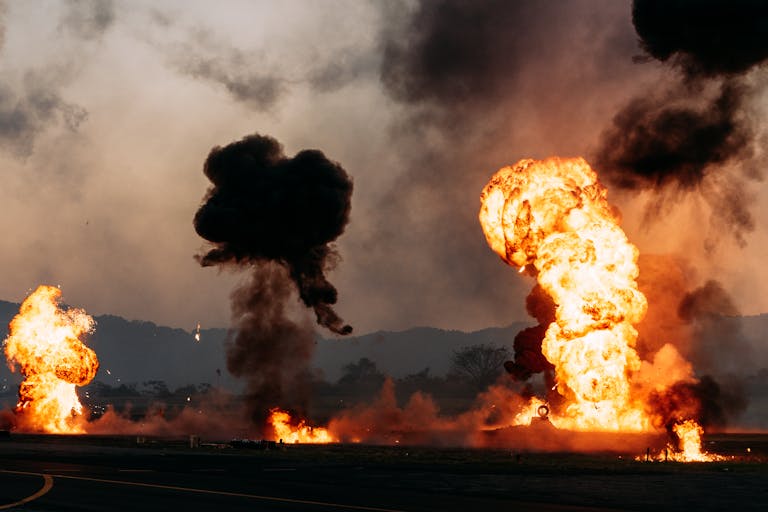
Intense fireball explosions with thick smoke in an outdoor setting.

The Iran War’s Hidden Front: Carbon, Fire and the Cost of Modern Warfare

When missiles strike refineries and cities burn, the damage is measured in casualties and territory. Far less visible is another front line: the atmosphere. In the first 14 days of the conflict involving Iran, an estimated 5 million tonnes of CO₂-equivalent emissions were released, roughly comparable to the annual footprint of a small state, and…

Episode 351: Climate, Infrastructure, and Nuclear Risk: Rethinking Strategic Stability with Dr Florian Krampe

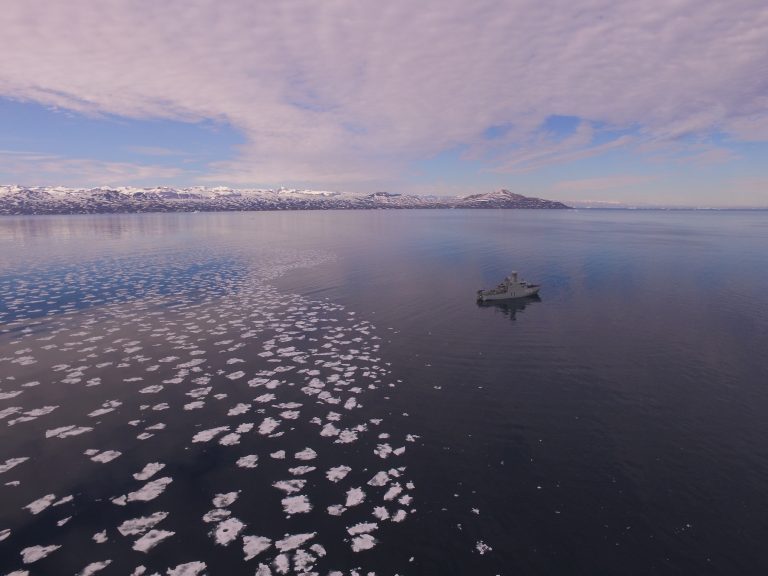
This episode with Dr Florian Krampe explores how climate change is no longer a peripheral environmental issue but a central factor reshaping global security. The conversation examines how environmental shifts are already degrading critical military infrastructure, from Arctic early warning systems built on melting permafrost to changing ocean conditions that affect submarine detection and strategic…

Climate, Infrastructure, and Strategic Stability: Rethinking Security in a Physically Changing World

Climate, Infrastructure, and Strategic Stability: Rethinking Security in a Physically Changing World

Climate change is no longer a distant or abstract risk in the context of global security. It is actively reshaping the physical environment in which military systems operate, altering the reliability of infrastructure, and introducing new forms of uncertainty into strategic decision-making. As Dr Florian Krampe of the Stockholm International Peace Research Institute (SIPRI) argues…

Dr Florian Krampe

Dr Florian Krampe

Dr. Florian Krampe is a German/Swedish political scientist and is the Director of Studies, Peace and Development, at SIPRI. He is also Director of the SIPRI Climate Change and Risk Programme. His particular focus is on peace and conflict research, environmental and climate security, and international security. With over 16 years of experience, Dr. Krampe…

Cedric de Coning

Cedric de Coning

Cedric de Coning is a Research Professor at the Norwegian Institute of International Affairs (NUPI), where his research focuses on strengthening the resilience and sustainability of social-ecological systems under pressure from climate change and other global stressors. His work examines the intersection of climate change, governance, and conflict, applying an adaptive peacebuilding perspective to international,…

The Climate-Conflict Nexus in the Lake Chad Basin: Complexity Beyond Simplistic Narratives

The Climate-Conflict Nexus in the Lake Chad Basin: Complexity Beyond Simplistic Narratives

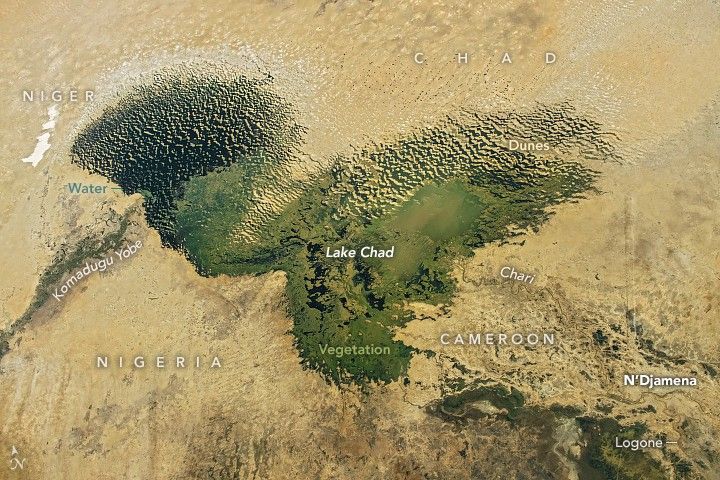
The Lake Chad Basin has become one of the world’s most frequently cited examples of how climate change, insecurity, and governance pressures intersect. With over 50 million people across Nigeria, Niger, Chad, and Cameroon, the region supports livelihoods that depend almost solely on natural resources, particularly fishing, farming, and pastoralism. Over the past six decades,…

Andrew E. Yaw Tchie

Andrew E. Yaw Tchie

Andrew E. Yaw Tchie is a Senior Research Fellow at the Norwegian Institute of International Affairs (NUPI) and Manager of the Training for Peace Programme. His research focuses on African-led peace support operations and stabilisation missions, United Nations peacekeeping operations in Africa, partnerships between the United Nations, the African Union, and regional organisations, as well…