Doug Weir

Doug Weir

Doug Weir is Director at the Conflict and Environment Observatory, where his work focuses on the environmental dimensions of armed conflict and military activity. His research examines how war and security policies contribute to environmental degradation, with a particular emphasis on pollution, ecosystem damage, and the long-term risks associated with military emissions. Doug is widely…
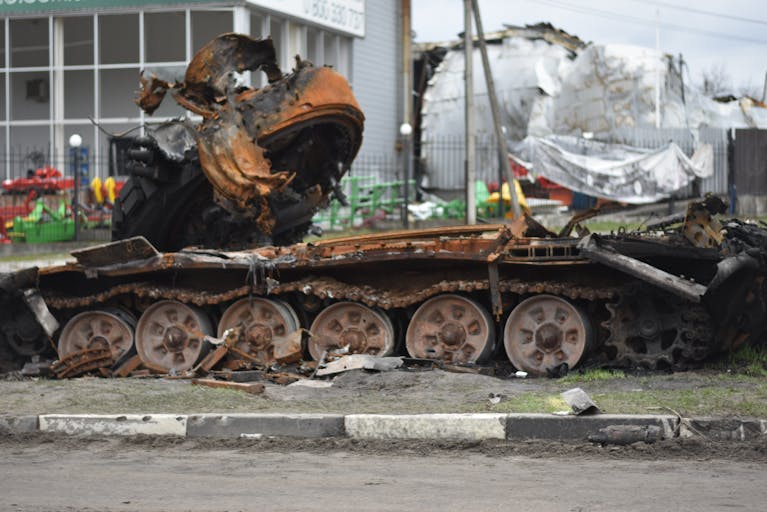

A rusted and damaged military tank lies abandoned on a city street.

Unreported, Unregulated, Unresolved: Military Emissions and the Climate Crisis

Traditional approaches to transitional justice continue to treat environmental harm as a peripheral concern. In global climate diplomacy, the environmental cost of war predominantly exists outside formal accounting. Such an emission is becoming harder to sustain as conflicts intensify and military spending rises across major powers. When delegates gathered for COP30 in November 2025, the…

Episode 359: Conflict Pollution: How Modern War Damages Climate, Water, and Land for Generations with Doug Weir

This episode hosts Doug Weir from the Conflict and Environment Observatory to examine the environmental consequences of modern warfare and the wider ecological risks created by armed conflict. The conversation explores how conflict generates complex forms of pollution, from toxic air emissions and oil fires to groundwater contamination and long-term ecological damage, often with impacts that persist…

Frederick Otu-Larbi

Frederick Otu-Larbi

Frederick Otu-Larbi is a climate and environmental scientist whose work focuses on climate change, natural resource governance, and environmental management, particularly in West Africa. With over a decade of experience, he has delivered practical, climate-focused solutions for governments, businesses, and communities. He is currently based at the University of Energy and Natural Resources in Ghana,…

Benjamin Neimark

Benjamin Neimark

Benjamin Neimark is a Reader at the School of Business and Management and a former Fellow at the Institute of Social Science and Humanities (IHSS) at Queen Mary University of London. He is a human geographer and political ecologist whose research focuses on the environmental and social impacts of global supply chains, extractive industries, and…

Episode 356: War on the Climate: Conflict, Carbon, and the Hidden Cost of War in Iran with Benjamin Neimark and Frederick Otu-Larbi

This episode hosts Benjamin Neimark and Frederick Otu-Larbi to examine the environmental and climate consequences of modern warfare, with a particular focus on the ongoing conflict involving Iran and its rapidly escalating global impact. The conversation explores how conflict is generating emissions at unprecedented speed and scale, with millions of tonnes of carbon dioxide released…

Dr Florian Krampe

Dr Florian Krampe

Dr. Florian Krampe is a German/Swedish political scientist and is the Director of Studies, Peace and Development, at SIPRI. He is also Director of the SIPRI Climate Change and Risk Programme. His particular focus is on peace and conflict research, environmental and climate security, and international security. With over 16 years of experience, Dr. Krampe…

Cedric de Coning

Cedric de Coning

Cedric de Coning is a Research Professor at the Norwegian Institute of International Affairs (NUPI), where his research focuses on strengthening the resilience and sustainability of social-ecological systems under pressure from climate change and other global stressors. His work examines the intersection of climate change, governance, and conflict, applying an adaptive peacebuilding perspective to international,…

The Climate-Conflict Nexus in the Lake Chad Basin: Complexity Beyond Simplistic Narratives

The Climate-Conflict Nexus in the Lake Chad Basin: Complexity Beyond Simplistic Narratives

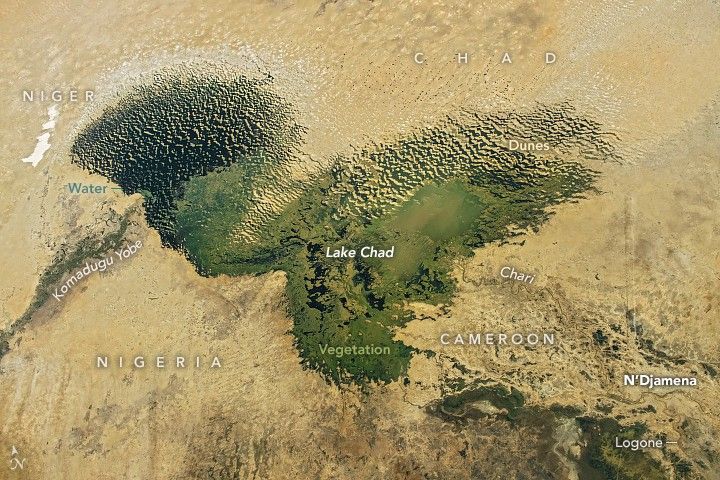
The Lake Chad Basin has become one of the world’s most frequently cited examples of how climate change, insecurity, and governance pressures intersect. With over 50 million people across Nigeria, Niger, Chad, and Cameroon, the region supports livelihoods that depend almost solely on natural resources, particularly fishing, farming, and pastoralism. Over the past six decades,…

Dr Paal Hilde

Dr Paal Hilde

Dr. Paal Hilde is professor of war studies at the Institute for Defence Studies (IFS), which is part of the Norwegian Defence University College. He earned his DPhil in politics at the University of Oxford (St. Antony’s College) in 2003. Paal has previously worked on policy planning and NATO at the Norwegian Ministry of Defence…