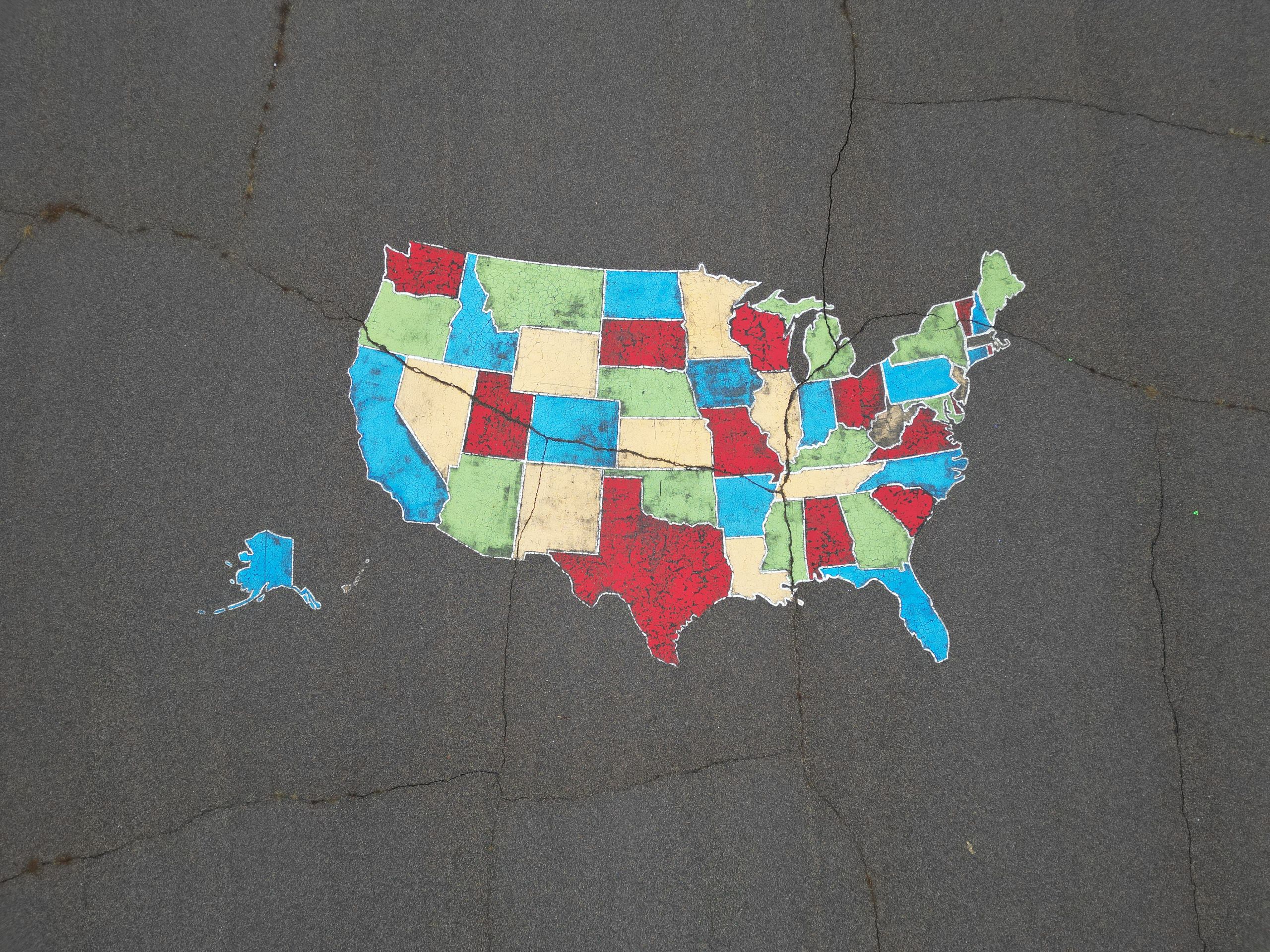
Gerrymandering and the New Redistricting Arms Race
Gerrymandering has long been a fixture of American political life, but recent developments suggest it is entering a more volatile and potentially destabilising phase. What was once largely confined to the decennial redistricting process following the census is now evolving into a continuous, fluid arena of partisan competition. This shift has been reinforced by the weakening of federal voting rights protections following Shelby County v. Holder (2013) and subsequent Supreme Court rulings that narrowed the scope of the Voting Rights Act, alongside the 2019 decision in Rucho v. Common Cause, which removed federal courts from adjudicating partisan gerrymandering claims. State legislatures are now weighing mid-decade map revisions explicitly engineered to maximise partisan advantage, raising the prospect of what many observers describe as a nascent redistricting arms race.
From Electoral Administration to Political Strategy
The origins of this escalation can be traced to Republican strategy in the aftermath of the 2010 census. Through Project REDMAP (Redistricting Majority Project), party operatives identified control of state legislatures as a level for shaping congressional power over an entire decade. By targeting relatively inexpensive down-ballot races, Republicans secured influence over the redistricting process in a series of pivotal swing dates.
In the 2012 elections, Democratic House candidates won approximately 1.4 million more votes nationwide than Republicans, yet Republicans retained a 234–201 majority in the House of Representatives. In states such as Pennsylvania, Michigan, North Carolina and Ohio, district boundaries produced congressional delegations that bore little resemblance to statewide voting patterns.
At the same time, technological change transformed redistricting from a rough exercise in geographic partitioning into a data-driven science. Modern map-drawers can now model voting behaviour at the level of precincts, streets and individual households. Geographic information systems, detailed census microdata and extensive voting histories allow political consultants to simulate thousands of possible district configurations before a single boundary is finalised.
The Retreat of Federal Constraints
For much of the post-civil-rights era, the Voting Rights Act provided a powerful federal constraint on partisan and racial manipulation of district boundaries, particularly through its pre-clearance requirement for jurisdictions with a history of discrimination. That began to unravel with the Supreme Court’s 2013 decision in Shelby County v. Holder, which effectively disabled the pre-clearance regime by removing the coverage formula that determined which states were subject to federal oversight.
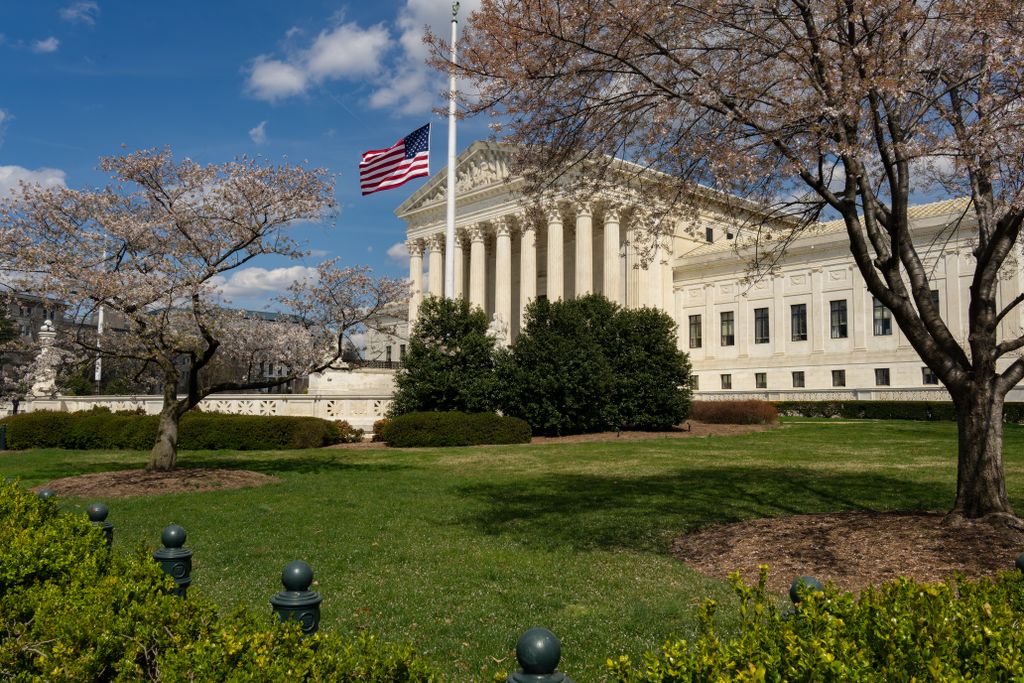
States previously required to submit redistricting plans for federal approval were now free to implement changes without advance scrutiny, shifting enforcement from ex-ante prevention to ex-post litigation. However, the Court’s 2019 decision in Rucho v. Common Cause went further still. By ruling that partisan gerrymandering claims present political questions beyond the reach of federal courts, it closed off one of the last remaining avenues for nationwide judicial intervention.
Taken together, these rulings did not legalise extreme partisan gerrymandering so much as relocate it. The issue moved from federal courts to state-level institutions: state constitutions, state courts, and state-level political balances. Some states responded by strengthening independent redistricting commissions or empowering courts to police extreme distortions. Others retained or expanded direct legislative control over map-drawing.
What has been produced is an uneven regulatory landscape. In practice, the permissibility of aggressive redistricting now depends less on national standards than on the specific legal and political architecture of each state. Where state courts are activist and constitutions contain explicit equality or fairness provisions, constraints remain meaningful. Where they do not, legislative majorities face far fewer obstacles.
As a result, redistricting has become a jurisdictionally asymmetric contest. Tight regulation in some states, largely unconstrained in others, encouraging political actors to reassess not only how maps are drawn, but when. The traditional decennial rhythm of redistricting is no longer treated as fixed in all contexts, and several states have begun exploring mechanisms for mid-decade adjustments under various legal pretexts.
Texas and the Normalisation of Mid-Decade Redistricting
In Texas, Republican lawmakers, encouraged by former President Donald Trump, have considered redrawing congressional districts ahead of the next census cycle in effort to secure additional Republican-leaning seats. Democratic legislators responded by leaving the state in an attempt to deny quorum and delay proceedings.

Beyond Texas, following the 2020 census, the state gained two congressional seats and now sends 38 members of the House, second only to California. In a chamber often decided by narrow margins, even marginal adjustments to district boundaries in Texas could have national implications for control of Congress.
Mid-decade redistricting, once treated as an extraordinary deviation from democratic norms, is beginning to resemble a legitimate instrument of partisan strategy.
The Democratic Response and Strategic Parity
For much of the past decade, Democratic reform efforts centred on institutional restraint: independent redistricting commissions, judicial oversight, and non-partisan mapping processes. States such as California, Michigan, Colorado and Arizona adopted versions of these models in an attempt to reduce direct legislative control over electoral boundaries.

More recently, that posture has shifted. Democratic leaders in states including California, Illinois and New York have argued that unilateral restraint is politically unsustainable in an environment where opponents continue to maximise structural advantage. The logic is increasingly one of strategic parity rather than procedural idealism.
This has produced a dynamic that resembles competitive escalation. Rather than converging on shared norms of fairness, states are adapting to the behaviour of their political rivals. The result is less a stable equilibrium than a continually adjusting contest, in which restraint is difficult to sustain without perceived electoral cost.
The Erosion of Electoral Competition
The effects of this system are now visible in the structure of congressional elections. According to analysis by the Cook Political Report, fewer than 10% of House districts are now genuinely competitive. In the 2024 cycle, most races were effectively decided well before formal campaigning began.
This structural predictability has reshaped political incentives. With fewer competitive districts, elected representatives face diminished pressure to appeal to centrist voters and stronger incentives to prioritise primary electorates and party-aligned interest groups. Over time, this reinforces ideological consolidation within both parties.

Research from the Brennan Center for Justice suggests that heavily gerrymandered states tend to exhibit higher levels of legislative polarisation and fewer competitive elections. While broader forces such as geographic sorting and national partisan alignment are also at play, district design amplifies these tendencies by insulating incumbents from electoral uncertainty.
As electoral risk declines, so too does the incentive for compromise.
Implications for Democratic Legitimacy
The broader stakes extend beyond electoral arithmetic.
Democratic systems depend on the perception that elections function as meaningful mechanisms for political accountability. When district boundaries appear to predetermine outcomes, that perception is weakened, even if formal electoral procedures remain intact.
Critics argue that gerrymandering undermines democratic accountability by insulating politicians from voter consequences. Defenders respond that it is an inevitable feature of a system in which political actors, not neutral technocrats, design electoral maps.

Both positions capture part of the reality. But the contemporary scale, precision and strategic intent of redistricting have altered its significance. What was once a periodic distortion of representation has become a structural feature of political competition in many states.
The United States remains one of the most influential political systems globally, and congressional composition shapes decisions on foreign policy, defence spending, economic priorities and international engagement.
As both parties treat redistricting with increasing strategic seriousness, a central question remains unresolved: whether voters meaningfully choose their representatives, or whether representatives, through the design of electoral boundaries, determine their voters.
The answer will shape not only the balance of power in Congress, but the broader resilience of American democratic institutions.