Climate, Infrastructure, and Strategic Stability: Rethinking Security in a Physically Changing World

Climate, Infrastructure, and Strategic Stability: Rethinking Security in a Physically Changing World

Climate change is no longer a distant or abstract risk in the context of global security. It is actively reshaping the physical environment in which military systems operate, altering the reliability of infrastructure, and introducing new forms of uncertainty into strategic decision-making. As Dr Florian Krampe of the Stockholm International Peace Research Institute (SIPRI) argues…
Episode 351: Climate, Infrastructure, and Nuclear Risk: Rethinking Strategic Stability with Dr Florian Krampe

This episode with Dr Florian Krampe explores how climate change is no longer a peripheral environmental issue but a central factor reshaping global security. The conversation examines how environmental shifts are already degrading critical military infrastructure, from Arctic early warning systems built on melting permafrost to changing ocean conditions that affect submarine detection and strategic…

Dr Florian Krampe

Dr Florian Krampe

Dr. Florian Krampe is a German/Swedish political scientist and is the Director of Studies, Peace and Development, at SIPRI. He is also Director of the SIPRI Climate Change and Risk Programme. His particular focus is on peace and conflict research, environmental and climate security, and international security. With over 16 years of experience, Dr. Krampe…

Episode 350: The Human Blind Spot in Cybersecurity with Robert Siciliano

In this episode, we host Robert Siciliano to examine why the biggest vulnerability in cybersecurity is so often not the technology, but the people using it. Drawing on decades of work in fraud prevention, identity protection, and security awareness, Robert argues that most organisations still treat cyber risk as a compliance issue rather than a human one….

Robert Siciliano

Robert Siciliano

Robert Siciliano is an American security expert, private investigator, speaker, and public commentator whose work focuses on fraud prevention, identity protection, and the human side of cyber risk. He is the CEO of Safr.Me and Head Trainer at Protect Now, where he helps organisations and individuals strengthen their defences against scams, impersonation, social engineering, and…

Episode 349: Latin America’s Violence Economy: Inequality, Growth, and State Capacity with Irvin Waller

In this episode of The International Risk Podcast, Dominic Bowen speaks with Irvin Waller about the often-overlooked role of interpersonal violence as a driver of international risk. While violence is frequently treated as a domestic issue, this conversation explores how high levels of homicide and violent crime can shape economic performance, weaken governance, and contribute…

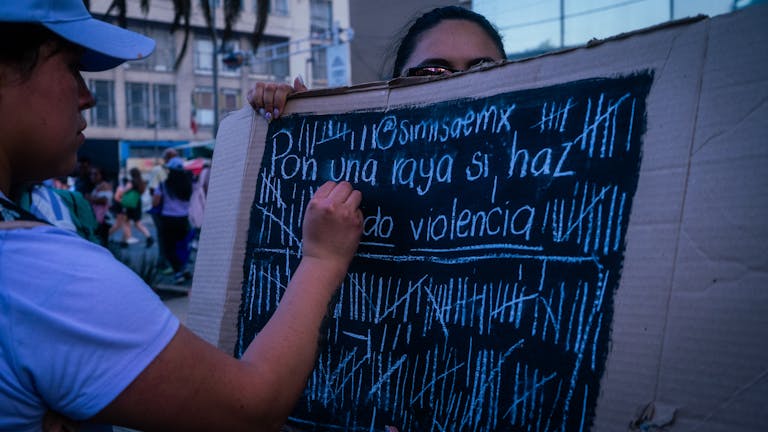
Woman writing on a protest sign during a demonstration against violence in an urban setting.

Violence as a Tax on Development: Growth, Risk, and Policy Failure in Latin America

Violent crime in Latin America and the Caribbean (LAC) has for decades imposed a heavy toll on lives and economic performance. Outside of active war zones, the region remains the most violent in the world, accounting for roughly one-third of global homicides despite just 8% of the global population. The economic consequences are equally severe….

Irvin Waller

Irvin Waller

Irvin Waller is Professor Emeritus of Criminology at the University of Ottawa, whose work focuses on reducing interpersonal violence and advancing victims’ rights across national and international contexts. His research and policy engagement examine how evidence-based prevention strategies can significantly reduce violent crime, with a particular emphasis on translating successful interventions into scalable public policy….

Disinformation as Risk: Trust, Markets, and Influence

Disinformation as Risk: Trust, Markets, and Influence

For years, disinformation has been framed primarily as a political or media problem, associated with election interference, bot networks, and foreign influence campaigns. It is often treated as something external to core systems. It is portrayed as an issue for platforms, regulators, or communications teams to manage. Yet this framing obscures a more complex and…

Thomas Barton

Thomas Barton

Thomas serves as Executive Director of the CCOD, where he oversees the organisation’s management and strategic direction. In this role, he is responsible for shaping the Council’s policy positions and representing its members in engagements with key stakeholders. He is also the founder and CEO of Polis Analysis, established in October 2019, which specialises in…