
Disinformation as Risk: Trust, Markets, and Influence
For years, disinformation has been framed primarily as a political or media problem, associated with election interference, bot networks, and foreign influence campaigns. It is often treated as something external to core systems. It is portrayed as an issue for platforms, regulators, or communications teams to manage. Yet this framing obscures a more complex and consequential reality.
As Thomas Barton, founder of the Council for Countering Online Disinformation (CCOD), explains in his recent conversation on The International Risk Podcast, disinformation has evolved into a systemic risk that cuts across markets, institutions, and corporate decision-making. It no longer operates solely at the margins of online discourse. Instead, it is increasingly embedded within domestic narratives, financial systems, and organisational environments, shaping behaviour and distorting outcomes in ways that are often difficult to detect in real time.
The key question is no longer simply who is spreading false information. It is how disinformation moves, where it embeds itself, and why it is able to generate tangible economic and strategic effects before it is corrected.
False Narratives and Market Signals
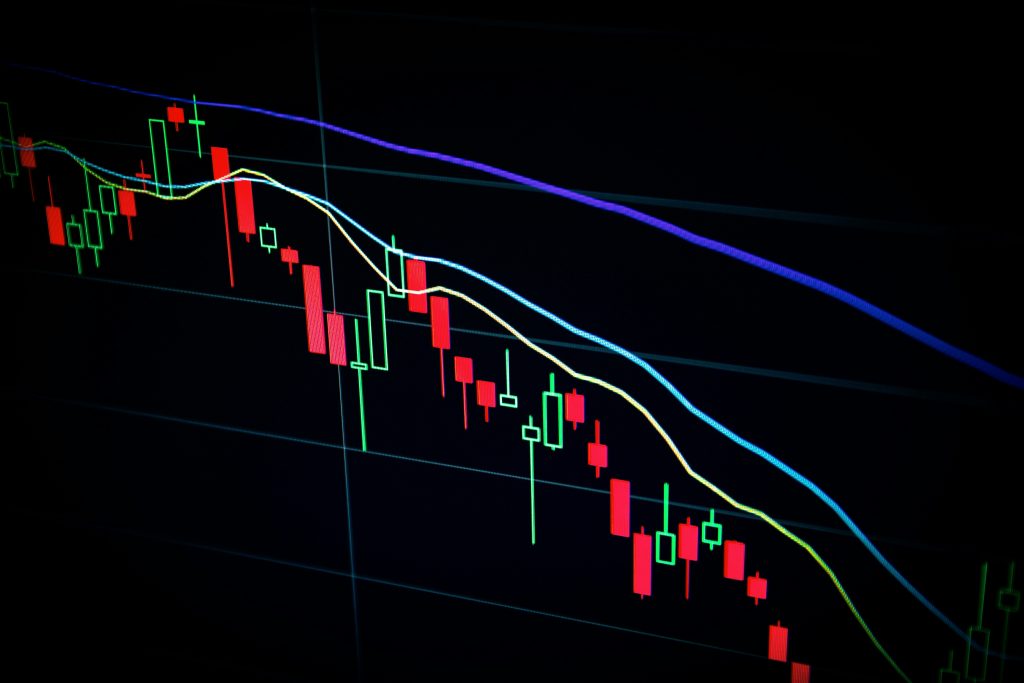
One of the most significant shifts in the disinformation landscape is its interaction with financial markets. Information, whether accurate or not, functions as a signal. When that signal enters a market environment, it can influence perception, trigger trades, and ultimately move prices.
As Barton outlines, the propagation of false information often follows a predictable chain. A claim is published, amplified through networks and platforms, picked up by market participants, and acted upon before verification mechanisms can catch up. By the time corrections are issued, positions have already been taken and value has already shifted.
This dynamic reflects a structural vulnerability. Markets are designed to respond rapidly to new information, but they are less equipped to distinguish between high-quality signals and manipulated narratives in the moment they emerge. Speed, in this context, becomes both a strength and a weakness.
Disinformation as Enterprise Risk
While much of the public discussion focuses on markets or politics, Barton emphasises that disinformation increasingly represents a core risk for businesses themselves. For many organisations, trust is both a critical asset and a point of vulnerability.
False narratives can damage brand credibility, unsettle employees, influence investor behaviour, and disrupt operations. In some cases, they can affect supply chains or trigger regulatory scrutiny. Yet many firms continue to treat disinformation as a communications issue rather than an enterprise-wide risk.
This creates a structural lag in response. By the time an organisation recognises that it is being targeted, the narrative may already be established and circulating widely. Reactive strategies, focused on rebuttal or clarification, often struggle to regain control once momentum has built.
The implication is clear. Disinformation needs to be integrated into existing risk frameworks, alongside more familiar categories such as cybersecurity, financial risk, and operational resilience.

Underestimation and Exposure
A recurring theme in Barton’s analysis is the extent to which organisations underestimate the scale and nature of the threat. Many assume that disinformation only becomes relevant when they are directly targeted, or that it remains confined to specific sectors or issues.
In reality, exposure is often indirect. A false narrative affecting a supplier, partner, or broader sector can have downstream effects. Similarly, disinformation that shapes public perception or regulatory environments can alter the conditions in which firms operate.
This indirect exposure is harder to identify and therefore easier to overlook. It also reinforces the need for a more proactive approach, focused on monitoring, anticipation, and resilience rather than purely reactive measures.
For senior executives, the challenge is not only to respond to disinformation, but to prepare for it in advance. This requires a shift in how crisis management is understood.
Traditional crisis models often assume a discrete event followed by a response phase. Disinformation, by contrast, can emerge gradually, evolve rapidly, and persist even after being debunked. It may not have a clear starting point or a single source, and it can reappear in different forms over time.
Effective preparedness therefore involves building capabilities across multiple functions: monitoring information environments, establishing clear response protocols, aligning communications with operational decision-making, and ensuring that leadership teams are equipped to act under conditions of uncertainty.
In this sense, managing disinformation is less about controlling individual narratives and more about strengthening organisational resilience to information shocks.
The Question of Trust
Underlying these dynamics is a broader issue: the erosion of public trust. Disinformation does not operate in a vacuum. Its effectiveness depends, in part, on existing levels of trust in institutions, media, and authority.
Where trust is already fragile, false narratives can gain traction more easily. Where it is stronger, they may encounter greater resistance. This creates a feedback loop, in which disinformation both exploits and contributes to declining trust.
Whether this trend can be reversed remains an open question. Efforts to rebuild trust are inherently long-term and require coordination across multiple actors, including governments, businesses, and civil society.
What is clear, however, is that disinformation is no longer a peripheral concern. As Barton’s analysis suggests, it is a structural feature of the modern information environment—one that increasingly shapes risk across domains.
The challenge is not only to identify falsehoods, but to understand the systems that allow them to generate real-world impact.