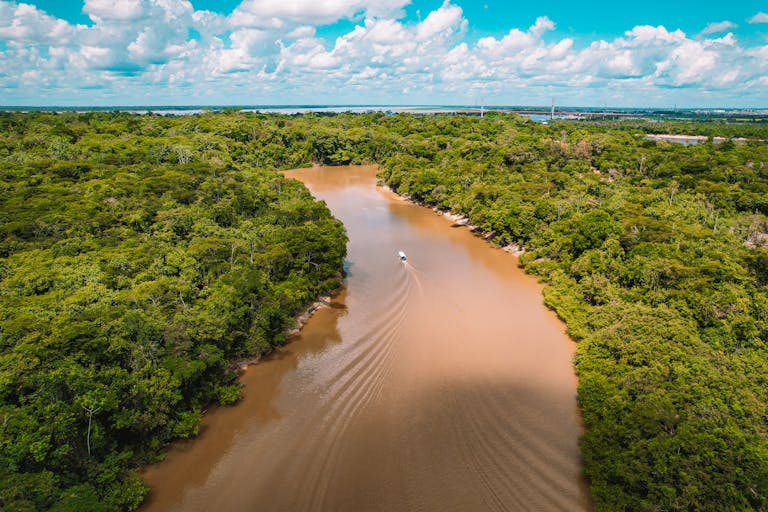
Episode 362: The Amazon Rainforest, Gold Mining, and the Development Dilemma in Suriname with John Goedschalk

This episode hosts John Goedschalk to examine the relationship between environmental sustainability, economic development, and long-term climate resilience in the Amazon rainforest and the Guiana Shield. The conversation explores why the forests of Suriname are disproportionately important to global climate stability, regional rainfall systems, and food production across South America. Drawing on the science behind…

Hungary’s Democratic Awakening: Dismantling Orbán’s Illiberal System After 16 Years

Hungary’s Democratic Awakening: Dismantling Orbán’s Illiberal System After 16 Years

In this episode of The International Risk Podcast, host Dominic Bowen speaks with Zsuzsanna Szelényi, foreign policy specialist, former member of the Hungarian Parliament, and Programme Director at the CEU Democracy Institute, about Hungary’s dramatic political transformation following the end of Viktor Orbán’s 16-year rule. After 16 years of increasingly authoritarian governance, Hungary has voted…

Zsuzsanna Szelényi

Zsuzsanna Szelényi

Zsuzsanna is foreign policy specialist, former politician, author and founding director of the CEU Democracy Institute Leadership Academy. Before joining the CEU Democracy Institute, Zsuzsanna Szelényi was Richard von Weizsäcker fellow at the Robert Bosch Academy in Berlin and Europe’s Future Fellow of the Institut für die Wissenschaften vom Menschen. She is conducting research on…

Episode 360: Hungary After Orbán: Democratic Reset or Political Reconfiguration in Europe? with Zsuzsanna Szelényi

This episode with Zsuzsanna Szelényi explores Hungary’s dramatic political transformation following the end of Viktor Orbán’s 16-year rule, examining how an entrenched illiberal system was dismantled through democratic means and what this reveals about the resilience of liberal democracy in Europe. The conversation traces the structural factors that converged to break Orbán’s grip on power—including economic mismanagement,…

A rusted and damaged military tank lies abandoned on a city street.

Unreported, Unregulated, Unresolved: Military Emissions and the Climate Crisis

Traditional approaches to transitional justice continue to treat environmental harm as a peripheral concern. In global climate diplomacy, the environmental cost of war predominantly exists outside formal accounting. Such an emission is becoming harder to sustain as conflicts intensify and military spending rises across major powers. When delegates gathered for COP30 in November 2025, the…

Episode 359: Conflict Pollution: How Modern War Damages Climate, Water, and Land for Generations with Doug Weir

This episode hosts Doug Weir from the Conflict and Environment Observatory to examine the environmental consequences of modern warfare and the wider ecological risks created by armed conflict. The conversation explores how conflict generates complex forms of pollution, from toxic air emissions and oil fires to groundwater contamination and long-term ecological damage, often with impacts that persist…

Doug Weir

Doug Weir

Doug Weir is Director at the Conflict and Environment Observatory, where his work focuses on the environmental dimensions of armed conflict and military activity. His research examines how war and security policies contribute to environmental degradation, with a particular emphasis on pollution, ecosystem damage, and the long-term risks associated with military emissions. Doug is widely…

Episode 358: The Long Arm of Tehran: Proxies, Criminals and State-Backed Threats with Edmund Fitton-Brown

In this episode, we host Edmund Fitton-Brown to explore how Iran projects power beyond its borders through proxies, criminal networks, intelligence services, and deniable operations. Drawing on his experience as a former British Ambassador to Yemen and former senior United Nations expert on ISIS, al-Qaeda and the Taliban, Edmund explains why Iran’s external operations cannot…

Edmund Fitton-Brown

Edmund Fitton-Brown

Edmund Fitton-Brown is a former British diplomat, counterterrorism specialist, and one of the leading British voices on terrorism, Iran, proxy warfare, and Middle East security. He is currently a Senior Fellow at the Foundation for Defense of Democracies, where his work focuses on Arabian Peninsula issues, terrorism, and its enablers. He is also a Senior…

Episode 356: War on the Climate: Conflict, Carbon, and the Hidden Cost of War in Iran with Benjamin Neimark and Frederick Otu-Larbi

This episode hosts Benjamin Neimark and Frederick Otu-Larbi to examine the environmental and climate consequences of modern warfare, with a particular focus on the ongoing conflict involving Iran and its rapidly escalating global impact. The conversation explores how conflict is generating emissions at unprecedented speed and scale, with millions of tonnes of carbon dioxide released…